


A draft parliamentary report examining the disbandment of South Africa’s Political Killings Task Team (PKTT) has come under fire after MPs argued that its findings do not go far enough in criticising suspended Police Minister Senzo Mchunu’s actions.
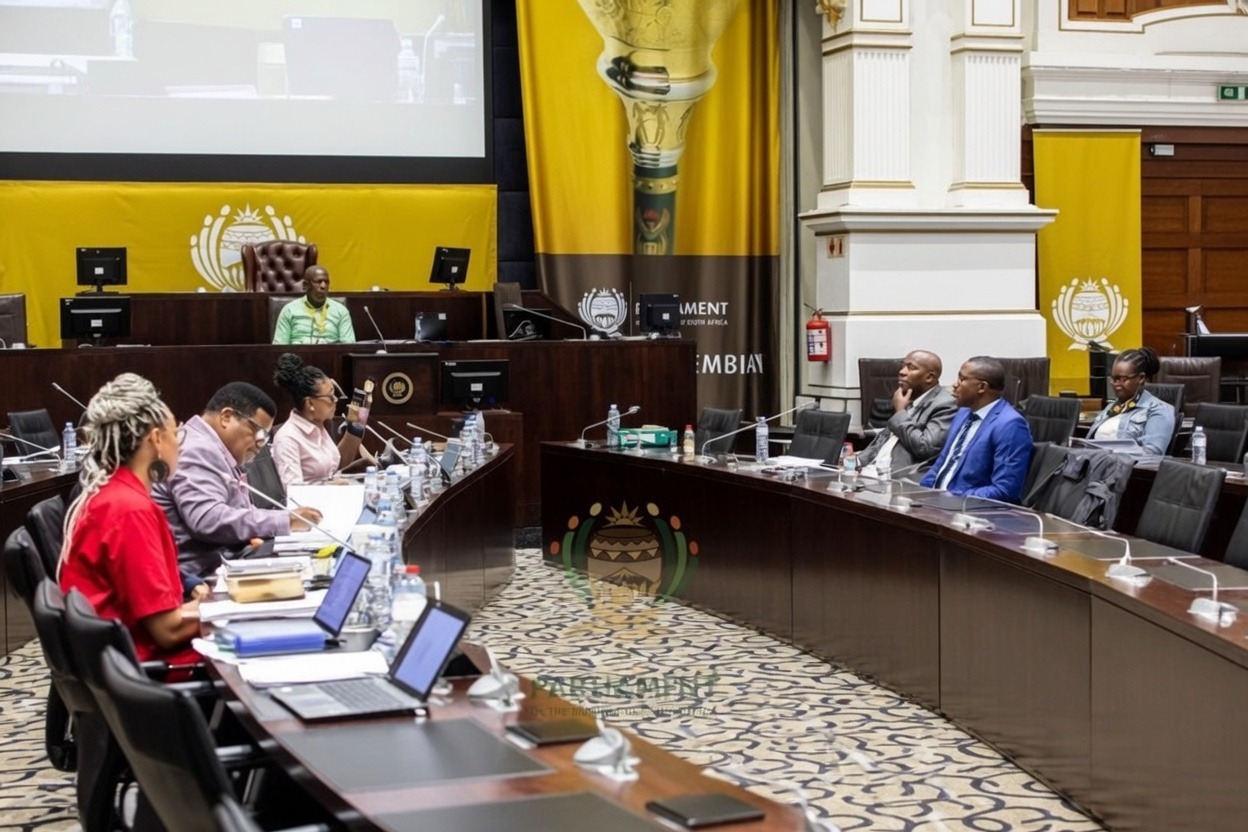
During deliberations by Parliament’s Ad Hoc Committee, Economic Freedom Fighters (EFF) MP Leigh-Ann Mathys said the report failed to state clearly that Mchunu’s decision to dissolve the specialist police unit in December 2024 was irrational.
“It must be clear that the directive was irrational. It is not clear that it was irrational. This paragraph is just so watered-down,” Mathys told the committee.
The committee was established to investigate allegations of political interference within the South African Police Service (SAPS) following claims by KwaZulu-Natal Police Commissioner Lieutenant General Nhlanhla Mkhwanazi. He alleged that organised criminal syndicates had infiltrated elements of the criminal justice system and claimed the decision to disband the PKTT was intended to protect politically connected individuals.
According to the draft report, Mchunu issued the directive without consulting National Police Commissioner General Fannie Masemola, President Cyril Ramaphosa, the National Prosecuting Authority or other key stakeholders. The report also notes that several senior SAPS officials only became aware of the decision through media reports and social media.
The committee further questions the reasons given for dissolving the task team, stating that operational and budgetary concerns cited by Mchunu were not included in the original directive and appear to have been introduced at a later stage. It also says there is a credible evidential basis to suggest the decision may have been linked to the progress of investigations into criminal syndicates rather than the official explanation.
Several members of the committee have called for stronger wording in the final report, arguing that it should more clearly reflect concerns over governance, accountability and ministerial decision-making.
Mchunu, who was placed on special leave by President Cyril Ramaphosa after the allegations emerged, has defended the decision, insisting it was a lawful exercise of ministerial authority. He maintains that the Political Killings Task Team had fulfilled its mandate and was no longer necessary.
The committee’s report will not determine criminal liability but is expected to assess the evidence presented, identify institutional shortcomings and recommend reforms within SAPS. It is due to be finalised later this month before being submitted to Parliament.
The inquiry is running alongside the Madlanga Commission of Inquiry, which is separately investigating allegations of organised crime infiltration within SAPS and other state institutions.
The outcome of both investigations is expected to shape future reforms aimed at strengthening oversight, accountability and public confidence in South Africa’s policing system.