


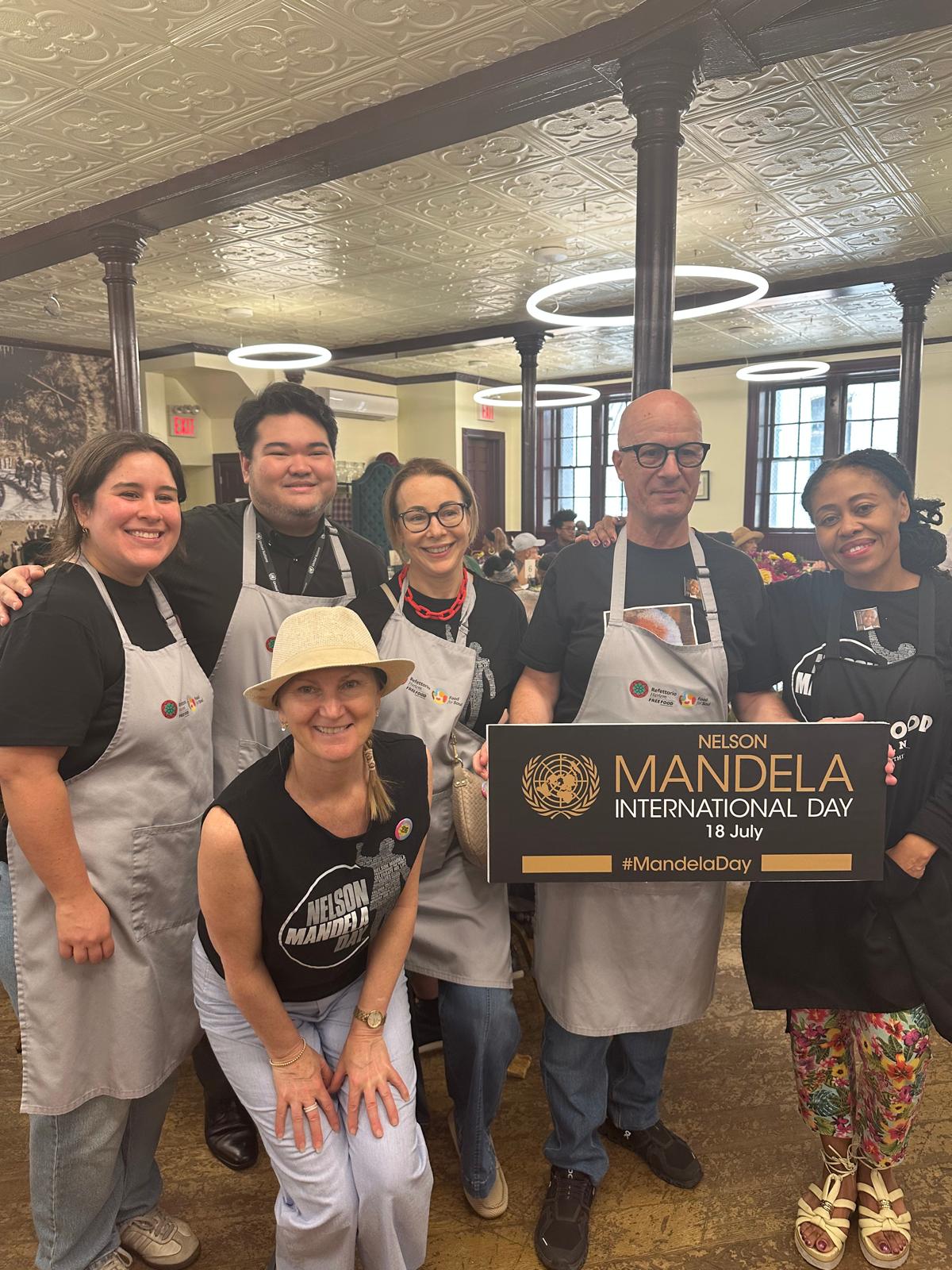
The United Nations General Assembly has honoured the legacy of former South African President Nelson Mandela during its official commemoration of Nelson Mandela International Day, held on 18 July.
A message delivered on behalf of UN Secretary-General Antonio Guterres described Mandela, affectionately known as Madiba, as a leader who believed that humanity could overcome hatred, division, discrimination and injustice.
Guterres highlighted Mandela’s lifelong commitment to equality and dignity, saying his vision continued to inspire efforts to build a more just and peaceful world.
Addressing the General Assembly, journalist Redi Tlhabi said Mandela understood that the protection of human dignity could never be sacrificed for political convenience.
Tlhabi reflected on Mandela’s belief that freedom must be universal, recalling his famous statement that “freedom is incomplete without the freedom of the Palestinians.”
She said Mandela’s position was not based on political interests but on a broader moral principle of equal rights and justice for all people.
“Mandela understood that justice cannot depend on geography, alliances, military strength, race, gender or religion,” Tlhabi said, warning that a world where laws are applied selectively risks replacing justice with power.
The address drew comparisons between the struggles against apartheid and current global debates over human rights, including the humanitarian situation in Gaza and questions surrounding the equal application of international law.
The commemoration served as a reminder of Mandela’s enduring message of reconciliation, equality and respect for human dignity. UN officials and delegates reaffirmed the importance of continuing his work by addressing injustice and defending human rights worldwide.
Nelson Mandela International Day is observed annually on 18 July, marking the birthday of South Africa’s first democratically elected president and celebrating his contribution to peace, freedom and social justice.