



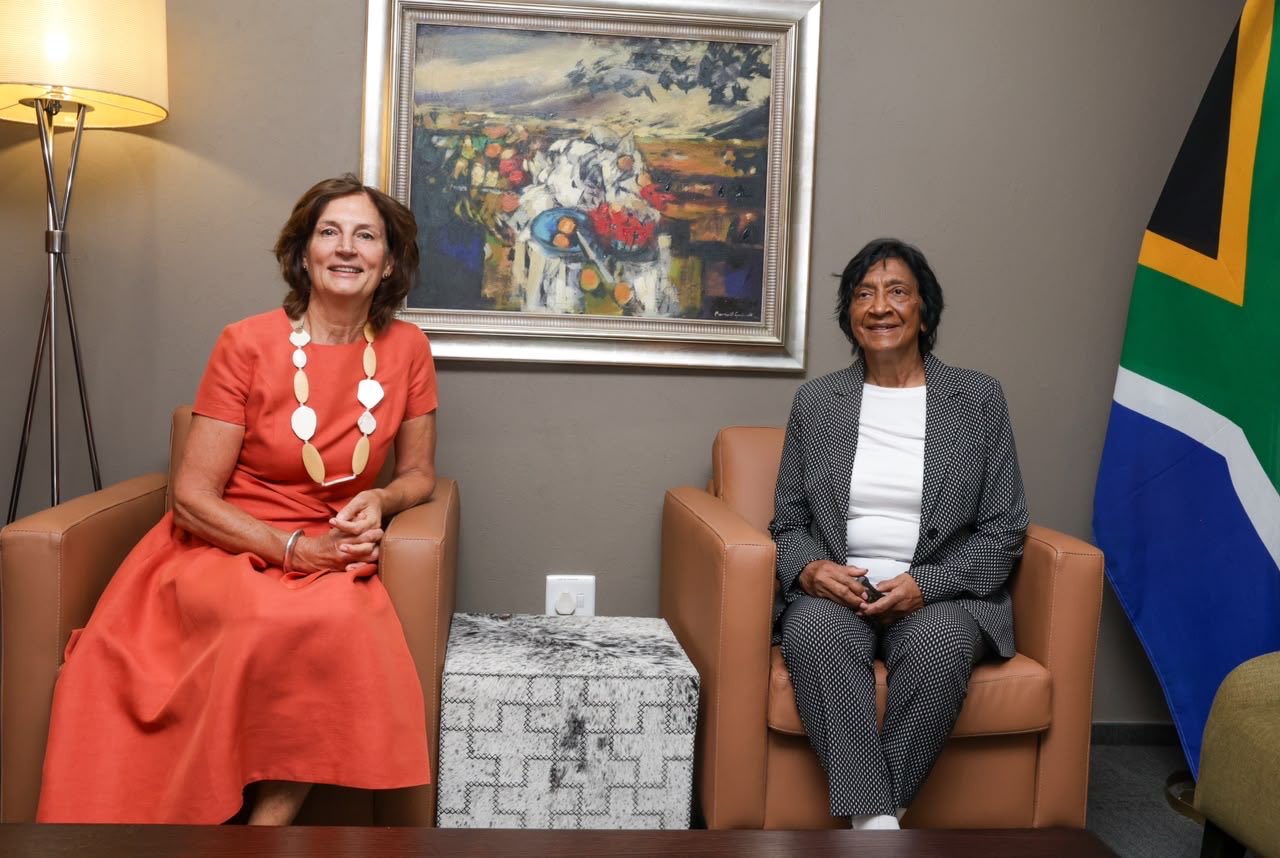
Nobel Peace Prize laureate Judge Navi Pillay has stressed the importance of international law in resolving disputes, protecting human rights and holding political, military and judicial actors accountable, amid growing global conflicts.
The remarks were made during an event marking the 80th anniversary of the International Court of Justice (ICJ), hosted by the Department of International Relations and Cooperation in Pretoria.
During a one-on-one discussion with the Ambassador of the Kingdom of the Netherlands to South Africa, Joanne Doornewaard, Pillay highlighted the importance of international law, particularly for African countries and other nations facing political instability, territorial disputes and human rights challenges.
Pillay argued that although South Africa continues to benefit from international law, other countries are in more urgent need of international legal protection.
“We may not need them right now, but of course we do for other reasons, the rights of students, the rights of the poor, the rights of migrants and refugees, and many, many other issues concerning South Africa that are taken as complicated against us,” Pillay said.
She added that international law remained essential beyond the African continent, pointing to challenges facing countries in the Middle East and other regions affected by territorial disputes and questions of state recognition.
“So while we do need international law, we do not need them as urgently as other countries, peoples in other countries, and don’t just think of Africa. You think of the Middle East, you think of other countries, countries where there are border disputes; they are not even recognised as states by the United Nations,” she said.
Pillay emphasised that international law and the ICJ play an important role in resolving disputes between countries and clarifying the legal principles governing international relations.
“This is a very important institution, firstly to resolve disputes, and secondly to spell out international law for us,” she said.
Pillay raises concerns over attitudes towards international law
Pillay also expressed concern over what she described as disregard for international law by some officials in the United States.
She referred to statements by some American diplomats suggesting that international law does not exist, questioning such positions in light of the country’s historical involvement in establishing international justice institutions.
“Well, that comes from the United States because of their failure to recognise that international law exists. And some of them do very openly say there’s no such thing as international law,” she said.
Pillay pointed to the United States’ role in establishing the Nuremberg Tribunals following the Second World War, arguing that its historical contribution to international justice makes such attitudes particularly concerning.
ICJ remains important amid growing global conflicts
Meanwhile, Ambassador Doornewaard said the ICJ’s 80th anniversary comes at a time of heightened international tensions and conflicts, with the world facing levels of instability not seen since the Second World War.
She stressed that the anniversary provided an opportunity to reflect on the importance of international justice and the need to strengthen the institutions responsible for upholding it.
“And it’s that shared belief which brings us together today to reflect on what international justice has meant so far and what more we can do to uphold it in the years to come,” Doornewaard said.
She noted that 24 cases were pending before the ICJ, arguing that the number demonstrated the continued importance of the court as a mechanism for resolving international disputes.
“Currently, 24 cases are pending before it, proving that, contrary to its critics, it’s still seen by most as the best way to resolve disputes,” she said.
Doornewaard also quoted the Netherlands’ foreign minister, who had earlier highlighted the importance of ensuring that calls for justice around the world are heard.
“And as our foreign minister pointed out earlier this year, and I quote, around the world, we hear the calls for justice, and these voices do not and will not go unheard. And the court provides a path for these calls for justice to be heard.”
She concluded by reminding the audience of South Africa’s own experience in building a democratic and just society, noting that the country is marking 30 years since the adoption of its Constitution.
The anniversary, she said, offers an important opportunity to reflect on the country’s journey towards justice and the continuing relevance of international law in addressing global challenges.

