


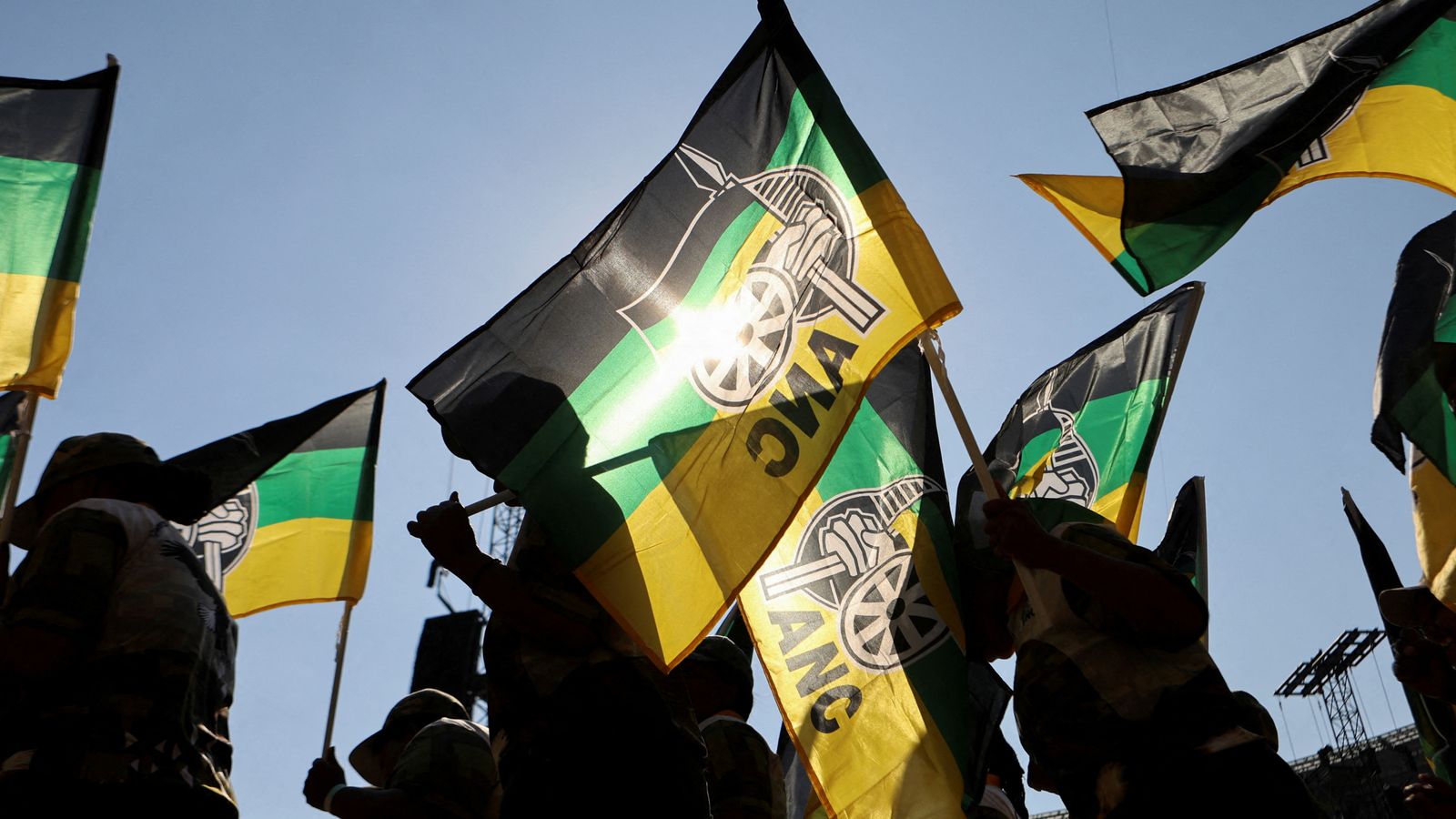
The African National Congress (ANC) says it is prepared to engage political parties, civic movements and independent candidates as it seeks to establish coalition governments following its losses in the 2026 Local Government Elections.
The party’s Special Extended National Executive Committee (NEC), which met from Thursday to Friday, has mandated its leadership to begin coalition negotiations in municipalities where no political party secured an outright majority.
In a statement released on Friday, ANC national spokesperson Mahlengi Bhengu said engagements with various political parties were already under way, guided by the party’s coalition framework.
The ANC says it is approaching the negotiations with an open mind and is willing to work with political formations that share its commitment to stable and effective local government.
The party says coalition agreements must be based on a common minimum programme, supported by measurable service delivery targets.
It has also pledged to prioritise transparent and accountable municipal governance, decisive action against corruption and improved delivery of basic services, including water, electricity, sanitation and roads.
The coalition announcement follows a difficult election for the governing party, which suffered further setbacks across several major metropolitan municipalities, continuing a decline that has reshaped South Africa’s local government political landscape.
ANC support declines across all eight metros
The extent of the ANC’s electoral difficulties is reflected in its performance across all eight metropolitan municipalities, where its support declined compared with the 2021 Local Government Elections.
The party lost its position as the largest political formation in Johannesburg, Tshwane, Ekurhuleni, eThekwini and Nelson Mandela Bay.
The Democratic Alliance (DA) emerged as the largest party in five metros, while the uMkhonto weSizwe (MK) Party secured the highest share of the vote in eThekwini. The ANC remained the largest party in Buffalo City and Mangaung.
A comparison of the 2021 and 2026 results highlights the extent of the decline in ANC support across the eight metros.
| Metropolitan municipality | ANC 2021 | ANC 2026 | Decline |
|---|---|---|---|
| Johannesburg | 33.60% | 20.25% | 13.35 pp |
| Tshwane | 34.31% | 20.22% | 14.09 pp |
| Ekurhuleni | 38.19% | 22.11% | 16.08 pp |
| eThekwini | 42.02% | 16.43% | 25.59 pp |
| Cape Town | 18.63% | 13.95% | 4.68 pp |
| Nelson Mandela Bay | 39.43% | 25.48% | 13.95 pp |
| Buffalo City | 59.30% | 41.93% | 17.37 pp |
| Mangaung | 50.63% | 33.91% | 16.72 pp |
Sources: IEC 2021 and 2026 election results. PP refers to percentage points. Figures rounded to two decimal places.
The biggest setback was recorded in eThekwini, where ANC support fell by 25.59 percentage points, from 42.02% in 2021 to 16.43% in 2026.
The result marks a significant shift in KwaZulu-Natal’s political landscape, with the MK Party securing 38.29% of the vote to emerge as the largest party in the metro.
In Buffalo City, ANC support declined from 59.30% to 41.93%, while in Mangaung it fell from 50.63% to 33.91%.
Although the ANC remained the largest party in both municipalities, it failed to secure an outright majority, leaving it dependent on negotiations with smaller parties to establish governing arrangements.
In Johannesburg, the DA secured 34.79% of the vote, compared with the ANC’s 20.25%. ActionSA emerged as the third-largest party with 16.27%.
In Tshwane, the DA obtained 34.37%, followed by ActionSA with 22.07%, while the ANC received 20.22%.
Ekurhuleni also saw the DA emerge as the leading party with 30.68%, while the ANC secured 22.11%.
The ANC’s weakest performance among the eight metros was in Cape Town, where it received 13.95% of the vote. The DA retained control of the municipality with 56.42%.
Coalition negotiations become crucial
The election results have left seven of South Africa’s eight metropolitan municipalities without an outright majority for any political party. Cape Town is the only metro where the DA secured an outright majority.
The ANC’s coalition position signals that it is preparing to negotiate with a broad range of political formations as it seeks to secure governing arrangements in municipalities across the country.
However, the party’s negotiations are expected to be shaped by individual municipal circumstances rather than a single national formula. The ANC has indicated that coalition arrangements must prioritise stability, effective governance and the needs of residents.
The party has identified water, electricity, sanitation, roads, public spaces, community safety and local economic development as key priorities for municipal government.
The NEC is expected to provide a further update on the progress of coalition engagements on Tuesday.
The national picture is equally challenging for the governing party. The ANC’s national vote share declined from approximately 45.6% in the 2021 Local Government Elections to 30.76% in 2026, a drop of almost 15 percentage points.
The decline represents a significant electoral setback for the party, which remains South Africa’s largest political party nationally but no longer commands the level of support it once enjoyed.
The latest coalition position follows deliberations at the Special Extended NEC meeting, where party leaders considered the election outcome and the growing number of municipalities without outright majorities.
The ANC says its priority is to establish stable municipal councils capable of delivering essential services, addressing corruption and protecting workers’ interests.

