



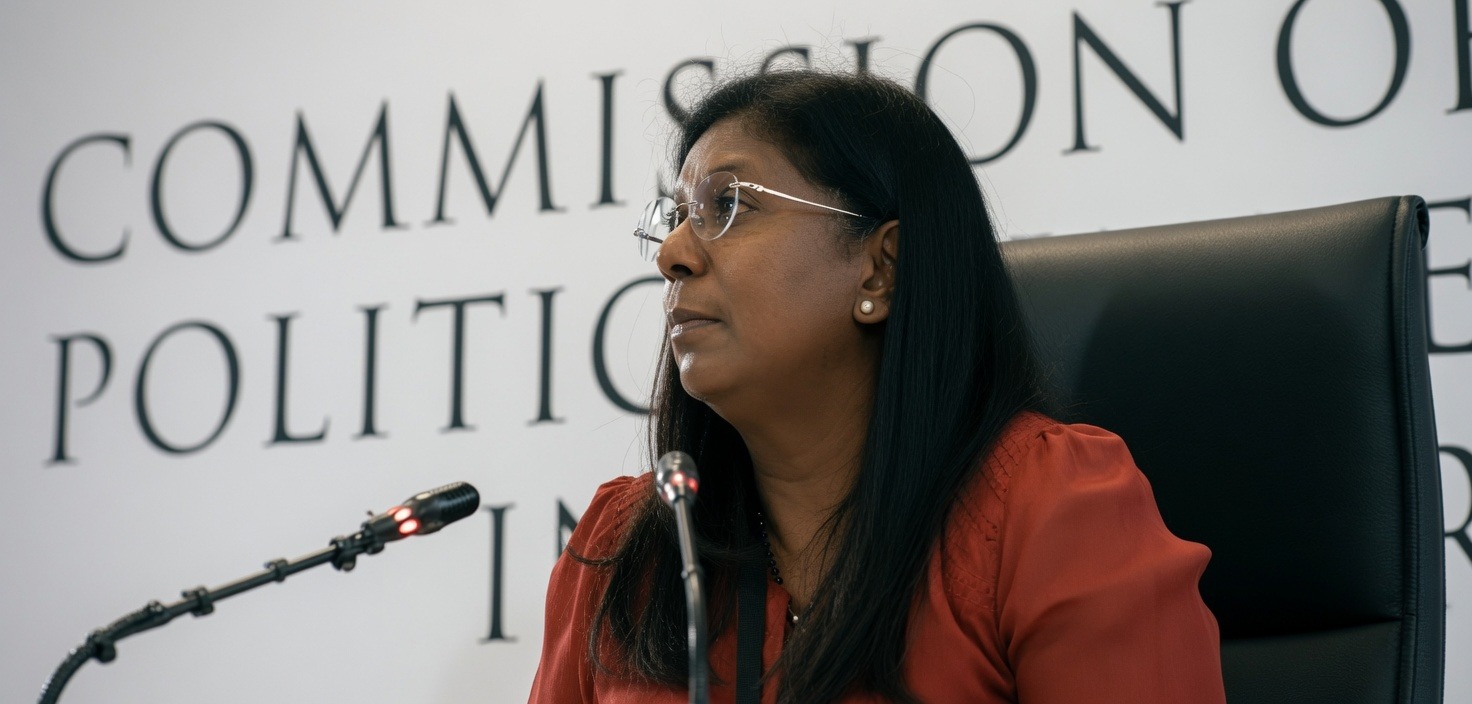
The Office of the Investigating Directorate Against Corruption (IDAC) Oversight Judge has confirmed that it has received complaints relating to the Head of IDAC, Advocate Andrea Johnson.
However, the office has declined to disclose the details of the complaints or identify those who submitted them, stating that it does not comment on complaints received or matters under consideration.
“However, given the exceptional public interest in this matter, the numerous media enquiries received, and the fact that the existence of the complaints is already in the public domain, the Office considers it appropriate to confirm their receipt.
“The complaints are receiving attention through the Office’s established processes and are being assessed in accordance with its statutory mandate and the applicable legal framework,” said Max Mpuzana, spokesperson for the IDAC Oversight Judge, Takalani Raulinga.
Johnson, who appeared before the Madlanga Commission of Inquiry on Tuesday, has been accused of defeating the ends of justice and interfering in sensitive investigations to protect politicians, senior police officers and alleged criminal syndicates.
Several stakeholders have called for her dismissal following IDAC’s arrest of Crime Intelligence Head Lieutenant-General Dumisani Khumalo and other senior police officials in June last year.
Meanwhile, the Office of the IDAC Oversight Judge has assured the public that it will protect whistle-blowers and complainants who make disclosures in good faith.
“The reporting of alleged corruption and misconduct is an essential feature of constitutional accountability and the rule of law.
“The Office will take all reasonable measures within its mandate and within the bounds of the law to ensure that individuals who raise concerns are not discouraged from doing so by fear of prejudice, intimidation or retaliation,” Mpuzana said.
He further explained that the receipt of a complaint does not constitute a finding of wrongdoing, nor should it be interpreted as evidence of misconduct.
“Every complaint is considered independently, objectively and in accordance with the principles of procedural fairness.
“To protect the integrity of the Office’s processes and the rights of all concerned, the Office will not comment further on the substance of the complaints or on any assessment or investigative steps that may or may not be undertaken while the matter remains under consideration,” Mpuzana added.

