



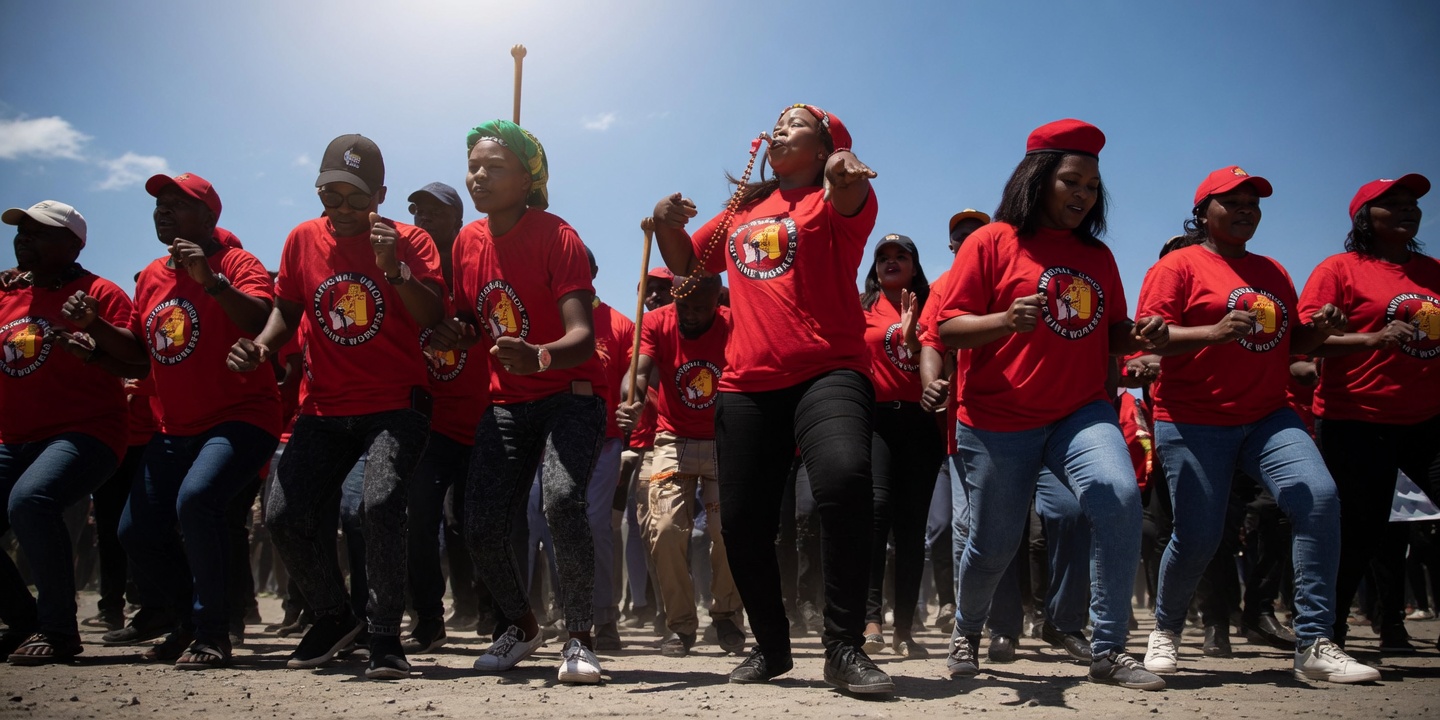
The National Union of Mineworkers (NUM) has defended its decision to take President Cyril Ramaphosa and the state to court in an effort to block the unbundling of Eskom and the creation of an independent Transmission System Operator (TSO), which would operate separately from the power utility’s management.
The union’s highest decision-making body, the National Executive Committee (NEC), which met in Pretoria over the weekend, has directed its legal team to finalise formal court action against the President and the state over plans to restructure Eskom.
Mpho Phakedi, NUM Secretary-General, told YOU FM Newshour that Eskom management is not off the hook and will be cited in the court papers going forward.
“They are tasked with the responsibility of executing this decision to unbundle the utility and, of course, as we move forward with our legal papers, we will include them.
“When we started this process, we wrote to the Board Chairperson and the President. We have written to the entity and the shareholder,” said Phakedi.
Phakedi issued a stern warning to all stakeholders should they proceed with the unbundling.
“In addition to our ongoing legal proceedings, should government continue to proceed with reforms that threaten public ownership, undermine Eskom’s strategic mandate, or compromise workers’ rights without genuine consultation, the NEC stands ready to deploy all available constitutional and organisational measures.
“This includes worker mobilisation to defend energy sovereignty, public ownership and workers’ livelihoods,” warned Phakedi.
He dismissed as rhetoric the so-called “closed-door” meetings between NUM officials and the ANC’s top seven leaders.
“It was a rhetoric response to defend the whole idea of privatising or unbundling Eskom, insisting that the decision was born out of an intention to resolve the utility’s inefficiency in terms of service to the country and basically in making sure that Eskom doesn’t become a monopoly in the energy sector,” remarked Phakedi.
The union has urged the Presidency to ensure job security and affordable electricity prices for millions of unemployed South Africans during the restructuring of the power utility.
“While the Presidency asserts that establishing the TSO aims to foster competition, attract investment and enhance energy security, the NUM NEC remains deeply concerned.
“The NEC firmly maintains that restructuring must not come at the expense of jobs, working conditions, collective bargaining rights or public ownership.
“Eskom workers have carried the burden of keeping the grid stable, and their livelihoods must be protected,” explained Phakedi.

