


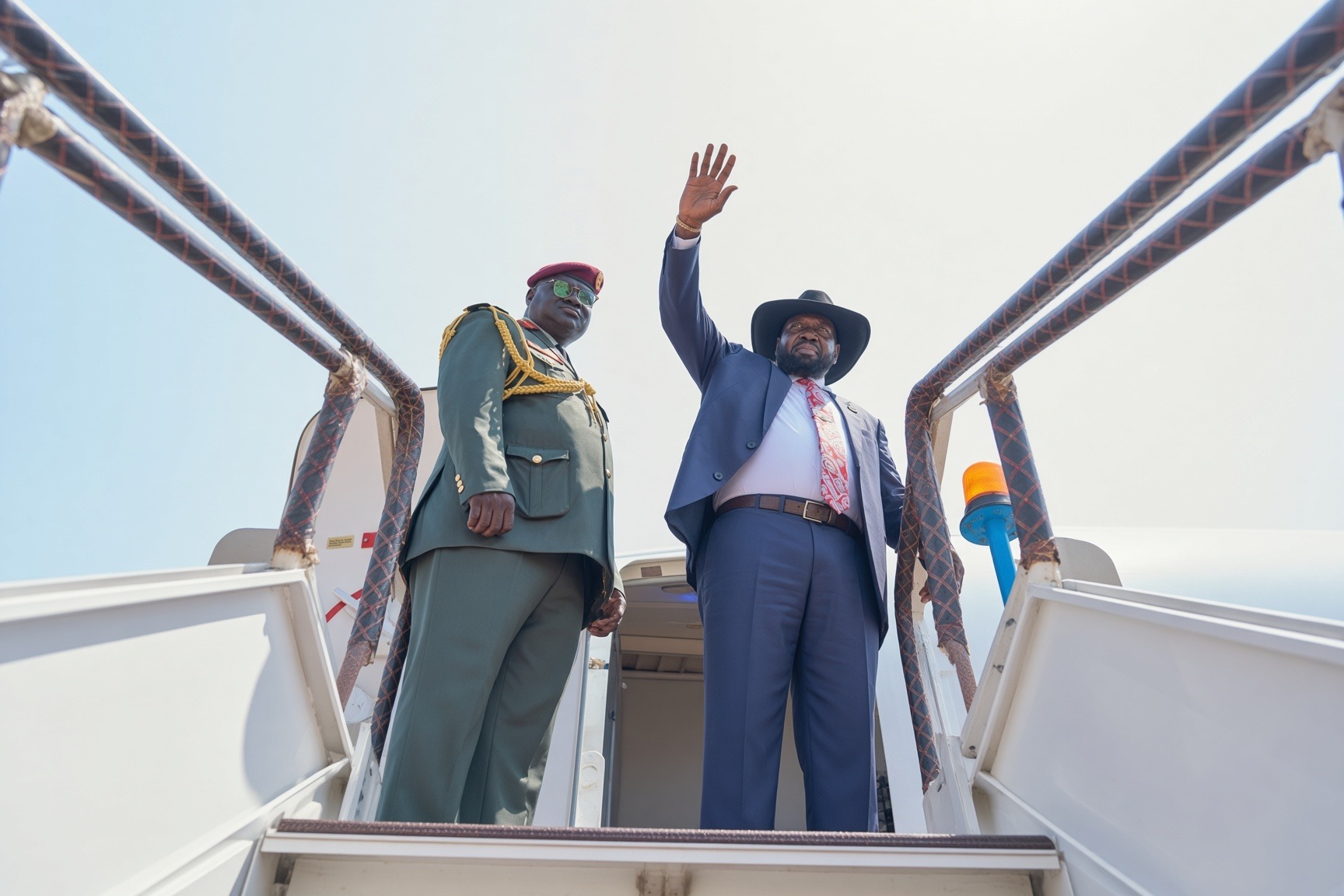
South Sudan’s security challenges are putting renewed focus on whether the country can deliver elections later this year, as President Salva Kiir travels to South Africa for talks with President Cyril Ramaphosa.
Kiir’s visit comes as South Sudan continues to grapple with political tensions, concerns over the implementation of its revitalised peace agreement and attacks that have highlighted the risks facing the country.
Ramaphosa, who chairs the African Union Committee on South Sudan, is expected to use the talks to assess progress towards political stability and the implementation of the peace deal.
Peacekeepers killed in South Sudan
The security environment was brought into sharp focus by the deaths of two Ethiopian UN peacekeepers in an ambush in South Sudan.
The incident highlights the dangers facing personnel deployed to support peace and stability in the country and raises broader concerns about the security conditions ahead of the planned elections.
The deaths come at a sensitive time for South Sudan, where political disagreements remain unresolved and the peace agreement continues to face challenges.
Elections face a difficult road
South Sudan is expected to hold elections later this year, but concerns over the political and security environment could complicate preparations.
The country’s main opposition party has accused the government of violating the revitalised peace agreement, raising questions about whether sufficient political consensus exists for a credible electoral process.
For elections to contribute to long-term stability, political parties will need to have confidence in the process and communities will need to feel secure enough to participate.
Continued instability could make that significantly more difficult.
AU engagement intensifies
The African Union has remained closely involved in efforts to support South Sudan’s peace process.
Earlier this year, the AU High-Level Ad Hoc Committee, comprising five countries, met with South Sudan’s government on the margins of the AU Assembly of Heads of State and Government in Addis Ababa.
The committee’s continued engagement reflects concern that unresolved political tensions could undermine the country’s transition.
As chair of the AU Committee on South Sudan, Ramaphosa has a central diplomatic role in encouraging Kiir’s government and other political actors to honour their commitments under the peace agreement.
A test for regional diplomacy
Kiir’s discussions with Ramaphosa will therefore come under scrutiny as South Sudan approaches another potential turning point.
The immediate challenge is to maintain security while addressing disagreements between the government and opposition.
The longer-term challenge is to ensure that elections do not become another source of instability.
South Sudan has spent years attempting to emerge from conflict, making the implementation of the peace agreement crucial to its political future.
The killing of UN peacekeepers serves as a reminder that the country’s transition remains vulnerable.
For the AU and neighbouring states, the priority will be preventing political disputes and security incidents from derailing the electoral timetable.