

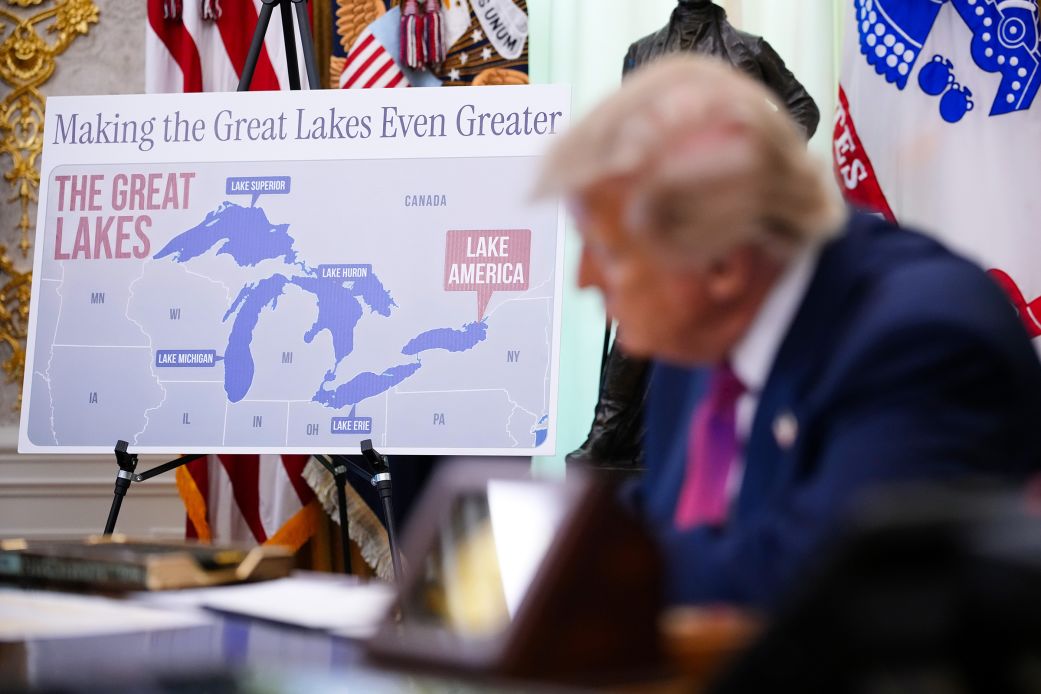
US President Donald Trump has signed an executive order directing the renaming of Lake Ontario to Lake America, in a move that has added another layer of tension to already strained relations between the United States and Canada.
Trump signed the order on Thursday, 27 August 2026, directing the US Department of the Interior and the Board on Geographic Names to update federal records and maps to reflect the new name. The changes are expected to be implemented within 30 days.
The order applies to the US government’s official geographic records. It does not have the power to force Canada, international organisations or other countries to adopt the new designation.
Canada refuses to adopt ‘Lake America’
Canadian Prime Minister Mark Carney has rejected the renaming, saying Canadians will continue to call the body of water Lake Ontario.
The lake’s name has deep historical significance, with “Ontario” having Indigenous origins. Canadian officials have stressed that the historic name will remain in use in Canada despite Washington’s decision.
The lake straddles the US-Canada border, with New York State on its southern and eastern shores and Ontario on its northern and western shores.
Move comes amid trade tensions
The renaming comes at a particularly tense moment between Washington and Ottawa.
The US has imposed 50% tariffs on billions of dollars worth of Canadian imports following the collapse of trade negotiations. Canada has responded with retaliatory tariffs targeting a range of American products.
Trump has repeatedly criticised Canada’s trade policies and has previously suggested that Canada could become the 51st US state.
Although Trump has denied that the renaming is intended as a direct message to Ottawa, the decision has been widely viewed as another symbolic point of friction between the two neighbours.
Trump’s broader renaming campaign
The Lake America order follows Trump’s earlier decision to rename the Gulf of Mexico as the Gulf of America for US federal purposes.
Trump has also suggested that other geographic names could potentially be changed. After signing the Lake America order, he joked that the next step could involve renaming one or both of the Atlantic and Pacific oceans.
The administration says the latest order is intended to recognise the United States’ historical, economic and strategic relationship with the Great Lakes.
According to the White House, the US has invested billions of dollars in protecting the Great Lakes ecosystem and provides much of the ice-breaking capacity used to keep commercial shipping routes open.
What will actually change?
For Americans, the immediate change will largely concern federal government records, maps and official communications.
The executive order instructs federal agencies to replace references to Lake Ontario with Lake America and directs the Geographic Names Information System to remove the former name from its records.
However, the order cannot determine how Canadians refer to the lake. Nor can it automatically compel private mapping companies, international organisations or foreign governments to recognise the new name.
That means the lake could effectively have different names depending on which side of the border it is being referenced from.
For Canada, the body of water remains Lake Ontario.
For the US federal government, it is now being designated Lake America.
The dispute over the name is therefore unlikely to end with the signing of Trump’s order, and instead risks becoming another visible symbol of the growing political and economic divide between Washington and Ottawa.