


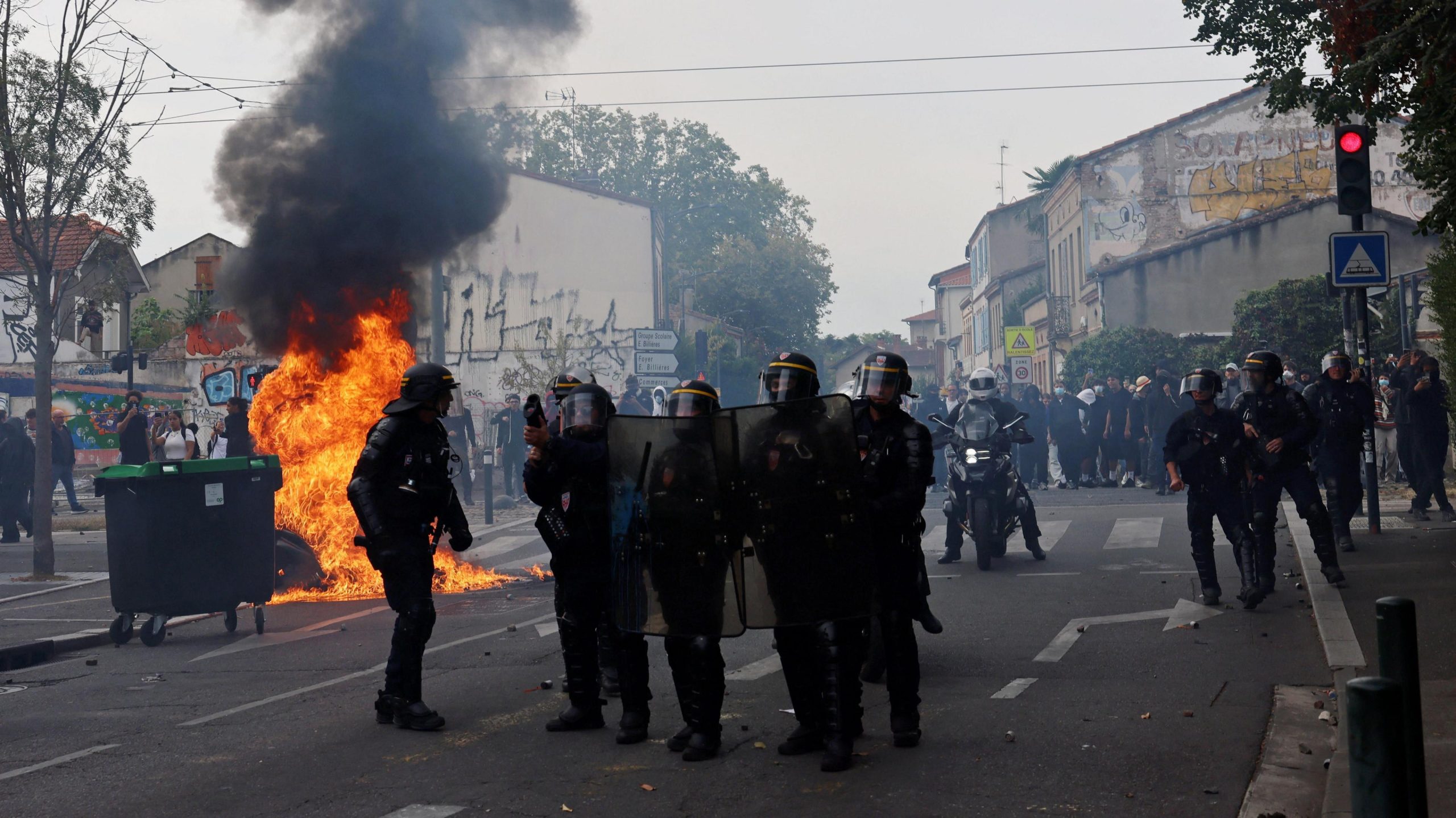
What is happening in France and Spain is not the same protest, nor is it driven by identical grievances. But taken together, the developments offer a useful snapshot of a wider European debate about education: how much governments are willing to invest, what teachers can reasonably be expected to deliver, and whether young people believe the system is preparing them for the future.
In France, a student protest that began in September over teacher shortages has rapidly developed into a nationwide movement. Students have complained about overcrowded classrooms, long school days, inadequate facilities, missing teachers and pressure surrounding access to higher education. The movement has spread well beyond the Paris suburbs where it began, affecting hundreds of schools across the country.
The speed of the mobilisation is significant. What initially appeared to be a local dispute has become a national confrontation involving students, teachers, parents, trade unions and the government. Authorities said hundreds of schools were fully or partially closed on Monday because of protests, damage or security concerns.
There is also a more troubling dimension. Some demonstrations have descended into clashes, property damage and arrests. French authorities say more than 5,000 people have been arrested since the unrest escalated, most of them minors. Students and rights groups, meanwhile, have raised concerns about the police response.
The seriousness of the situation was underlined on Monday when a 15-year-old boy in Lens suffered severe injuries after reportedly picking up a police stun grenade. An investigation has been opened. Separately, authorities are investigating injuries sustained by other young protesters.
None of this makes violence or attacks on schools acceptable. Teachers, pupils and police officers all have a right to safety. But the increasingly confrontational atmosphere risks obscuring the original argument: whether schools have sufficient staff, resources and infrastructure to provide the education students are entitled to receive.
The French government has recognised that some of the students’ complaints are legitimate. Prime Minister Sébastien Lecornu has instructed ministers to address issues including teacher absences, school buildings and the length of the school day, with proposals expected later this month.
The question is whether those commitments will be enough.
Spain is facing its own education tensions
Spain’s situation is different, but the timing is notable. Education protests have been taking place across several autonomous communities, with teachers demanding higher pay, smaller class sizes, more staff and improvements to school infrastructure and working conditions.
Madrid has been a particular focus. Around 20,000 people, according to government delegation figures, demonstrated in the capital on 27 September in support of public education. Teachers, students, families, unions and education groups took part.
The dispute is now moving towards industrial action. Teachers in Madrid have announced an indefinite strike beginning on 14 October, with full-day strikes planned for 14, 15 and 16 October, followed by partial stoppages if no agreement is reached.
Other regions are also experiencing education disputes, meaning Spain’s autumn could see several separate but overlapping campaigns rather than one unified national movement.
Why now?
It would be tempting to reduce both situations to simple dissatisfaction with governments. The reality is more complicated.
Education systems are under pressure from several directions at once. Teacher recruitment and retention have become difficult in some areas. Class sizes, administrative workloads, infrastructure and pay are recurring points of contention. At the same time, governments face competing demands on public spending.
Students also experience education differently from previous generations. Academic pressure, competition for university places, changing labour markets and uncertainty about future employment can make weaknesses in the education system feel particularly consequential.
In France, students have also raised concerns about the higher-education application system and the inequalities they believe it can reinforce.
That helps explain why a dispute over missing teachers can develop into something larger. The immediate complaint may be about a classroom, but the underlying concern can be about what that classroom represents.
What happens this week?
Student groups have called for a national day of action, while trade unions, teachers, parents and university students are expected to participate in demonstrations in support of the high school movement.
Authorities are preparing for further disruption, with hundreds of schools expected to remain fully or partially affected. The government has said restoring order and ensuring safety are priorities, while protesters are demanding more concrete action on education.
That creates a difficult balancing act. A stronger police response could contain disorder but potentially deepen accusations that the government is failing to listen. A more accommodating approach could create space for negotiations, but authorities must still deal with violence, damage and disruption.
In Spain, attention will increasingly turn towards negotiations ahead of the planned Madrid strikes on 14 October. The coming days will therefore be important in determining whether the dispute can be contained through negotiations or develops into a more sustained confrontation.
A moment for listening, not simplification
There is a danger in treating every protest as proof that governments have failed, just as there is a danger in dismissing every protest as youthful disruption.
Both positions overlook the complexity of running a public education system.
Students have legitimate interests in safe schools, effective teaching and a meaningful future. Teachers have legitimate concerns about workload, pay and working conditions. Governments have to consider budgets, competing public priorities and the practical limits of reform.
The sensible response is therefore neither unconditional support for protesters nor automatic support for authorities. It is to examine the evidence, distinguish legitimate grievances from unlawful behaviour and ask whether existing policies are producing the outcomes that governments intend.
France’s experience this week may determine whether a student-led movement becomes a pathway towards negotiations or a deeper confrontation. Spain, meanwhile, faces a slower-building test as planned strikes approach.
The challenge for governments is not simply to restore calm. It is to determine what is driving the anger and whether there are practical, affordable ways of addressing it.
For protesters, the challenge is equally important: turning public attention into constructive negotiations and achievable reforms.