



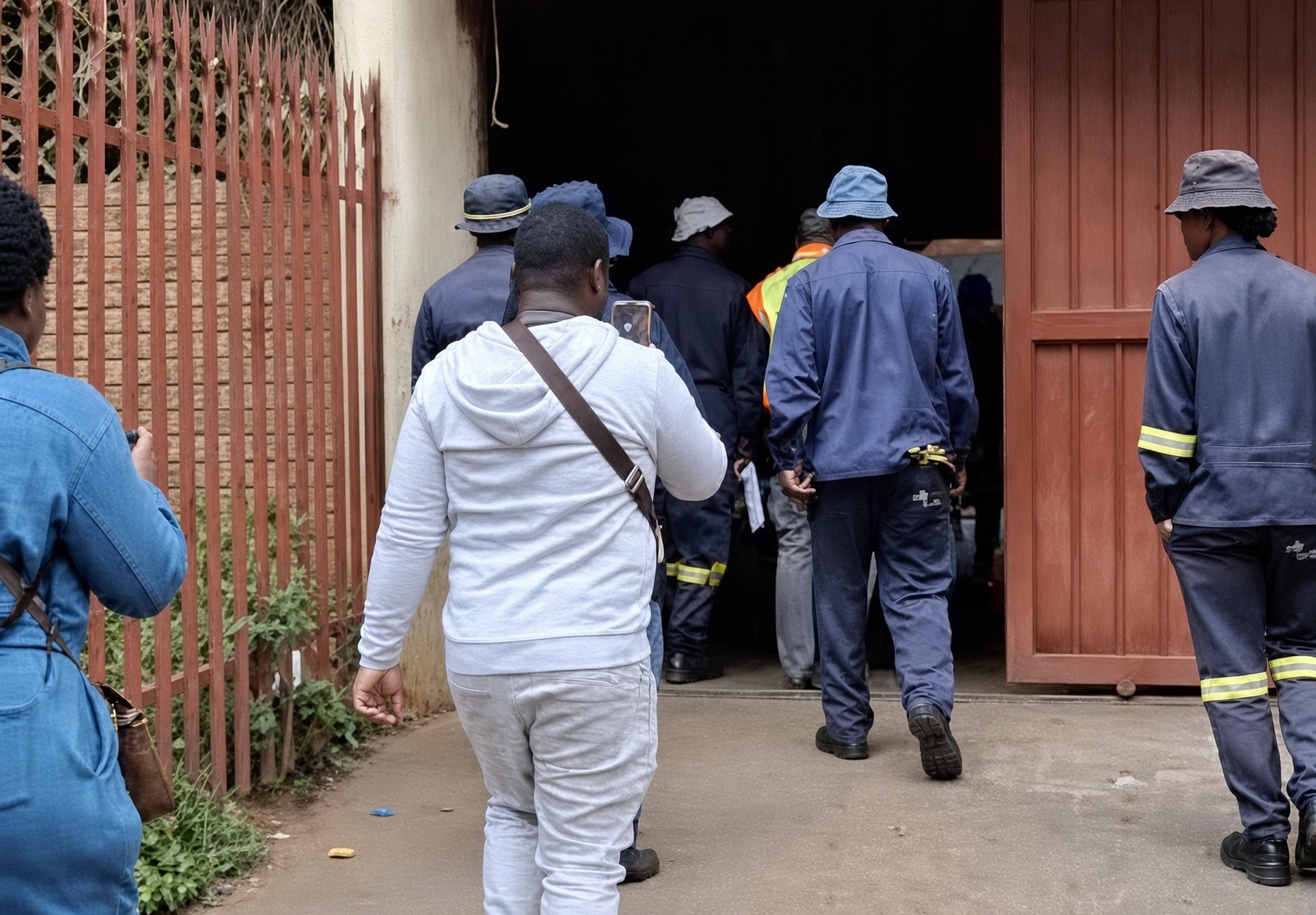
City Power has stepped up its crackdown on hijacked buildings in Johannesburg, targeting 11 properties in the inner city that collectively owe the utility about R15 million.
The utility has identified about 100 hijacked buildings across Johannesburg for possible enforcement operations as it intensifies efforts to recover billions of rand lost through electricity theft.
The operation, conducted on Monday, was supported by the Johannesburg Metropolitan Police Department (JMPD) and ended without incident, according to City Power spokesperson Isaac Mangena.
Mangena said most of the buildings targeted had allegedly been hijacked, with owners either unable or unwilling to settle mounting electricity debts.
In one case, an owner arrived during the operation but told City Power he could not pay the outstanding debt because the building had been hijacked.
The property owed about R4 million.
“He basically indicated he cannot pay the debt because the building was hijacked,” Mangena said.
The owner went as far as encouraging City Power to remove its electricity infrastructure from the property.
“We did disconnect the building. It’s sitting at about R4 million,” Mangena said.
R2bn lost to electricity theft
City Power’s concerns extend beyond unpaid municipal accounts.
Mangena said illegal electricity connections in hijacked buildings were contributing to the utility’s losses, with electricity theft costing City Power about R2 billion a year.
“We really are worried about these bad buildings or hijacked buildings because of the illegality that is actually happening there, including the illegal connections,” he said.
The utility’s crackdown also has a safety dimension.
City Power was identified in the Usindiso building report as one of the entities expected to take action in relation to hijacked and unsafe buildings.
Mangena said the utility had established a dedicated internal department to deal with so-called “bad buildings”.
“That’s why, as City Power, we have an in-house department that is dedicated to dealing with bad buildings or hijacked buildings,” he said.
Tenants allegedly paying syndicates
According to Mangena, some hijacked buildings do not have City Power accounts at all.
In other cases, residents claim they are paying for services to individuals allegedly linked to syndicates operating the buildings.
“We treat them just like we treat informal settlements,” he said.
City Power is now identifying about 100 hijacked buildings across Johannesburg for possible enforcement operations in the coming months.
Mangena said future operations would involve several City departments because the problems extend beyond electricity.
These could include by-law enforcement, planning and building control, as well as action relating to alleged criminal activity.
No one is being spared
The utility’s revenue drive is not limited to hijacked buildings.
City Power is also targeting customers in formal suburbs who fail to pay their electricity bills.
Mangena named Dainfern, Midrand, Ruimsig and Roodepoort among the areas where enforcement operations will be intensified.
He said the utility would pursue customers who have the means to pay but only settle their accounts when officials arrive to enforce payment.
“You know that those actually have got money to pay, but they just decide not to pay. They will pay when you knock at the door. So we will go out to ensure that we collect every cent,” Mangena said.
City Power says improved revenue collection is critical to its ability to maintain the electricity network, purchase equipment and pay technicians responding to outages.
The utility’s latest operation forms part of a broader revenue recovery campaign aimed at reducing electricity theft and ensuring that customers pay for the electricity they consume.

