


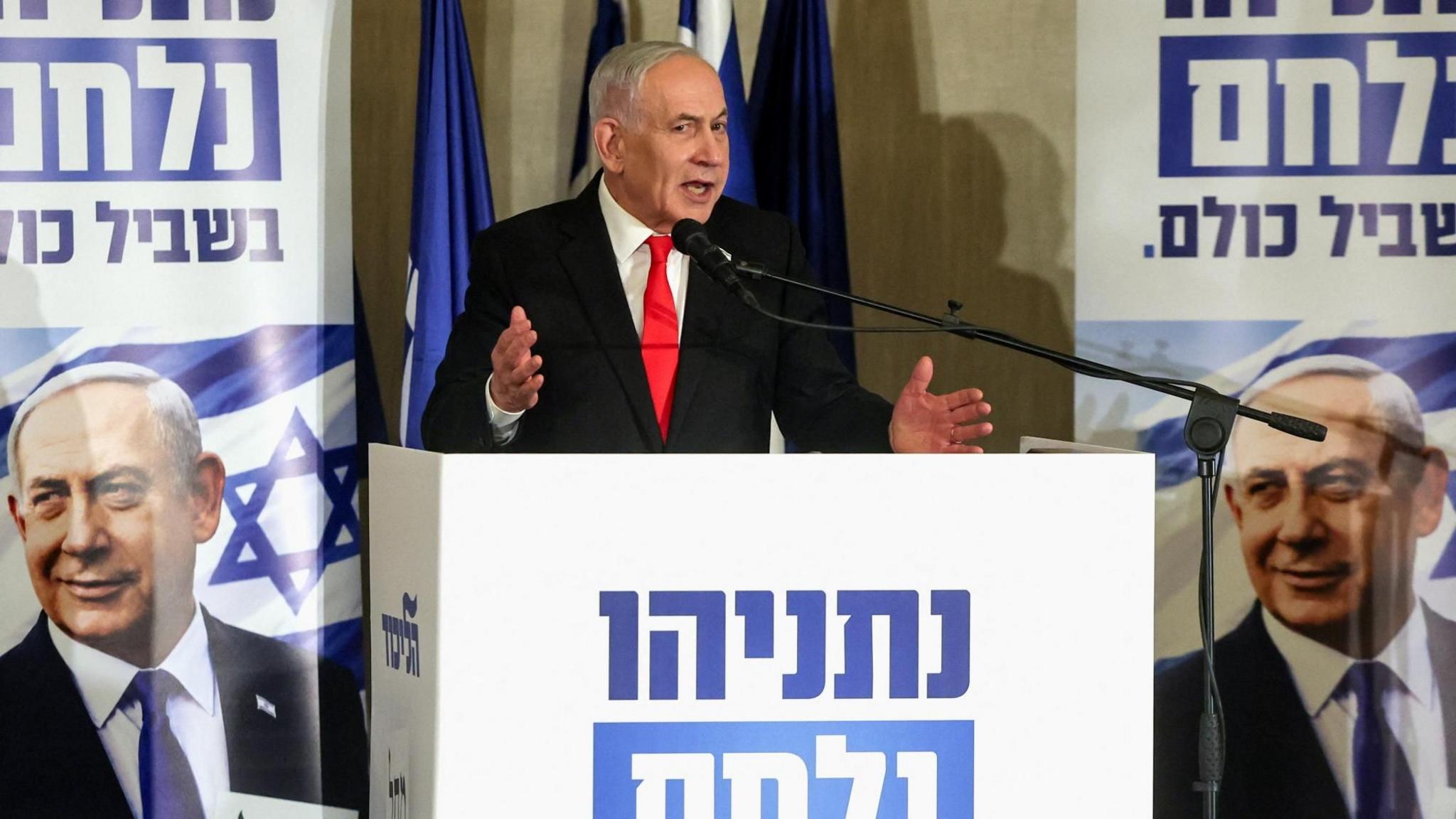
Benjamin Netanyahu is set to remain Israel’s caretaker prime minister as the country awaits final election results, with neither his bloc nor its main rival securing the parliamentary majority needed to form a government.
According to figures reported by Sky News on 28 October 2026, Netanyahu’s Likud-led bloc was projected to win 53 seats, while the opposition bloc led by former military chief Gadi Eisenkot was projected to secure 48 seats, with more than 85% of votes counted.
A majority of 61 seats is required in Israel’s 120-seat Knesset. The Arab-led parties were projected to hold the remaining seats, potentially giving them significant influence in efforts to form the next government.
However, cooperation with Arab parties remains politically contentious, with major political figures divided over whether they should be included in a governing coalition.
Coalition Negotiations Expected
Political negotiations are expected to intensify as parties seek a path towards forming a government. Yair Golan, leader of the Democrats, said he planned to meet several political leaders as discussions over a possible coalition began.
Netanyahu has called for a right-wing government, while Eisenkot has argued that voters have expressed a desire for political change. Neither bloc had secured the required majority based on the projections reported.
Israeli President Isaac Herzog has urged political parties to do everything possible to avoid another election. He is expected to consult parliamentary factions after receiving the official results.
The final outcome remains uncertain, with coalition negotiations likely to play a decisive role in determining Israel’s next government.
Hundreds of Thousands of Votes Still to Be Counted
The Israeli Central Elections Committee reportedly said between 430,000 and 480,000 double-envelope ballots had been cast and were yet to be counted.
These ballots are used by eligible voters who cannot vote at their designated polling stations, including soldiers, hospital patients, election workers and people with limited mobility.
The votes undergo additional checks to confirm voters’ eligibility and ensure they have not voted elsewhere before the ballots are counted. Their inclusion could affect the final seat allocation.
Election Uncertainty Hits Financial Markets
The uncertainty surrounding government formation has also weighed on Israel’s financial markets.
Sky News reported that the shekel weakened by approximately 1.6% against the US dollar, while major Tel Aviv stock market indexes fell by more than 3%.
The political uncertainty comes amid continuing regional tensions. The report also cited Palestinian health officials who said Israeli strikes in Gaza had killed at least four people and injured more than 20 on 28 October. Israel’s military had not responded to a Reuters request for comment at the time of the report.
With the final votes still being counted, Israel faces a period of political negotiations as rival blocs seek the support needed to form a government.