


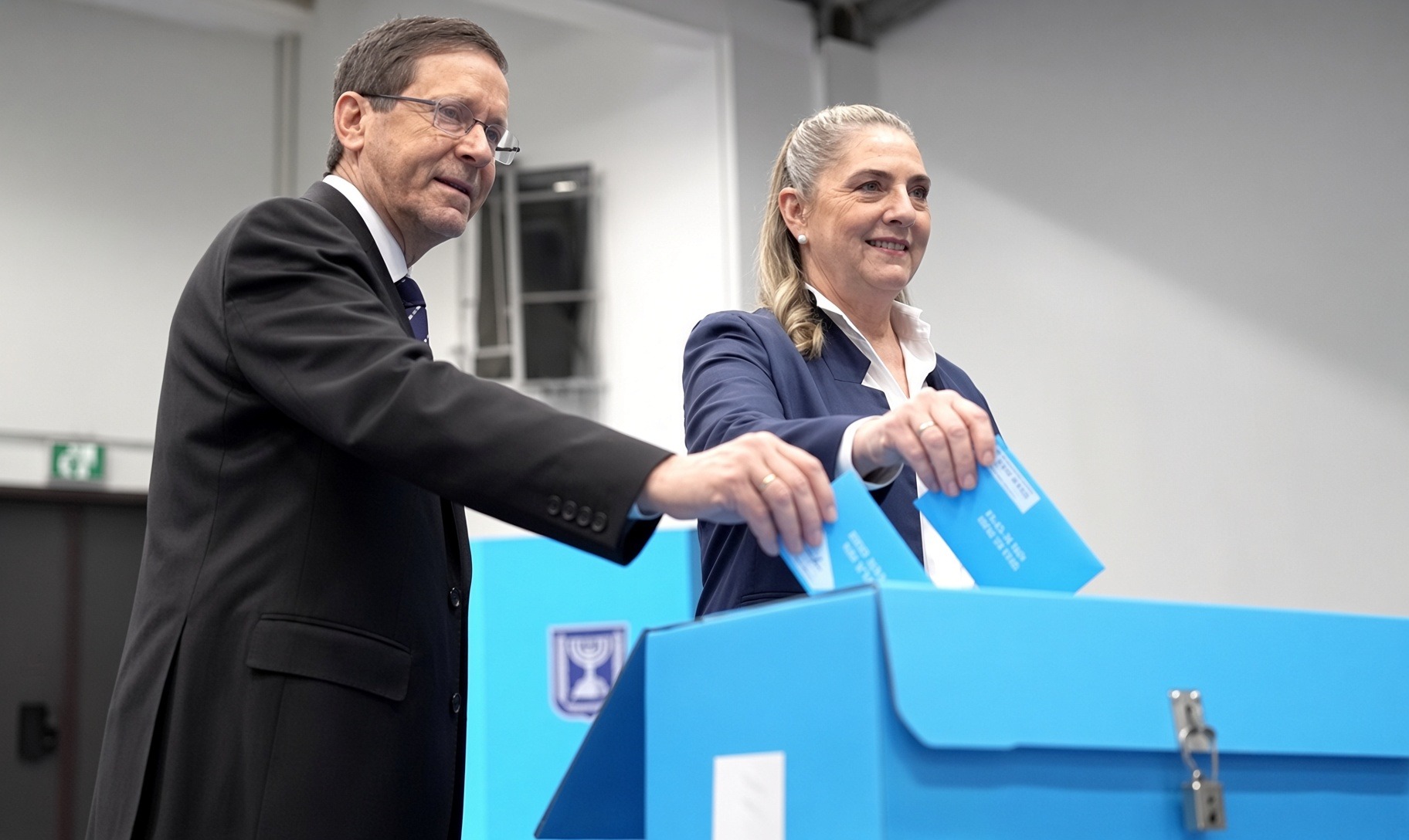
Israeli President Isaac Herzog cast his ballot at a polling station in Jerusalem on Tuesday as voters headed to the polls in a closely contested parliamentary election that could reshape the country’s political leadership.
Prime Minister Benjamin Netanyahu’s Likud party and its right-wing allies are facing a challenge from an opposition alliance led by Gadi Eisenkot, a former military chief of staff whose political support spans parts of the centre and right.
The election comes after a period of intense political, military and social upheaval in Israel, with voters weighing the government’s handling of national security, the consequences of the October 7, 2023, Hamas-led attacks and the subsequent war in Gaza.
Netanyahu’s Leadership Under Scrutiny
Netanyahu, Israel’s longest-serving prime minister, is seeking to retain power amid public debate over the security failures surrounding the October 7 attacks, the conduct of the war in Gaza and the government’s domestic policies.
His supporters have emphasised security and his government’s approach to regional threats. Critics have called for greater accountability over the attacks and questioned the government’s handling of the conflict and its wider consequences.
Eisenkot, meanwhile, has emerged as a leading opposition figure, campaigning against Netanyahu’s continued leadership and seeking support from voters concerned about security, government accountability and the country’s future direction.
Coalition Talks Could Determine the Outcome
Israel’s proportional electoral system makes coalition-building central to the formation of a government. The Knesset has 120 seats, and a governing coalition generally needs the support of at least 61 lawmakers to secure a parliamentary majority.
Pre-election polling indicated a closely contested race, with neither political camp assured of securing enough seats to govern independently of potential coalition partners.
The final distribution of seats and negotiations with smaller parties are therefore expected to play a decisive role in determining who will lead the next government.
War and Domestic Divisions Shape the Campaign
The election is the first national parliamentary vote since the Hamas-led attacks of October 7, 2023, and the ensuing war in Gaza.
The conflict has had profound consequences for Israelis and Palestinians, while also intensifying international scrutiny of Israel’s military operations and policies.
Other issues influencing the campaign include military service obligations, the role of ultra-Orthodox parties, relations with international partners and calls for an official inquiry into the security failures surrounding the October 7 attacks.
What Happens Next?
Polling stations are scheduled to close at 10 p.m. local time on Tuesday, after which broadcasters are expected to publish exit polls offering preliminary indications of the result.
Official vote counting and the allocation of parliamentary seats will provide a clearer picture of the political balance. If neither camp can secure sufficient support, negotiations to assemble a governing coalition could continue for weeks.
The election represents a significant moment for Israel as voters consider the country’s security priorities, domestic divisions and political leadership following three years of conflict and uncertainty.
The final outcome will depend not only on the number of seats won by individual parties but also on their ability to negotiate the parliamentary support required to form a government.