


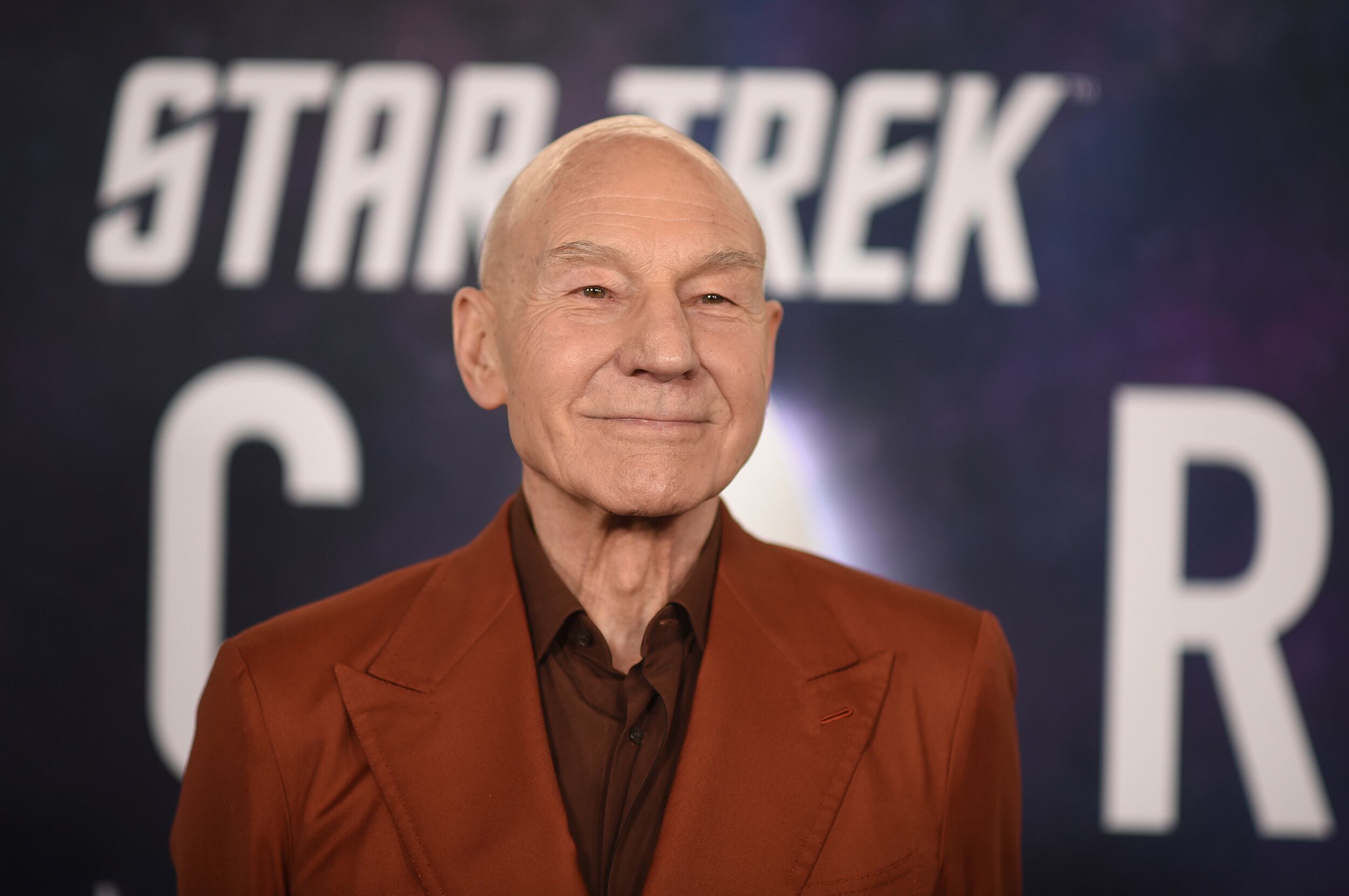
Patrick Stewart’s journey from a difficult childhood in an industrial town in West Yorkshire to international stardom was anything but conventional.
The acclaimed British actor, who became a household name as Captain Jean-Luc Picard in Star Trek: The Next Generation and later portrayed Professor X in the X-Men franchise, has died aged 86.
Stewart died at his home in Los Angeles on Wednesday. His death, attributed to Alzheimer’s disease and Lewy body dementia, was announced on social media.
Behind the commanding voice and distinguished acting career was a childhood marked by financial hardship and domestic violence — experiences that would remain part of his personal story throughout his life.
Born on 13 July 1940 in Mirfield, West Yorkshire, Stewart was the youngest of three sons. His father, Alfred, was a former regimental sergeant major in the British Army who later worked as a semi-skilled labourer. His mother, Gladys, was a weaver at a textile factory.
The family struggled financially, living in a small house without running hot water. Their bathroom was a communal outhouse outside, where Stewart found a quiet corner to read.
His childhood was also affected by his father’s alcoholism and repeated physical abuse of his mother. Stewart later spoke openly about witnessing the violence and the fear that shaped his early years.
In a 2009 article for The Guardian, he recalled: “I knew exactly when to insert a small body between the fist and her face, a skill no child should ever have to learn.”
Despite these circumstances, an early encounter with drama helped set him on a different path.
At the age of 12, his English teacher, Cecil Dormand, introduced him to Shakespeare by asking him to read the role of Shylock in The Merchant of Venice. The teacher became a lifelong friend, while Stewart’s involvement in local drama groups helped develop his interest in acting.
After leaving secondary school at 15, Stewart briefly worked as a junior newspaper reporter before becoming a furniture salesman. He eventually secured a scholarship to study at the prestigious Bristol Old Vic Theatre School, which accepted him in 1957.
He made his professional acting debut in 1959 as Tom Morgan in Treasure Island, beginning a career that would span theatre, television and film.
Shakespeare before science fiction
Long before audiences knew him as Picard, Stewart had established himself as a respected stage actor.
He joined the Royal Shakespeare Company in 1966 and performed in productions of some of the playwright’s best-known works, including Hamlet, King Lear, The Taming of the Shrew and Troilus and Cressida.
His stage achievements included Olivier Awards for his performances in Antony and Cleopatra (1979) and Hamlet (2009). He also received recognition for his role in Edward Albee’s Who’s Afraid of Virginia Woolf?
Stewart made his Broadway debut in 1971 in Peter Brook’s production of A Midsummer Night’s Dream. He later returned to Broadway in a solo production of A Christmas Carol, which earned him a Drama Desk Award for Outstanding Solo Performance.
His television work during the 1970s included roles in Fall of Eagles, The Gathering Storm, North and South and I, Claudius. He also appeared in adaptations of John le Carré’s Tinker Tailor Soldier Spy and Smiley’s People.
Despite his growing reputation, international fame took time to arrive.
The role that changed everything
Stewart was in Los Angeles conducting Shakespeare masterclasses when a television producer involved in developing a new Star Trek series saw him perform and encouraged him to audition.
He knew very little about the franchise and was initially surprised when he was offered the role of Captain Jean-Luc Picard.
The character was a middle-aged, thoughtful and composed captain with a French name and a British accent — an unusual choice for a science-fiction television hero.
But when Star Trek: The Next Generation premiered in 1987, Stewart’s portrayal of Picard helped make the series a major success.
Over seven seasons, Picard became known for his measured leadership, intellectual approach and memorable commands, including “Engage!” and “Make it so”.
Stewart reprised the role in four feature films and later returned to the character in the television series Star Trek: Picard, which ran for three seasons from 2020.
The success of the franchise introduced him to audiences far beyond the theatre world and established him as one of television’s most recognisable actors.
Stewart also demonstrated his versatility through his portrayal of Charles Xavier, or Professor X, in the X-Men films. The character, a powerful telepath who leads a group of mutants, became another defining role in his screen career.
His film credits also included David Lynch’s Dune (1984), while his television performances ranged from historical figures to literary characters.
A serious actor with a playful side
Although Stewart became closely associated with Picard’s calm authority, he also embraced comedy.
He appeared as King Richard in Mel Brooks’s Robin Hood: Men in Tights and voiced Avery Bullock in the animated series American Dad!.
He also made appearances in The Simpsons and Sesame Street, and hosted Saturday Night Live in 1994.
His theatre career continued alongside his screen work. In 2013, he reunited with close friend Ian McKellen for productions of Samuel Beckett’s Waiting for Godot and Harold Pinter’s No Man’s Land.
He later voiced Sir Ritchfield, a wise old ram, in The Sheep Detectives (2026), one of his final screen performances.
A complicated personal life and lasting legacy
Stewart’s personal life included two divorces and a later marriage to American singer Sunny Ozell.
He married choreographer Sheila Falconer in 1966, and they had two children before divorcing in 1990. His second marriage, to American producer Wendy Neuss, also ended in divorce.
In his memoir, Stewart acknowledged that affairs with younger women had contributed to the breakdown of both marriages, describing them as his greatest regret despite a life filled with professional success.
He married Ozell in 2013. His close friend and fellow actor Ian McKellen officiated at the informal ceremony in Berkeley, California.
Stewart is survived by Ozell, his son Daniel, who is also an actor, and his daughter Sophie.
In 2010, he was knighted, receiving the title Sir Patrick in recognition of his contribution to drama.
Yet his achievements were not limited to awards, honours or famous screen characters. His career bridged classical theatre and popular entertainment, demonstrating that an actor could move between Shakespearean productions, science-fiction franchises and comedy without abandoning his craft.
In his 2023 memoir, Making It So, Stewart reflected on the importance of acting in his life.
“Acting was the thing that made me happy when I was 13 years old,” he wrote, “and that is still the case 70 years later.”
He added that he still had more work to do and more characters he wanted to bring to life.
From the young boy who discovered Shakespeare in a Yorkshire classroom to the actor whose voice became familiar to millions around the world, Stewart leaves behind a legacy that stretches across generations and genres.