



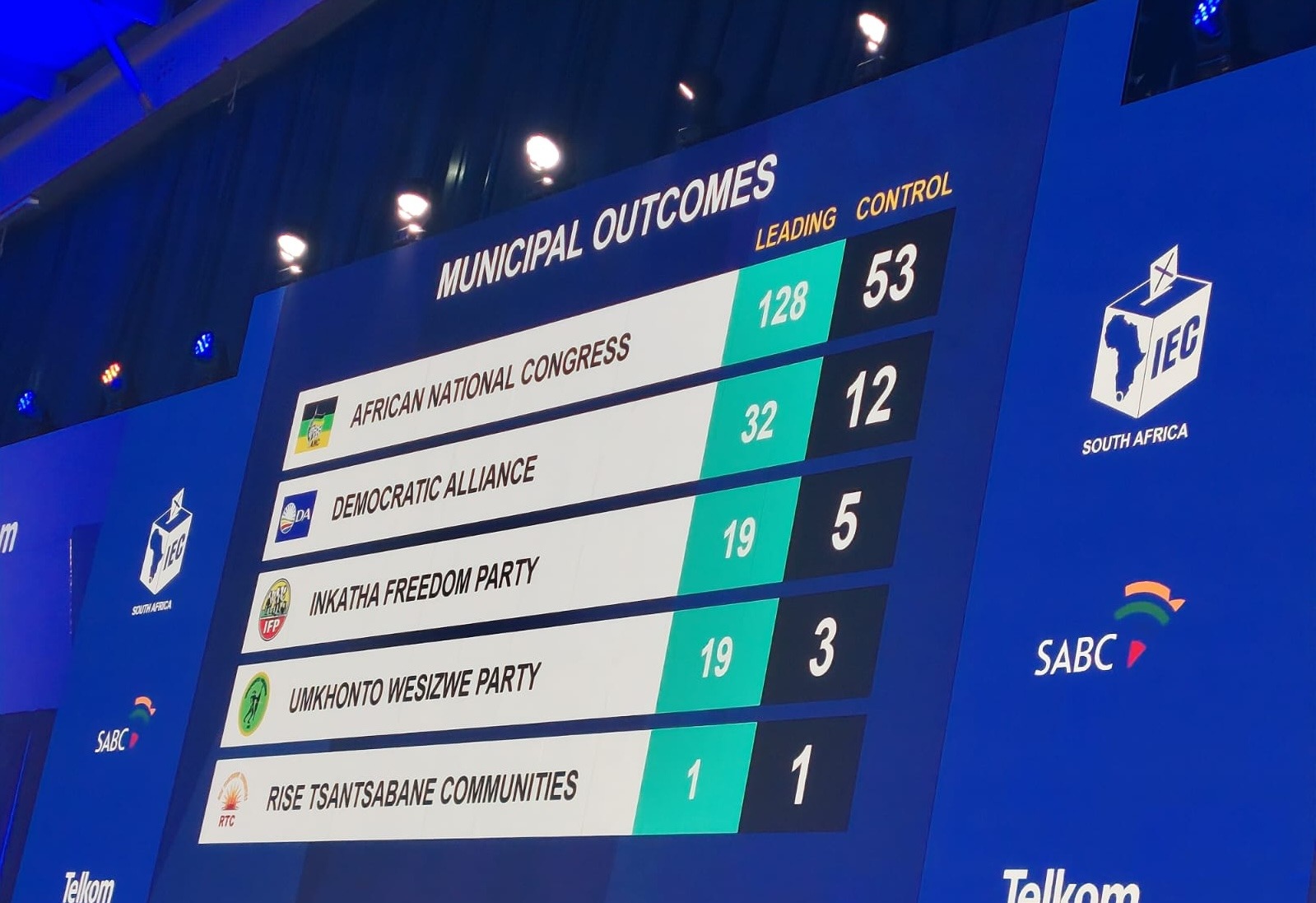
The Electoral Commission of South Africa (IEC) has welcomed the Human Sciences Research Council’s (HSRC) Election Satisfaction Survey (ESS), which assessed voters’ experiences and perceptions of the electoral process during the local government elections held on 4 November.
The HSRC reported that an overwhelming majority of voters regarded South Africa’s 2026 Local Government Elections as free and fair, with 90% expressing confidence that the electoral procedures were free and 91% satisfied that they were fair.
Speaking at the official declaration of the election results, IEC Chairperson Mosotho Moepya welcomed the findings, saying they reflected continued confidence in the country’s electoral processes.
“The findings of this survey are truly interesting. Firstly, it found that electoral integrity remains strong in this nation, at a score of 90%. It found that the freeness and fairness of elections were rated at 91%. It also found that 95% of voters were satisfied with the services rendered by the Commission on the day, and that 91% of them queued for less than 30 minutes. We do not take these findings for granted,” said Moepya.
He also commended voters for expressing confidence in the IEC, citing its perceived professionalism, competence, fairness and impartiality, as well as the accuracy of vote counting and the Commission’s track record in administering elections.
Moepya compared the conduct of elections in a democracy to the work of an orchestra, highlighting the coordination required to ensure a successful process.
“Conducting an election in a democracy is akin to conducting an orchestra. It is about bringing together many different instruments, talents, voices and temperaments. Each has its own contribution to make, and when put together, they produce something truly remarkable,” he said.
Meanwhile, HSRC researcher Dr Benjamin Roberts said that, despite the largely positive assessments of the electoral process, the survey highlighted a gradual decline in public trust in the IEC.
“Trust in the Commission stood at 81% in 2026, down from 85% in 2024, 89% in 2021 and 93% in 2019. In 2016, it stood at 91%,” he said.
The survey found that 5% of voters said they distrusted or strongly distrusted the Commission, while 14% were neutral, uncertain or declined to respond.
The findings also revealed provincial differences in levels of trust in the IEC.
The Eastern Cape recorded the highest level of trust at 87%, followed by the Northern Cape at 85%, the Free State at 84% and the Western Cape at 83%.
Trust stood at 81% in Mpumalanga and 80% in Limpopo, while North West and Gauteng each recorded 79%.
KwaZulu-Natal recorded the lowest level of trust in the Commission, at 72%.
While the survey points to strong voter satisfaction with the administration of the 2026 elections, the decline in trust over recent years highlights the importance of maintaining public confidence in the independence, credibility and impartiality of the electoral process.

