


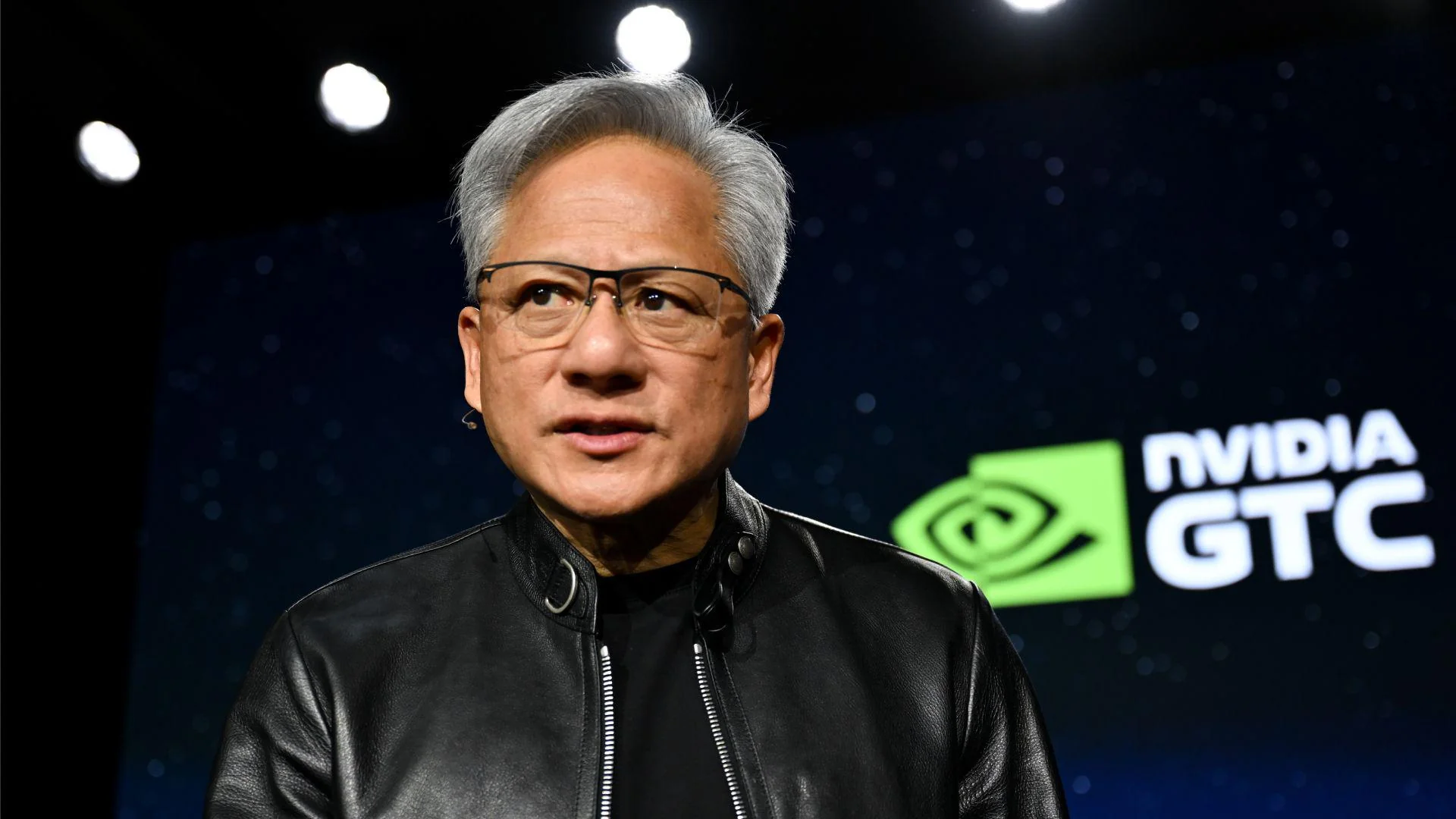
Nvidia has launched an independent investigation into reports that its chief executive, Jensen Huang, was targeted by a suspected Chinese intelligence operation, raising fresh questions about national security and the semiconductor giant’s exposure to geopolitical tensions.
The investigation follows a report by The New York Times that US intelligence officials believed Alice Huang, a Chinese executive linked to Singapore-based data centre company Megaspeed, had been passing information to Beijing.
The report said Alice Huang, also known as Huang Le and unrelated to the Nvidia founder, had developed a close relationship with the 63-year-old executive.
Nvidia’s board confirmed on Sunday that it had opened an inquiry into the allegations, while stressing that it had no reason to believe national security or company secrets had been compromised.
“While the board has no reason to believe that either national security or Nvidia secrets were compromised, the board’s inquiry will examine all available information,” the company said.
The allegations have placed renewed scrutiny on Nvidia, a global leader in the production of semiconductors used to train and operate artificial intelligence models. The company is one of the world’s most valuable businesses and occupies a central position in the technology rivalry between the United States and China.
The US restricts exports to China of its most advanced semiconductor technology, amid concerns that access to high-performance chips could strengthen Beijing’s technological and military capabilities.
The New York Times also reported that Megaspeed had come under scrutiny over suspicions that it may have helped direct Nvidia AI chips to China, citing sources briefed on the matter.
Trump backs Nvidia chief
US President Donald Trump said he had spoken to Huang on Monday and believed him when he said he had no knowledge that Alice Huang was allegedly involved in espionage.
“I asked him that question, ‘Did you have any idea that she was a spy?’ He said, ‘I had no idea that she was a spy,’ and I really believe him,” Trump told reporters during a White House press briefing.
The newspaper reported that Trump had been briefed about intelligence findings concerning Huang’s relationship with the businesswoman approximately a year ago but had chosen not to act.
Trump said on Sunday that he did not regret that decision, describing Huang as “an honorable guy”.
Huang is considered an influential figure in the artificial intelligence industry and an informal adviser to Trump, who has repeatedly argued against excessive regulation of the sector on the grounds that it could give China an advantage.
The president also indicated that Huang could join his upcoming trip to Asia, which includes the Asia-Pacific summit in Shenzhen.
“I don’t know, but I’ll certainly take him,” Trump said when asked whether the Nvidia chief would accompany him.
China rejects espionage allegations
Beijing has dismissed the allegations against Alice Huang.
Chinese Foreign Ministry spokesperson Guo Jiakun described the claims during a regular briefing on Monday as “baseless vilification and smearing”.
The controversy comes ahead of Trump’s planned meeting with Chinese President Xi Jinping at a summit in China later this month, where artificial intelligence and technology competition are expected to feature prominently.
The House Select Committee on China has also asked Jensen Huang to appear in Washington on 18 November for a closed-door briefing on Nvidia’s security protocols.
A letter posted on X said the request followed reports concerning Alice Huang.
Nvidia shares fall amid uncertainty
The allegations have unsettled investors, with Nvidia shares closing more than 4% lower on Monday after falling by nearly 9% earlier in the session.
Technology analyst Dan Ives, of investment bank Yorkville Ives, described the investigation as a “black eye moment” for Huang.
He warned that the matter could lead to multiple congressional inquiries and create uncertainty around the company’s stock.
Ives said Huang was likely to remain in his position in the near term, although his future as chief executive could depend on the outcome of the investigation.
George Chen, partner and chair of digital practice at The Asia Group, urged caution before drawing conclusions about the Nvidia chief.
“It would be premature to conclude that Jensen poses a threat to US national security before the facts are fully established,” Chen told AFP.
“Once you become famous, you will naturally become a target,” he added.
Separately, Huang acknowledged in a message to Nvidia employees released on Sunday that he had been unfaithful to his wife.
“My actions hurt her and our children. There is no excuse for what I did. I am deeply sorry,” he said.
The admission has added a personal dimension to the controversy, but the central questions for Nvidia and US officials concern the alleged intelligence operation, whether sensitive information was exposed and what the board’s investigation will establish.