



South African politics is currently witnessing an interesting debate about coalition negotiations and the role of voters in determining which parties work together after an election.
Some voters who supported parties led by individuals with highly centralised leadership structures are expressing dissatisfaction with those leaders’ decisions to engage the EFF and the ANC in coalition discussions.
This raises an important question: to what extent can voters expect to influence coalition decisions when they have supported political parties whose internal structures offer limited opportunities for members to hold their leaders accountable?
Voters who supported ActionSA, the Patriotic Alliance (PA), the African Transformation Movement (ATM) and other relatively new or smaller parties with limited internal democratic processes may find themselves with little influence over decisions made by their respective leaderships.
These parties have nevertheless attracted electoral support and, following the recent local government elections, have emerged as potential kingmakers in some of the 127 councils where no party secured an outright majority.
Does voting for a political party automatically make that party accountable to its supporters? Ideally, the answer should be yes. However, the relationship between voters and parties with highly centralised leadership structures is more complicated.
It is difficult for supporters to demand meaningful participation in coalition decisions when the parties they support have not necessarily established mechanisms for members to influence major organisational decisions.
The Patriotic Alliance, for example, is led by Gayton McKenzie, who has considerable influence over the party’s direction. His deputy, Kenny Kunene, is also an influential figure. Questions have therefore been raised about the extent to which ordinary party members can challenge leadership decisions or hold those at the top accountable.
There is no established tradition of competitive party conferences through which members can elect or remove the leadership in the same way that happens in some other political organisations.
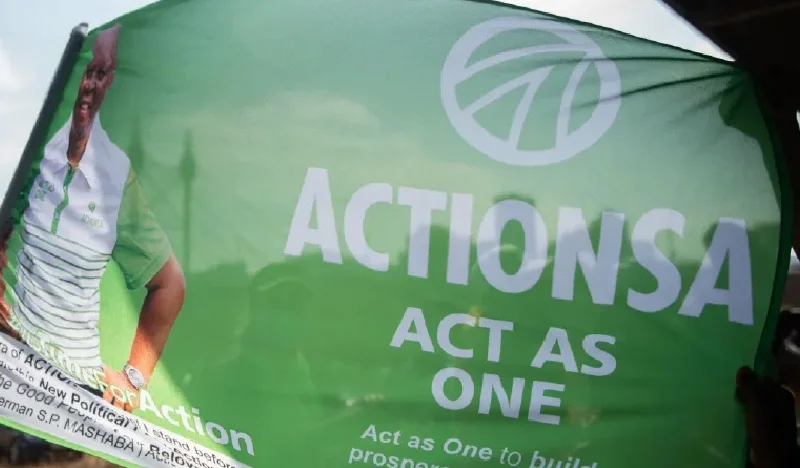
Similarly, ActionSA leader Herman Mashaba has spoken openly about his involvement in appointing individuals to positions within the party, including the selection of candidates for the recent local government elections.
Mashaba has not been particularly reluctant to discuss his approach. At the IEC National Results Centre, he told journalists about his personal involvement in deciding who leads, who gets deployed and who is removed from positions.
His comments raise questions about the extent of internal democracy within ActionSA and the role ordinary members play in determining the party’s direction.
This makes the current reaction among some ActionSA supporters particularly interesting.
You knew what you were voting for
When voters supported ActionSA, they were also endorsing a party whose leadership structure gives considerable authority to its founder and president.
When they voted for the PA, they supported a party in which McKenzie has significant influence over its political direction.
Similarly, voters who supported the ATM backed a party whose leadership structure has also attracted questions about internal accountability.
These organisational arrangements were not necessarily hidden from the public during the election campaign.
Now, following the elections, when Mashaba engages the EFF or the ANC in discussions about possible coalition arrangements in Johannesburg, Tshwane or Ekurhuleni, some supporters expect to have a direct say in those negotiations.
They want consultation, members’ meetings and greater participation in decisions about which parties their representatives should work with.
The question, however, is whether the organisational structures of these parties provide meaningful channels through which such demands can be accommodated.
Democracy should not be selective
Political accountability should not become important only when party decisions conflict with the preferences of voters.
In the ANC, DA, EFF, ACDP, PAC, UDM and IFP, among others, there are established organisational structures through which members can, at least in principle, challenge leaders, participate in conferences and influence leadership decisions.
These structures do not always function perfectly, and internal democracy remains a challenge across the political spectrum. Nevertheless, they provide formal mechanisms through which leadership can be contested.
In parties such as ActionSA and the PA, leadership authority appears considerably more centralised.
This raises a broader question about the nature of political parties and whether their supporters have sufficient influence over the decisions taken in their name.
A political party should ideally be more than an electoral vehicle built around the personality and preferences of its founder. It should have functioning structures that allow members to participate in decision-making and hold leaders accountable.
Voters must take responsibility for their choices
This argument is not necessarily about whether Mashaba should or should not negotiate with the EFF or the ANC. Political parties are entitled to engage with one another and explore coalition arrangements in the interests of forming governments.
Rather, the issue is the expectations voters place on political organisations and their leadership.
Those who prioritise consultation and internal democracy should consider these factors when choosing which political party to support.
It is difficult to demand democratic participation in coalition negotiations without also paying attention to the democratic processes within the party itself.
Ultimately, voters must consider the organisational character of the parties they support, rather than evaluating them exclusively on campaign promises, personalities or electoral performances.
Supporting a party with highly centralised leadership structures may mean accepting that important decisions will be made by a relatively small group of individuals.
That does not mean voters should remain silent or abandon their right to demand accountability. Rather, it highlights the importance of making informed political choices.
If voters support highly centralised leadership structures, they should also consider the implications those structures may have for their influence after election day.
Should South Africa reconsider its electoral system?
As some voters express dissatisfaction with coalition negotiations, suggestions have emerged that South Africa should review its electoral laws.
One proposal is to introduce a system in which elections are repeated in municipalities where no political party secures an outright majority. Under such an arrangement, voters would return to the ballot box to make a further choice rather than leaving the formation of a municipal government to post-election coalition negotiations.
Supporters of this proposal argue that it would give citizens another opportunity to indicate which political parties they want to govern, rather than allowing the outcome to be determined largely through negotiations between party leaders.
There is certainly room for a broader national conversation about the country’s electoral system and whether alternative arrangements could improve democratic accountability.
The IEC and Parliament could provide platforms for such discussions, including consideration of proposals from members of the public.
However, under the current electoral framework, political parties are entitled to negotiate coalition agreements and establish governing arrangements where no party has secured an outright majority.
Coalition politics is therefore part of the democratic process, whether voters are comfortable with the outcomes or not.
The bigger question is whether South Africa’s political parties are sufficiently democratic internally to ensure that the people who vote for them have a meaningful voice beyond election day.