


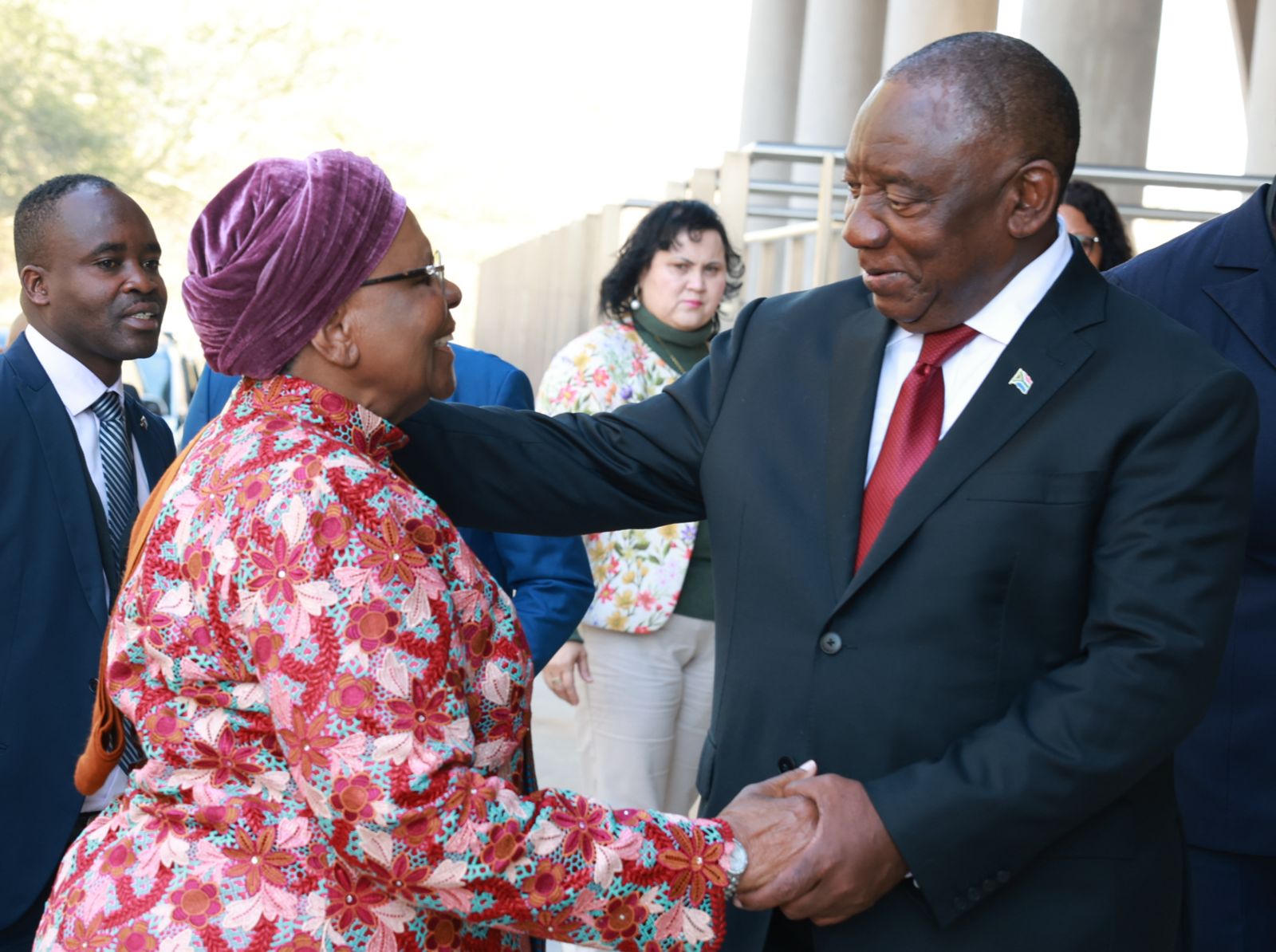
Africa is emerging as a key driver of the global economy as international demand grows for the continent’s critical minerals, energy resources, agricultural potential and strategic partnerships, President Cyril Ramaphosa has said.
Addressing the fourth Session of the South Africa-Namibia Bi-National Commission in Pretoria, Ramaphosa said African nations must move beyond the export of raw materials and ensure that natural resources are leveraged to support industrialisation, innovation, skills development and sustainable economic growth.
Co-chairing the Commission with Namibian President Netumbo Nandi Ndaitwah, Ramaphosa highlighted the shared responsibility of South Africa and Namibia to develop regional value chains that enable African economies to capture greater value from their mineral wealth and other resources.
He said the continent’s future economic success depends on shifting away from a model that has historically seen Africa export raw materials while importing finished products.
“Africa has become central to the future of the global economy. The world increasingly looks to Africa for the critical minerals, energy resources, agricultural potential and strategic partnerships that will shape the industries of the future,” Ramaphosa said.
He argued that the key challenge for African economies is not the availability of resources, but the ability to transform those resources into sustainable economic opportunities for local communities.
“The question before us is whether Africans will be prepared to capture the value that they create,” he said, adding that countries must ensure their natural endowments become catalysts for industrialisation, innovation, skills development and decent job creation.
Ramaphosa said South Africa and Namibia have an opportunity to establish stronger regional supply chains that support local manufacturing and value addition.
“Our objective should be to build regional value chains that produce finished products rather than merely exporting raw materials,” he said.
He warned that Africa’s traditional economic model of exporting minerals and importing manufactured goods has limited the continent’s ability to create industries and address unemployment.
“For far too long, Africa has exported opportunity while importing prosperity. We have exported raw materials and imported manufactured goods. We have created industries elsewhere, while unemployment has remained one of our greatest challenges at home,” Ramaphosa said.
He added that the era of exporting unprocessed minerals must gradually come to an end, with African countries focusing on beneficiation, investment and industrial development.
The South Africa-Namibia Bi-National Commission is expected to strengthen bilateral cooperation while expanding opportunities in trade, investment, energy, mining and industrial development between the two countries.
As global economies compete for access to strategic resources, Ramaphosa said Africa’s ability to develop local industries around its natural assets will determine whether the continent fully benefits from its growing importance in the global economy.