



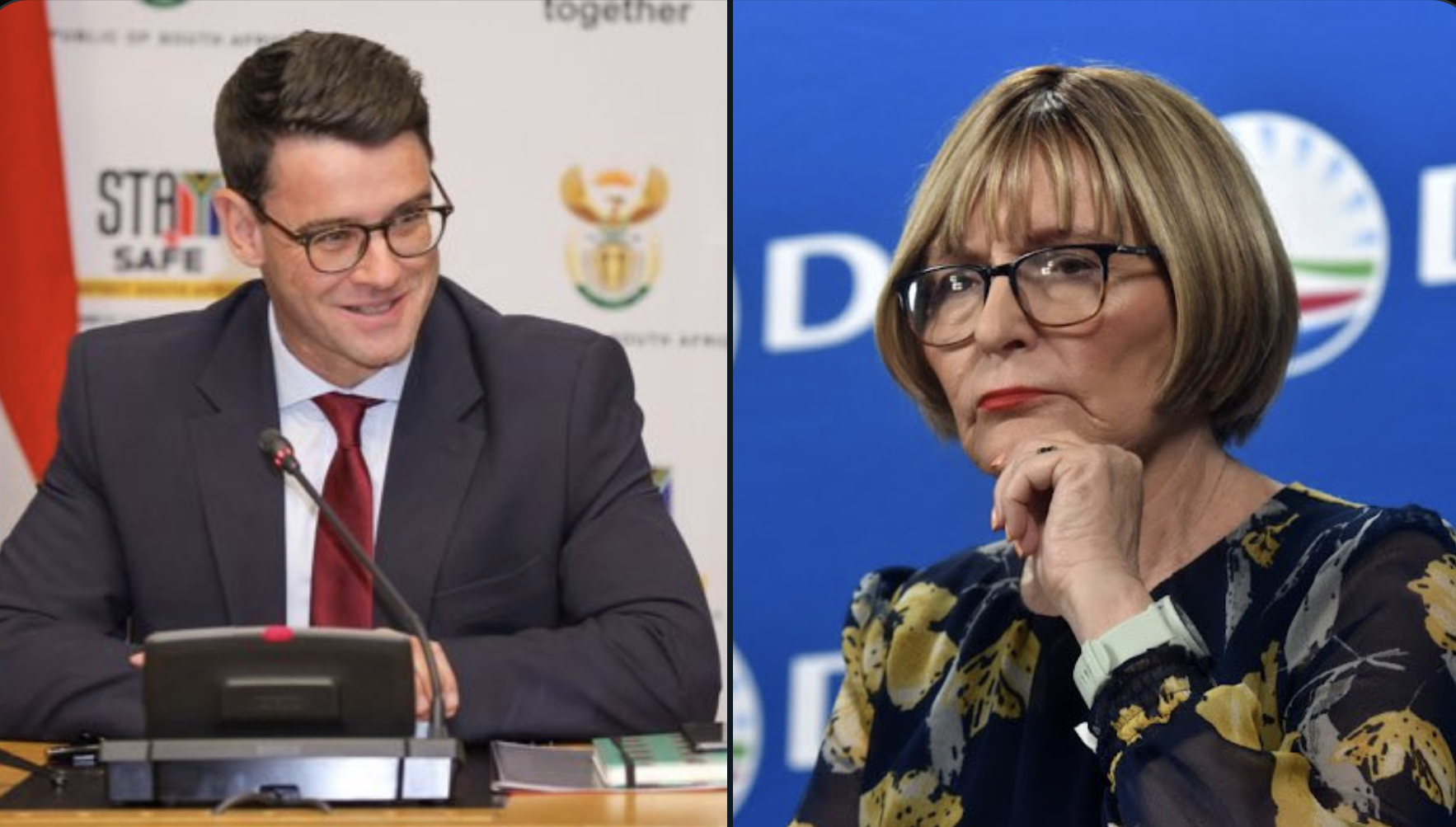
President Cyril Ramaphosa has officially removed Andrew Whitfield, the Deputy Minister of Trade and Industry, from his position—an action that has drawn swift reaction from the Democratic Alliance (DA). The decision comes at a time of heightened scrutiny on Cabinet members, with increasing pressure on the president to address issues within his own party ranks.
Ramaphosa’s spokesperson, Vincent Magwenya, confirmed the removal, highlighting that it aligns with the applicable constitutional provisions governing ministerial appointments. However, he noted that the president had not indicated any intention to conduct a broader cabinet reshuffle, stoking speculation about the current government’s fragility.
In response, DA Federal Chair Helen Zille convened an urgent meeting of the party’s Federal Executive, stating that the party would deliberate on the implications of this unexpected decision regarding its presence in the Government of National Unity (GNU). The DA has been vocal about its demand for a more balanced representation in governance, especially since the ANC’s overwhelming dominance in ministerial positions.
This cabinet shakeup raises questions about stability within the GNU—a coalition formed after the ANC lost its outright majority in the 2024 elections and had to enter arrangements with several smaller parties. Despite comprising ten political factions, it is the ANC and DA that command the majority vote share, accounting for 85% of the total. Yet, a critical analysis reveals a stark imbalance; the ANC secures approximately 55% of the GNU yet wields authority over a staggering 63% of ministries, while the DA grapples to exert any real influence.
Critics have noted that the GNU is largely perceived as an extension of the ANC, masquerading under a coalition banner, as the party pursues policy initiatives without significant opposition. This has particularly been evident with highly contested legislation, including the National Health Insurance Act and the Expropriation Act, which have advanced despite DA and other coalition pushback. Such developments underscore the DA’s dwindling power within the current government structure.
Moreover, the circumstances surrounding Whitfield’s removal are indicative of broader tensions that may soon surface. Reports suggest that other ministers, particularly Nobuhle Nkabane, the Higher Education and Training Minister, and Thembi Simelane, currently serving in Human Settlements, are under increasing scrutiny. Nkabane has faced criticism for her approach towards key chair appointments, while Simelane continues to weather allegations of corruption, raising questions about her seat at the Cabinet table.
As the dust settles from this latest cabinet shakeup, the DA’s power dynamics and the overall health of the GNU remain subjects of intense speculation. The urgent meeting called by Zille will determine the party’s next steps as it strives to regain footing in a political landscape dominated by the ANC’s majoritarian rule. With the 2025 Budget around the corner, the implications of this reshuffle could resonate well beyond the immediate political arena, challenging the DA to recalibrate its strategy under duress.