



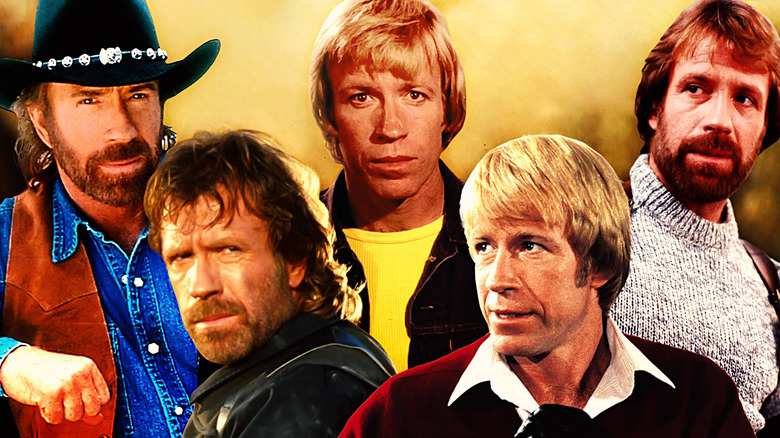
The passing of Chuck Norris closes the chapter on more than a career—it closes the door on a cultural era when heroes were not conflicted, irony had not yet swallowed sincerity, and the line between good and evil was drawn in permanent ink.
Norris did not invent the action hero. But he refined a specific version of it—one that was less about spectacle than about presence. Where Arnold Schwarzenegger brought operatic scale and Sylvester Stallone brought bruised vulnerability, Norris brought something quieter and, in its own way, more rigid: moral certainty. He was not there to wrestle with doubt. He was there to resolve it.
His filmography—Missing in Action, The Delta Force, Code of Silence—reads today like a time capsule of late Cold War anxieties and American self-image. These were not just action movies; they were fantasies of control in an era that often felt uncontrollable. Norris’s characters rescued prisoners, defeated terrorists, restored order. They did not debate systems—they bypassed them.
And audiences responded.
In a cinematic landscape that often leaned into chaos, Norris offered discipline. His background as a real martial artist, and not just a performer, mattered. When he fought Bruce Lee in The Way of the Dragon, it was not just choreography—it was a collision of philosophies. Lee’s fluidity versus Norris’s grounded force. That scene endures not simply because it is iconic, but because it captures a moment when martial arts cinema and Western action storytelling briefly shared the same stage.
Yet Norris’s greatest cultural impact may have come long after his theatrical peak.
In 2005, the internet did something unusual: it resurrected him. The “Chuck Norris Facts” phenomenon transformed him from a fading action star into a mythological figure for a new generation. These weren’t just jokes—they were hyperbolic expressions of an older idea of masculinity, one so exaggerated it became surreal. “Chuck Norris counted to infinity. Twice.” The humor worked because it was rooted in recognition. People remembered what he represented.
In an age that increasingly questioned traditional archetypes, Norris became both symbol and satire of them. And unlike many figures caught in that duality, he endured it. He did not reject the joke; he became part of it. In doing so, he achieved something rare: cultural relevance across radically different eras of media.
His television work in Walker, Texas Ranger extended that legacy even further. For nearly a decade, he entered American living rooms as Cordell Walker—a lawman defined not by bureaucracy but by personal ethics. The show was, in many ways, a distilled version of the Norris ethos: justice delivered not through institutions, but through character.
It is easy, from a contemporary perspective, to critique this worldview. Today’s audiences are more attuned to systemic complexity, more skeptical of lone saviors, more comfortable with ambiguity. The modern action hero—whether in film or television—is as likely to fail as to succeed, as likely to question as to act.
But that evolution does not erase what Norris represented—it highlights it.
He belonged to a time when audiences wanted heroes who did not hesitate. When decisiveness itself was a virtue. When the idea that “the good guy wins in the end,” as Norris himself once put it, was not naïve but necessary.
And perhaps that is why his work still lingers.
Because beneath the explosions, the fight scenes, and the stoic one-liners was something elemental: a belief in clarity. Not simplistic storytelling, but purposeful storytelling. Norris’s characters did not reflect the world as it is—they reflected a desire for what it could be, stripped of confusion and compromise.
Even his off-screen life fed into that narrative. From his martial arts achievements to his mentorship of students—including Steve McQueen—to his philanthropic efforts, Norris cultivated an image that blurred the boundary between actor and ideal. He was not just performing strength; he was, in many respects, practicing it.
That coherence is rare in celebrity culture, then or now.
Of course, no legacy is without complication. Norris’s later political and cultural positions placed him firmly within a particular ideological camp, one that does not resonate universally. But even that speaks to the same core trait that defined his screen presence: conviction. Agree or disagree, Norris was never ambiguous about what he believed.
And that, ultimately, may be the thread that ties his entire cultural impact together.
Chuck Norris did not adapt to every era—he transcended them by remaining fundamentally the same. From martial arts champion to action star to internet legend, he carried a singular idea of strength across decades of change.
Now that he is gone, what remains is not just a collection of films or a catalog of memes, but a question: what do we want our heroes to be?
If today’s stories lean toward complexity, irony, and imperfection, Norris reminds us of an alternative tradition—one where heroes are steady, where justice is visible, and where the outcome, however improbable, is never in doubt.
That tradition may no longer dominate the screen. But for a generation that grew up watching him, and for a digital culture that unexpectedly rediscovered him, it will never quite disappear.
Because legends like Chuck Norris do not just reflect their time.
They define it—and then, somehow, outlast it.