


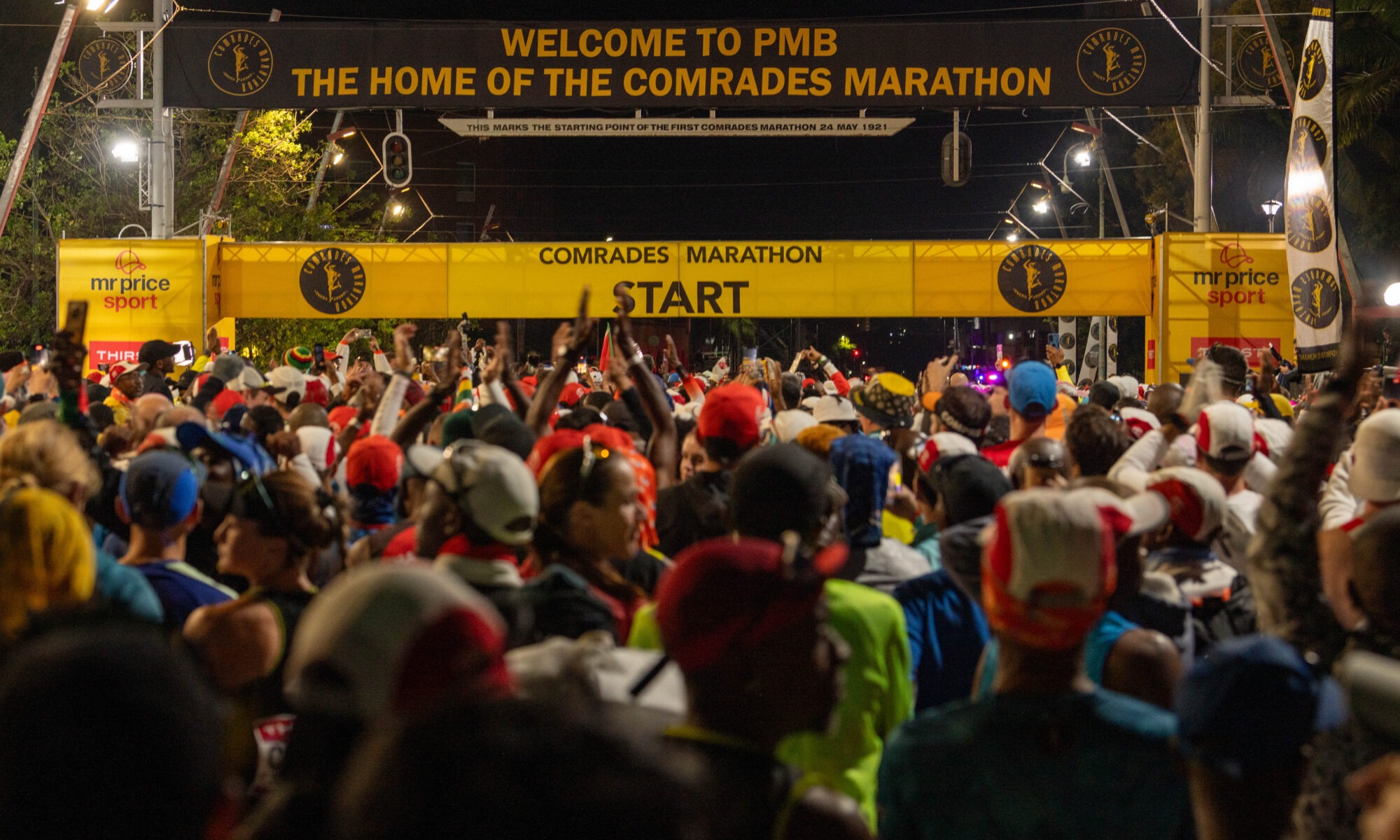
With just days to go before the 2026 Comrades Marathon, attention is shifting beyond the race itself to the expanded safety measures, logistical planning and support systems designed to guide more than 21,000 runners through the historic 50th up-run from Durban to Pietermaritzburg.
The ultra-marathon, set for Sunday, covers 85 kilometres and 55 metres this year—slightly shorter than the traditional 89.98 kilometres—forming part of a broader set of adjustments introduced by organisers to improve race management and athlete safety.
The Comrades Expo opens on Thursday at the Durban Exhibition Centre, where runners will collect their race numbers and final instructions ahead of race day.
A key focus this year is the strengthening of medical and emergency response coverage along the route. Race doctor Jeremy Boulter confirmed that teams of paramedics, nurses and doctors will be stationed throughout the course, supported by favourable weather forecasts expected to bring cool and dry conditions.
He warned runners to prioritise safety over performance if warning signs appear.
“At this stage the weather looks favourable with dry and cool to mild conditions being expected. Scores of paramedics, nurses and doctors will be looking after runners experiencing medical difficulties,” Boulter said, advising athletes experiencing dizziness or disorientation to stop immediately and seek assistance.
Race officials have also introduced structural changes to improve pacing and cut-off management. Runners will start in three staggered batches between 5am and 5:30am outside Durban City Hall, a system designed to reduce congestion and ensure athletes reach key sections such as Polly Shortts in daylight.
Race Director Sue Forge said the approach is intended to improve overall flow and safety across the course, alongside a new traffic-light style monitoring system at cut-off points. Green indicates runners are on track, orange signals the need to increase pace, and red indicates they have missed the cut-off.
“This is being done to make the most of the well-lit first part of the race and enable runners to reach Polly Shortts while it is still daylight,” Forge said.
Beyond logistics and safety, the race also carries a strong motivational theme this year, “Ska Fela Moya,” intended to encourage endurance through the demanding climbs and the 1.8-kilometre elevation gain between start and finish.
Defending champions Tete Dijana and Gerda Steyn return to headline a competitive elite field, but much of the focus this year remains on how organisers are reshaping the race experience for thousands of participants across all levels.