



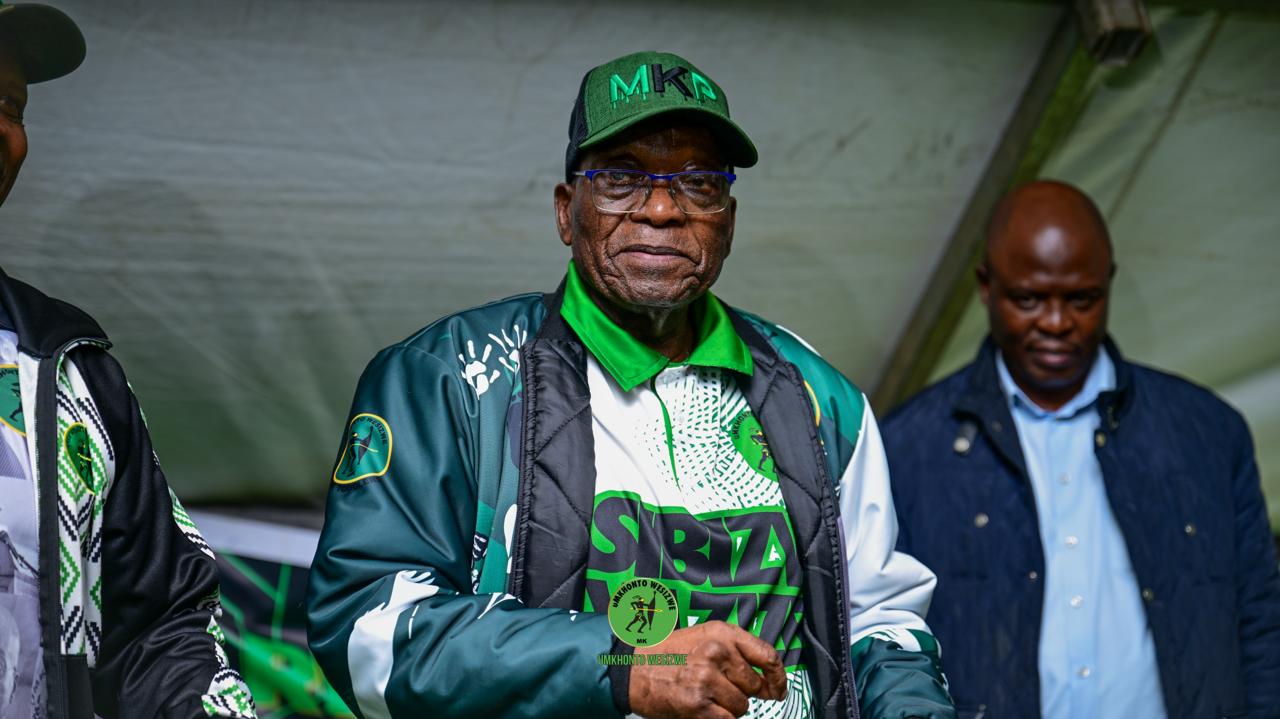
The Constitutional Court has dismissed former presidents Jacob Zuma and Thabo Mbeki’s challenge to have Justice Sisi Khampepe removed as chairperson of the TRC Cases Inquiry.
The inquiry was established by President Cyril Ramaphosa in May 2025 to investigate allegations of political interference in efforts to stop or delay apartheid-era prosecutions arising from cases referred by the Truth and Reconciliation Commission (TRC).
Zuma and Mbeki had challenged Khampepe’s continued involvement in the inquiry, arguing that her previous roles could create a perception of bias.
Khampepe served on the TRC’s Amnesty Committee from 1996 to 2001. She also served as Deputy National Director of Public Prosecutions from September 1998 to December 1999 while she was still involved with the Amnesty Committee.
Khampepe had previously rejected requests for her recusal.
The former presidents subsequently approached the High Court to review that decision. In March, the High Court dismissed their application, although one judge disagreed with the majority and supported their bid to have Khampepe recused.
The matter was then taken to the Constitutional Court.
Delivering the judgment on Monday, Justice Leona Theron said the Constitutional Court had granted Zuma and Mbeki leave to appeal directly and partially upheld their appeal.
“Leave to appeal is granted. The appeal is partially upheld. The order of the High Court is set aside,” Theron said.
The court also dismissed the argument based on Section 47(1) of the Superior Courts Act, which had been relied upon in challenging the former presidents’ application.
However, after considering the review application, the Constitutional Court ultimately dismissed the challenge to Khampepe’s 30 January 2026 ruling refusing to recuse herself.
Theron said: “The application to review the ruling delivered on 30 January 2026 by the chairperson … dismissing the recusal application is dismissed.”
The ruling means Khampepe remains chairperson of the TRC Cases Inquiry as it continues its investigation into allegations surrounding political interference in apartheid-era prosecutions.
The Constitutional Court ordered each party to pay its own costs in both the High Court and Constitutional Court proceedings, apart from costs relating to a separate application by the seventh respondent.

