


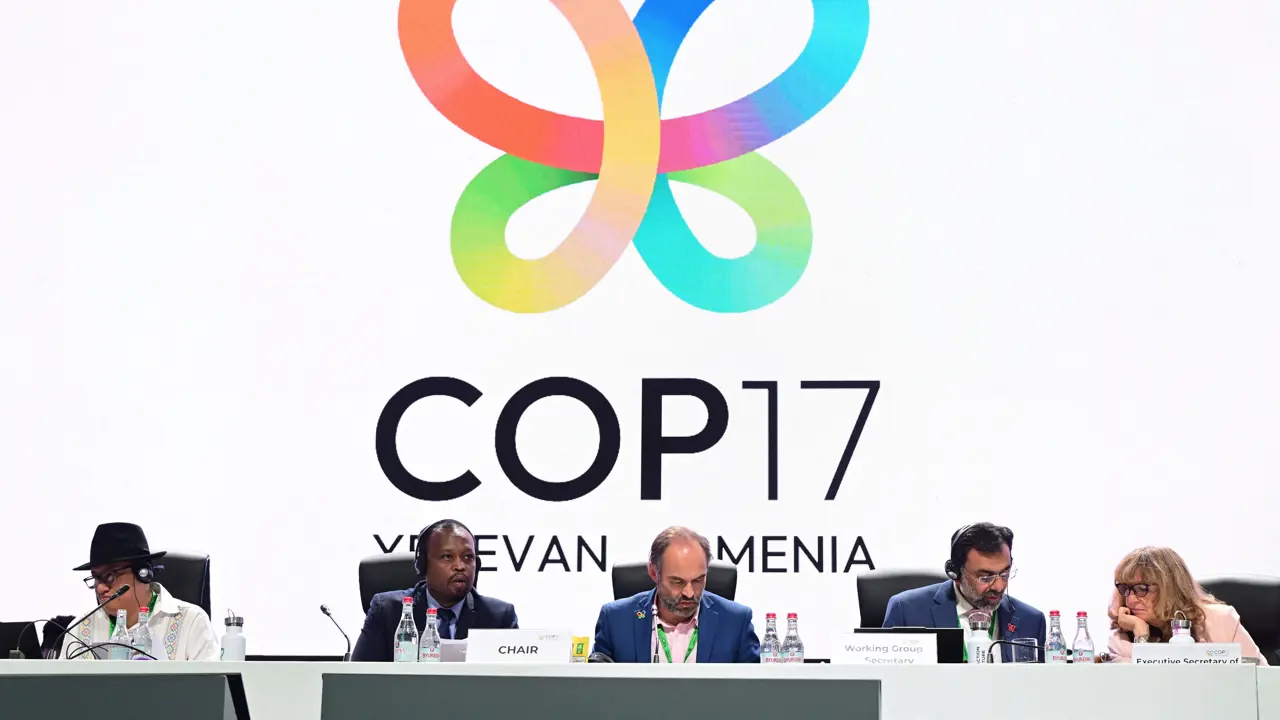
Nearly 200 countries have reached agreements at the United Nations COP17 biodiversity summit in Armenia, but concerns remain over the lack of progress on some of the most urgent environmental challenges facing the world.
Delegates approved key agreements after negotiations continued late into Friday night and the early hours of Saturday. However, celebrations were overshadowed by disagreements over conservation funding, environmentally harmful subsidies and the role of scientific evidence in international decision-making.
The two-week summit in Yerevan aimed to strengthen global efforts to meet the landmark commitment to halt and reverse biodiversity loss by 2030.
The agreement includes a target to protect 30 per cent of the world’s land and oceans, alongside efforts to tackle pollution, invasive species and the wider drivers of environmental destruction.
However, the United Nations has warned that current progress remains insufficient to achieve these objectives.
COP17 president Hambardzum Matevosyan welcomed the approval of two major texts, bringing the negotiations to a close after an extended final session.
Despite the agreements, French Ecological Transition Minister Monique Barbut criticised the outcome, saying it did not match the scale of the global biodiversity crisis.
She described the negotiations as a series of missed opportunities to accelerate action against nature loss, warning that environmental destruction would not wait for international agreements to catch up.
Countries Agree to Accelerate Biodiversity Action
One of the key outcomes was a draft agreement urging countries to accelerate their efforts to address the main causes of biodiversity loss.
The text called for increased action to tackle the pressures threatening ecosystems and wildlife.
Guido Broekhoven of WWF International described the outcome as a positive step forward, although he highlighted weaknesses, particularly in addressing harmful subsidies.
Financial incentives supporting activities that damage nature, including fossil fuel production, intensive agriculture and overfishing, remained among the most controversial issues during negotiations.
Greenpeace International also acknowledged growing political momentum to address harmful financial incentives, despite what it described as weak wording in the final decision.
Concerns Over Political Interference in Scientific Evidence
The summit was also marked by disagreements over scientific reports and the role of research in shaping biodiversity policy.
Several countries faced criticism for allegedly attempting to undermine or restrict the approval of important scientific findings.
Swiss negotiator Gabriela Blatter, speaking on behalf of dozens of countries, expressed concern about increasing challenges to the use of scientific evidence in international negotiations.
She stressed that while governments had the right to protect their national interests, scientific evidence should remain central to environmental decision-making.
The dispute raised wider concerns about the relationship between scientific research and political priorities in global conservation efforts.
Conservation Funding Remains Unresolved
Funding was another major source of disagreement, particularly over how countries should share the financial responsibility for protecting biodiversity.
The European Union pushed for wealthier emerging economies, including China, to contribute to international conservation funding.
The proposal proved contentious, although a draft agreement suggested a possible compromise by inviting countries outside the traditional group of developed-country donors to contribute voluntarily.
Negotiators also failed to resolve important questions surrounding the Cali Fund, a United Nations mechanism designed to attract corporate contributions to biodiversity conservation.
The fund was expected to generate billions of dollars, but contributions have remained far below expectations.
Pakhi Das of Plant-for-the-Planet criticised the decision to postpone essential funding discussions for another two years, warning that the delay could leave the fund largely empty in the meantime.
Ecuador to Host Next Biodiversity Summit in 2028
Despite the disagreements, countries agreed on the location of the next round of international biodiversity negotiations.
Ecuador was selected to host the next biodiversity summit in 2028 after defeating Panama in a secret vote.
The decision gives the South American country responsibility for hosting the next major international meeting on global biodiversity protection.
As COP17 concluded, the agreements provided a renewed framework for international cooperation, but significant challenges remain.
With the 2030 biodiversity targets approaching, governments face growing pressure to turn diplomatic commitments into practical action, secure reliable conservation funding and address the economic activities driving the destruction of nature.