


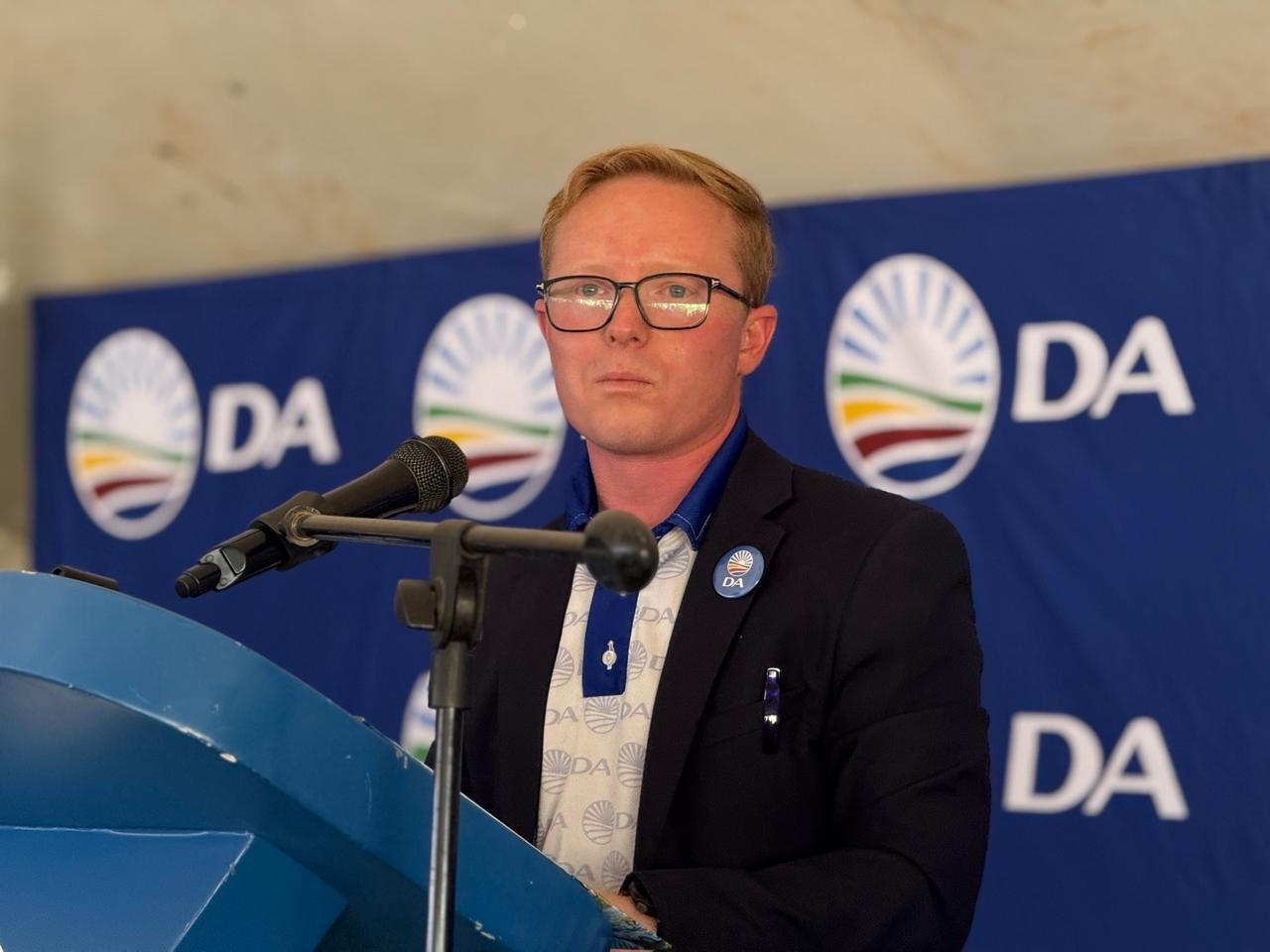
The Democratic Alliance (DA) has strengthened its political position in KwaZulu-Natal after securing a commanding 61% of the vote in uMngeni Local Municipality, paving the way for Chris Pappas to return as mayor for a second term.
The result marks a significant shift from the 2021 local government elections, when the DA narrowly captured the municipality by just 42 votes.
Five years later, the party has transformed that narrow victory into an outright majority, making uMngeni the only municipality in KwaZulu-Natal won by the DA with an outright majority in the 2026 elections.
Pappas is expected to be inaugurated on Friday when the newly elected municipal council convenes for its first meeting.
The DA’s improved performance represents a significant electoral endorsement for the outgoing administration, with Pappas attributing the increased support to his government’s performance over the past five years.
Speaking during a recent media briefing, he said the administration had worked to demonstrate that the DA could govern effectively and deliver services to communities across political and social divisions.
“It’s been an incredible journey, the last five years. One where we had to go out to prove to many communities that the DA can indeed deliver for all and can be different to the ANC and IFP, who are in government in other municipalities in our province and indeed we did that,” Pappas said.
The newly constituted council will include 15 DA councillors, including Pappas, five representatives from the uMkhonto weSizwe (MK) Party, four from the African National Congress (ANC) and one from the Inkatha Freedom Party (IFP).
The outcome gives the DA a clear majority in the municipality, allowing it to continue governing without relying on coalition partners to secure control of the council.
Pappas first made history in 2021 when he became the first DA member to serve as a councillor in a KwaZulu-Natal municipality.
His return for another term now places renewed attention on the municipality’s development priorities, service delivery and the administration’s ability to sustain the electoral support it secured in 2026.