




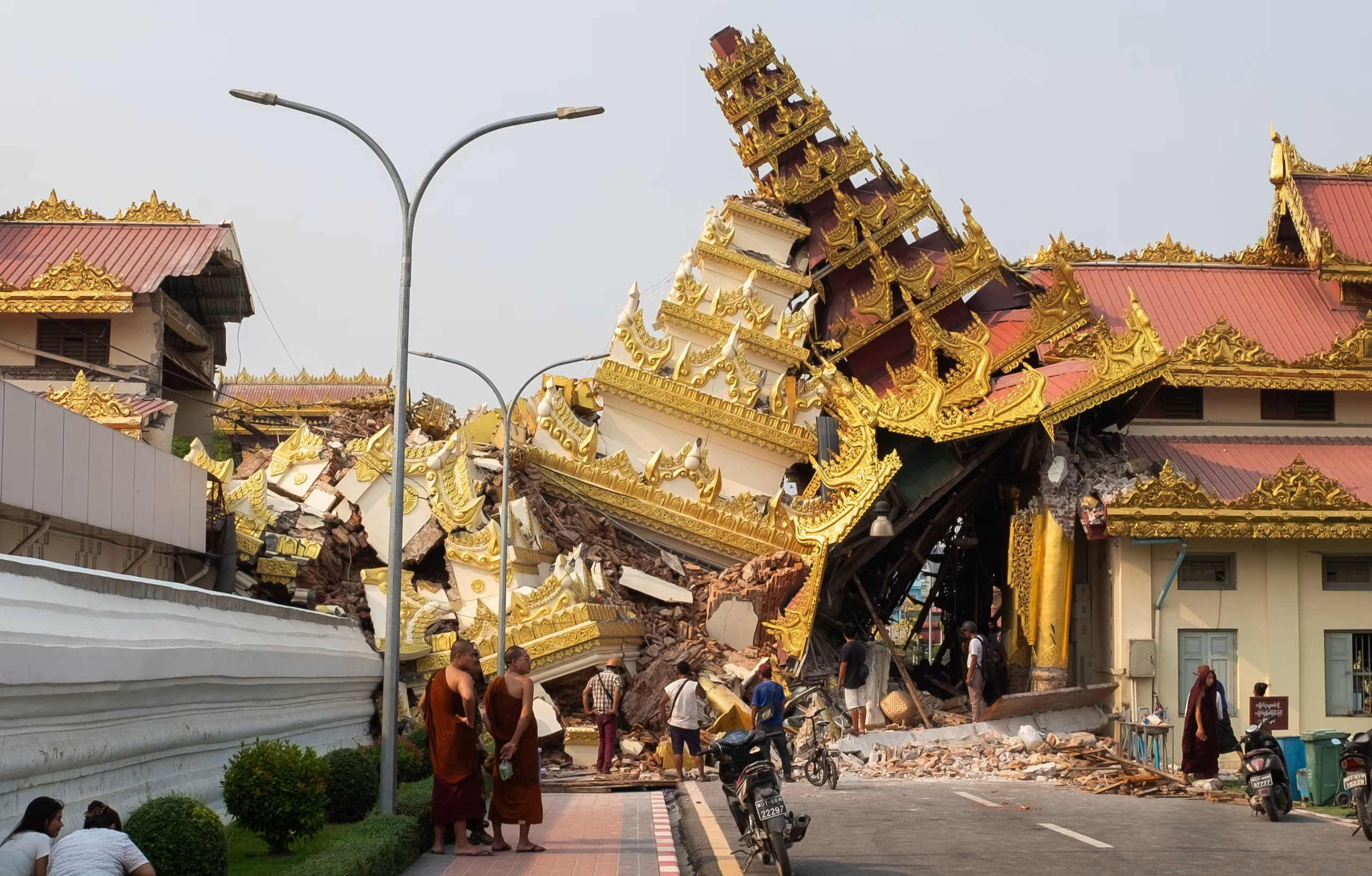
A magnitude-7.7 earthquake struck central Myanmar on Friday, causing widespread devastation and a staggering humanitarian crisis as the death toll rises to more than 1,000. The tremor, which originated just 16km north-west of the city of Sagaing, was felt across borders in Thailand and south-west China, shaking buildings and disrupting lives far from the epicentre.
The first quake hit around 12:50 local time (06:20 GMT), quickly followed by a second tremor of magnitude 6.4 just 12 minutes later. The repercussions of these quakes have been severe, especially in Mandalay—Myanmar’s second-largest city with approximately 1.5 million residents—where many of the fatalities have been reported.
According to the Myanmar military, the earthquake has now resulted in over 1,002 deaths, with an alarming 2,376 injuries and about 30 people still missing. In a desperate plea for help, rescue officials in Mandalay are engaging in life-saving efforts, stating they are “digging people out with our bare hands.” Eyewitness accounts reveal harrowing scenes of destruction and panic as roads buckle and buildings collapse.
Reports from elsewhere in the region illustrate the earthquake’s far-reaching impact. In Bangkok, approximately 100 construction workers have been reported missing following the collapse of an unfinished high-rise building as tremors shook the Thai capital. Rescuers have confirmed the presence of at least 15 individuals believed to be trapped beneath the rubble.
Compounding the situation, communication in Myanmar has been hindered due to restrictions imposed by the military junta governing the country since the 2021 coup. With state control over local media and limited internet access, updates from affected areas are difficult to verify and often delayed. Many regions are currently experiencing patchy mobile service, leaving numerous residents in the dark about the situation’s gravity.
Understanding the earthquake
The geological factors contributing to this event lie in the nature of the Earth’s tectonic plates. Earthquakes occur when stress along fault lines builds up until it results in a sudden release of energy, causing the ground to shake. The 7.7 magnitude of the Myanmar earthquake categorises it as a major quake, with potential for serious damage—in stark contrast to minor tremors that typically go unnoticed.
The UK’s Foreign, Commonwealth & Development Office (FCDO) has issued warnings regarding aftershocks, urging those in the region—including tourists— to heed local authorities’ advice. Travel restrictions can be enforced at short notice, reflecting an increasingly volatile security situation within Myanmar, Thailand, and Laos.
A historical perspective
This earthquake’s shallow depth, measured at approximately 10km, may have exacerbated its destructive capacity, causing more intense shaking at the surface than deeper quakes. Comparatively, one of the deadliest earthquakes in history struck Indonesia on December 26, 2004, causing a catastrophic tsunami that led to 228,000 casualties. In contrast, the world’s most powerful earthquake, recorded at 9.5 in Chile in 1960, serves as a reference point for the destruction possible in such seismic events.
As rescue operations continue and more information becomes available, the full scale of this disaster is yet to be realised. The immediate needs for shelter, medical aid, and resources are paramount as communities begin the long and arduous journey toward recovery.