


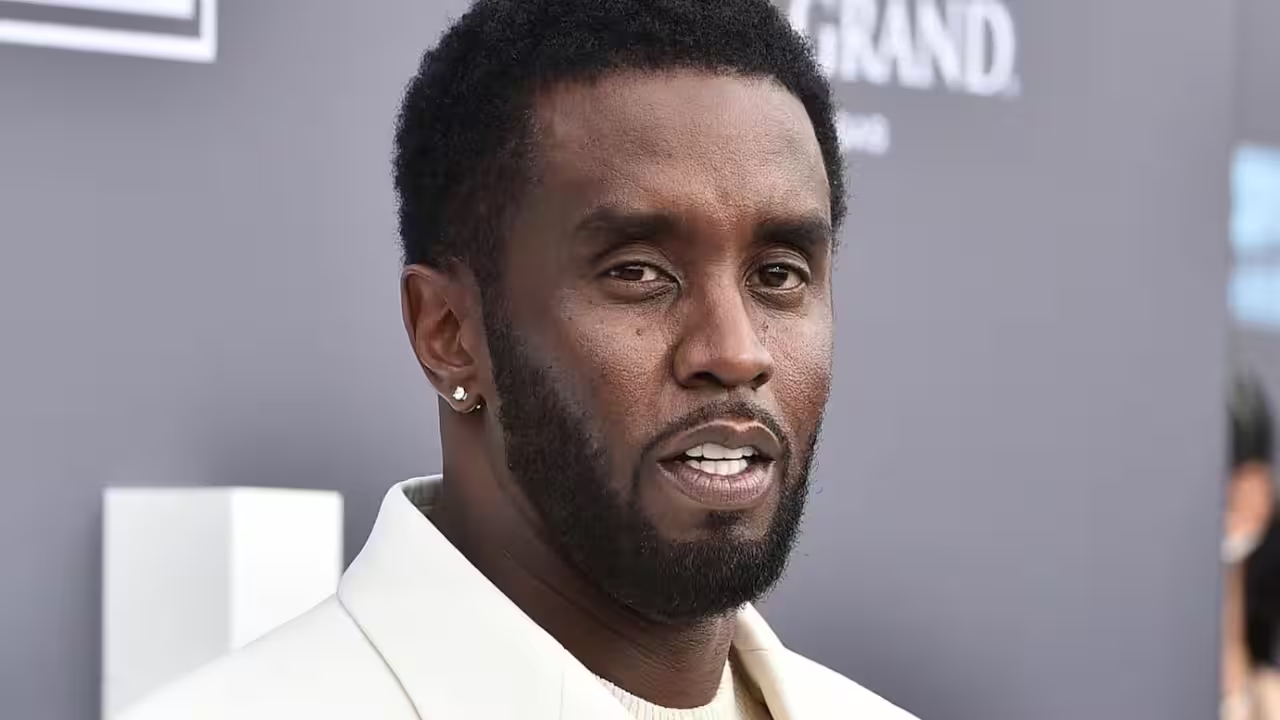
Sean “Diddy” Combs could face renewed scrutiny over his alleged links to the murder of Tupac Shakur if Duane “Keffe D” Davis is convicted, potentially bringing one of the most explosive allegations from hip-hop’s 1990s feud back into focus.
Davis is on trial in Las Vegas over allegations that he orchestrated the September 1996 killing of Shakur. Prosecutors say he was in the white Cadillac involved in the shooting and played a central role in organising the attack.
But the case could have implications beyond Davis.
A key piece of evidence is a 2008 police recording in which Davis allegedly discussed the circumstances surrounding Shakur’s death. According to The Telegraph, Davis also claimed in the recording that Combs had offered $1 million to have Shakur killed.
The allegation has never resulted in criminal charges against Combs, who has strongly denied it and previously dismissed the claim as “pure fiction and completely ridiculous”.
Nevertheless, a conviction could place the allegation under renewed scrutiny, particularly if prosecutors establish that Davis’s accounts of the killing are credible and corroborated by other evidence.
The alleged Combs connection dates back to the bitter rivalry between Shakur’s Death Row Records and Combs’ Bad Boy Records. Shakur had accused Combs and associates of involvement in an earlier robbery and shooting targeting him in New York—an accusation Combs denied. The dispute subsequently became part of the increasingly hostile East Coast-West Coast rap rivalry.
A source close to the Clark County District Attorney’s Office told The Telegraph that a Davis conviction could potentially lead to further action concerning Combs. However, prosecutors have not publicly identified Combs as a suspect in Shakur’s murder, and there is currently no indication that he faces charges over the killing.
The biggest obstacle could be Davis himself. His defence has attacked his credibility, arguing that he has exaggerated his accounts of the murder over the years. His lawyer, Michael Sanft, has also questioned why Davis was not prosecuted earlier if authorities considered his claims reliable.
That makes the outcome of Davis’s trial potentially significant for the allegations surrounding Combs. If prosecutors secure a conviction and Davis’s testimony and previous statements are accepted as credible, investigators could face renewed pressure to examine claims that have remained unproven for decades.