


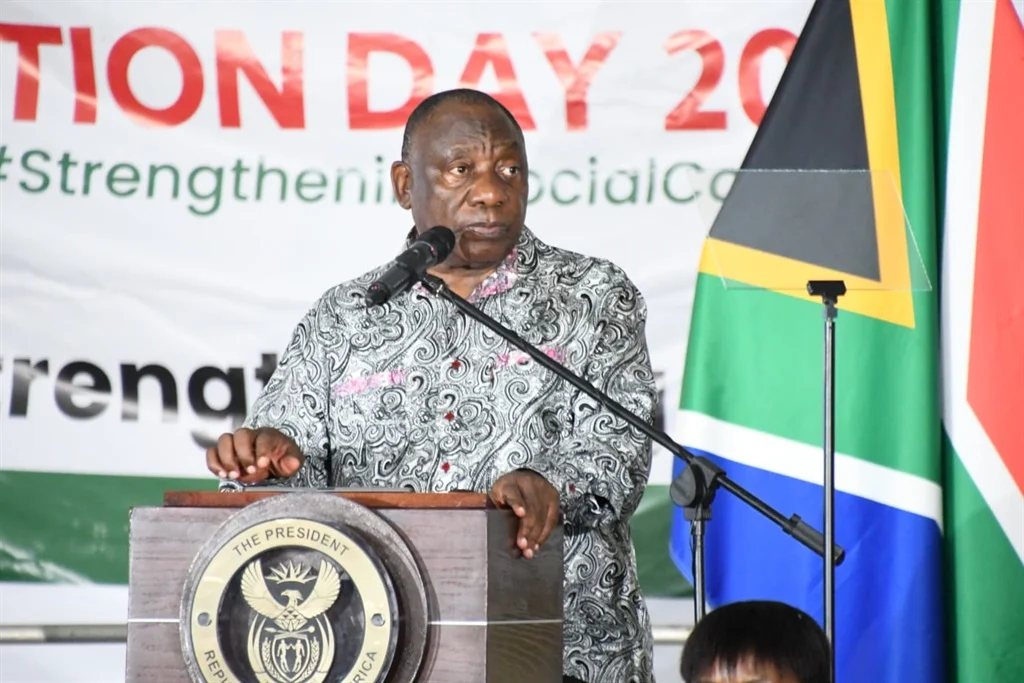
President Cyril Ramaphosa said despite celebrating nearly 30 years of democracy, South Africans must not forget the wrongs of the past.
He was delivering a keynote address at the Day of Reconciliation celebrations at the rainy Thohoyandou stadium in Limpopo.
“Reconciliation is not an act of forgetting or ignoring the wounds of the past.
“Instead, it is a courageous and intentional effort to confront our history, to learn from it and to build bridges of understanding across the chasms of misunderstanding and mistrust.
“Reconciliation is a commitment to creating a society where everyone is valued, where diversity is celebrated, and where the scars of the past are transformed into stepping stones towards a brighter and more compassionate future,” said Ramaphosa.
He said the country’s national days, flag, anthem, and symbols stand as testament to a new, unique nation that emerged from a difficult and bitter past.
Ramaphosa highlighted that despite many naysayers and challenges, the country would soon mark 30 years of freedom.
“Some of the world’s oldest democracies are still grappling with racial and ethnic tensions among their people.
“And yet South Africa, despite its many challenges, has not slid into the morass of bigotry, racism and tribalism that is prevalent in many other societies.
“This is what we celebrate today, and every year on national Reconciliation Day,” explained the President.
He highlighted that some of the sporting achievements bore witness to the power of reconciliation, especially the Springboks victory at the Rugby World Cup in France in October.
“To have seen so many South Africans of all races and all ages rallying behind the team, showing their support so passionately and joining in the victory celebrations reminded us that, despite our many challenges, we are a united nation, proud of who we are and proud of how far we have come,” explained Ramaphosa.
He said the proud and resilient South African spirit carried the country through the many difficulties of the past, like the COVID-19 pandemic, and it will continue to do so well into the future.
Despite overcoming some of the difficulties, Ramaphosa challenged South Africans to engage in open and honest conversations about the injustices of the past and present for the country to heal.
“We must confront the uncomfortable truths, learn from them and work together to create a society where everyone can thrive, regardless of their background or identity.
“Yet, the legacy of our divided past continues to manifest itself in the enormous divides between rich and poor, between black and white, between men and women, between urban and rural.
“Inequality is the greatest challenge to meaningful and lasting reconciliation in our country,” highlighted Ramaphosa.
The President stressed that central to the advancement of reconciliation must therefore be a concerted effort to end poverty and unemployment and meaningfully reduce inequality.
He condemned the violence and gender discrimination perpetrated against women, adding that there’s a need to bridge the divides between men and women.


