




Operation Dudula has vowed to keep ‘fighting’ against illegal immigration regardless of how the High Court in Johannesburg rules in the case brought against it by several Non-Governmental Organisations led by Kopanang Africa Against Xenophobia. Judgment was reserved in the matter that was heard without the participation of Operation Dudula.
This week one of the pressure group’s leaders Solomon Kekana addressed the court asking for the matter to be postponed claiming to have not known that the matter had been set down for two this week ( tuesday and wednesday) with Judge Leicester Adams turning down the request.
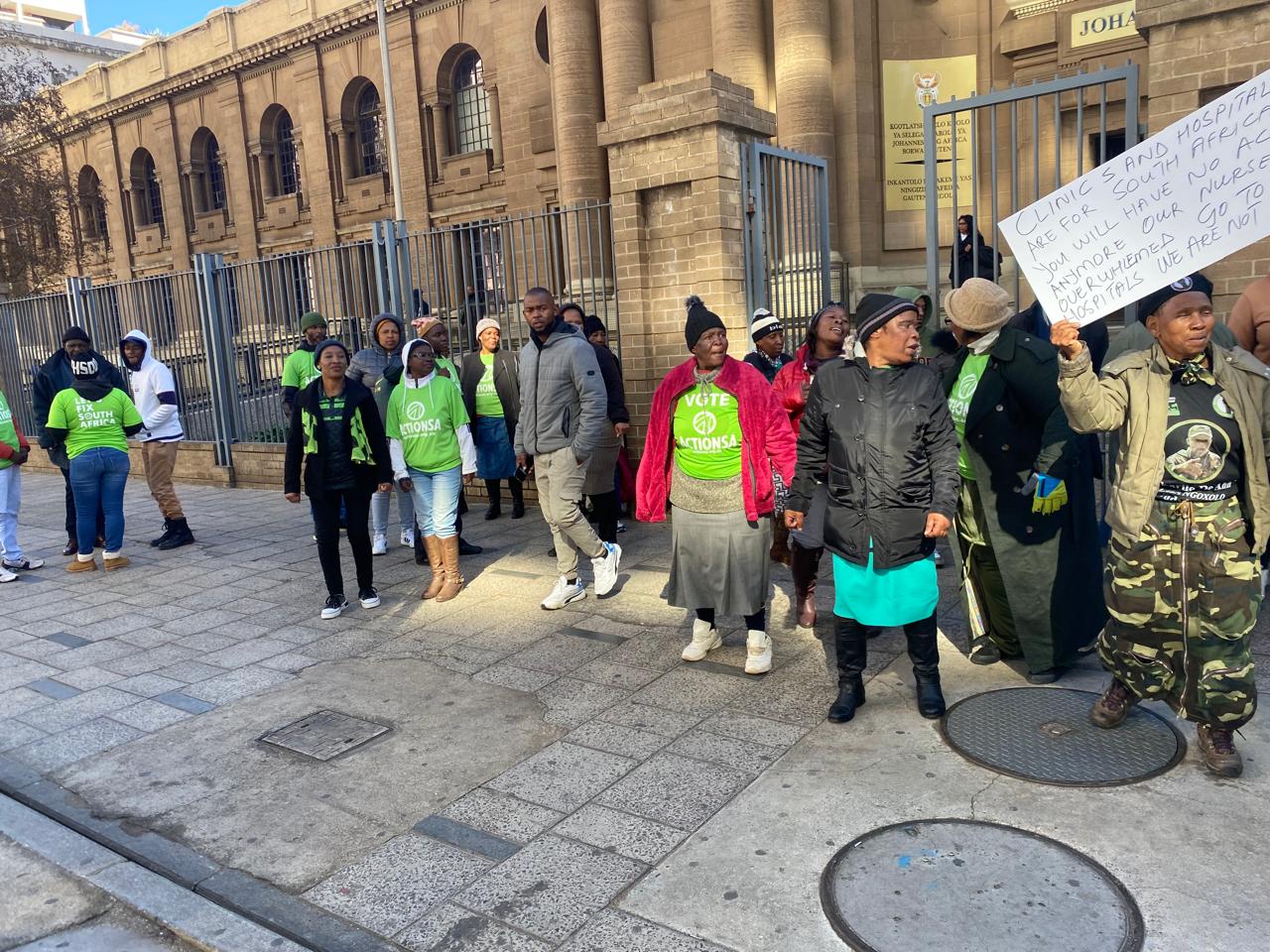
On the second day of proceedings scores of Operation Dudula members turned up to demonstrate outside court and said they will keep fighting against illegal immigration which they say has reached crisis levels.
“I mean, we’re here, we listened, because for some reason we couldn’t participate. They’ve been sending emails to a personal email address and not to an organisation, but that is something for another day. We listened to what they are saying, that we are harassing them, and they fear for their lives. I mean, those are just unfounded things. You can’t just say somebody is harassing you because they go into marches and they’re fighting for lawlessness. You can’t do that,” said Operation Dudula President Zandile Dabula of the proceedings.
She said the pressure group would keep pushing for the prioritisation of South Africans whom she said were being displaced by foreigners.
“So, we will wait for the judgement, and I hope it will come out soon. And we’re hoping that the ruling will not be in favour of the foreigners. because they say South Africans are dangerous.How can foreigners take up the problem in our country and therefore they are not feeling safe people are asking why don’t they pack their bags and leave, if they’re not happy with how we treat them in this country,” she said.
Kopanang said the government was complicit in what it believes is persistent harassment of immigrants.
“We have submitted evidence in court, many many cases and affidavits, of where local police stations have basically turned a blind eye to evictions,to basically accompanying Operation Dudula on its missions themselves, not arresting them when they’re violating the basic laws of the country, and then basically conducting sweeps of entire neighbourhoods and arresting even South African citizens, even people with documentation, and then holding them in jail over the weekend. So what we’re saying is when these instances happen, we have a duty as citizens and as a law to implement the law, and we have rogue police officers who are taking matters, and increasingly we’re glad to see that some police officers are being arrested for breaking the law, and actually are going to have those consequences, so we want to see more of that,” said Kopanang chairperson Dale Mckinley.
Inside court lawyers for the departments of police and home affairs punched holes into the NGOs’ case showing demonstrating among others that;
There’s no law members of Operation Dudula or anyone else from wearing coumaflage. Police never aided Operation Dudula’s activities in any manner. Police never carried any raids instigated by Operation Dudula.
The authority to confront anyone suspected of being in the country illegally was not harassment and a function delegated to SAPS and Home Affairs by the constitution as well as that it was international practice.
That claims of refusal by state officials to assist immigrants were baseless.
Dabula said foreigners were unreasonable in their demand for the state not to discriminate against them when rolling out services.
“I mean, our facilities are suffocating, it’s a fact. Public clinics, hospitals, you cannot continue like this. I mean, we’re living with aliens, people we don’t know who they are, where they’re coming from, because some of them are undocumented, and we will not stop,” said Dabula.
She appealed to the court not to give a ruling that may disadvantage South Africans as it could stir further tensions.
“And we will not stop, that’s what I’m saying, but the judge must just be conscious when they take a decision on who they’re going to grant the order to, and what would be its implications,” she said