


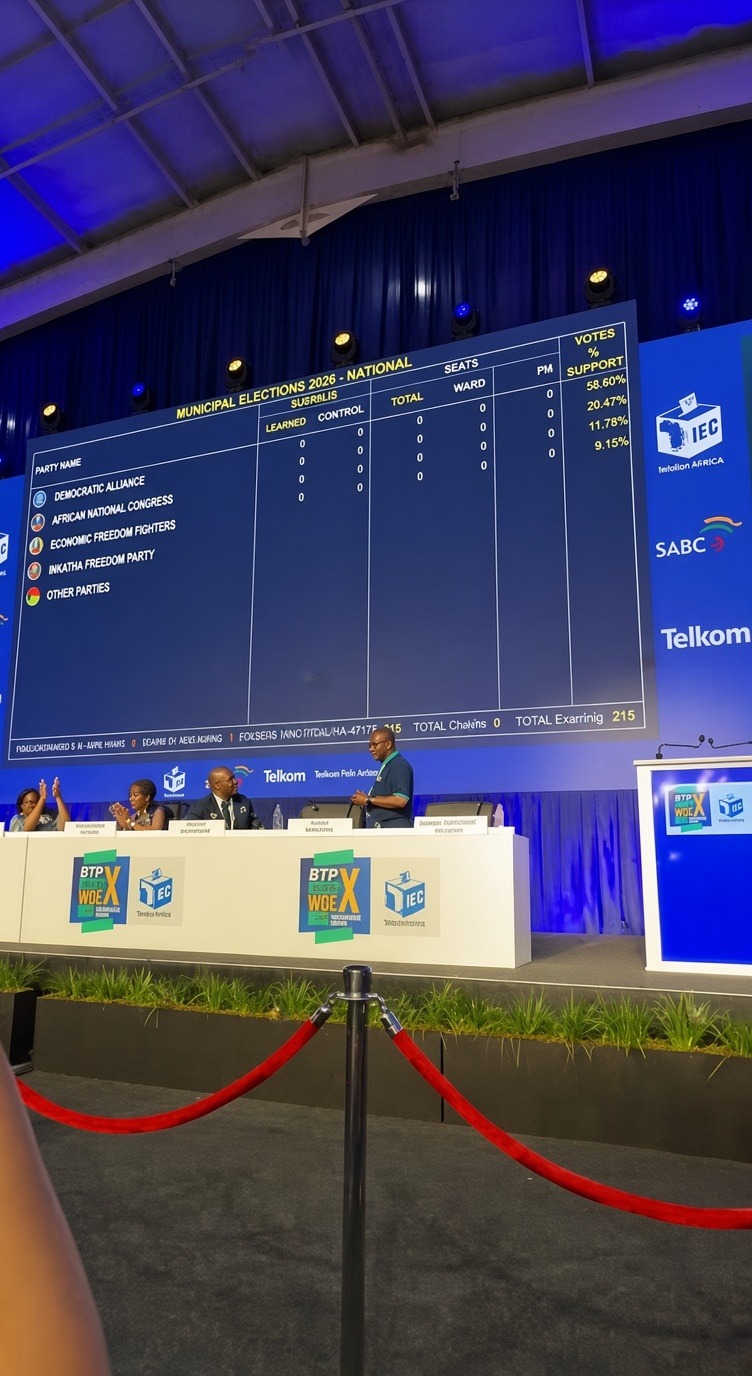
With election results trickling in, the ANC is still hopeful it can recover some lost ground — including maintaining control of Buffalo City and Mangaung, the only metros where it had outright majorities.
With 15% of the votes counted, South Africa is heading for its closest-ever local election.
Nationally, the ANC is on 31.7%, the DA on 31.0%, and the MK Party on 5.1% — a gap of just 0.7 percentage points between the two leading parties.
In the metros, the picture is shifting fast — particularly in Gauteng.
In Johannesburg, the DA is leading with 48.2%, followed by ActionSA on 13.6% and the ANC on 12.8%.
In Tshwane, it’s a three-way race: ActionSA 26.8%, ANC 26.1%, DA 21.4%.
In Ekurhuleni, the DA leads with 41.3%, ahead of the ANC on 16.9% and ActionSA on 15.9%.
In Cape Town, the DA remains dominant at 61.9%. In Nelson Mandela Bay, the DA leads with 46.3%.
But in the two metros the ANC previously governed alone, the race is still open.
In Buffalo City, the ANC leads with 45.9%, ahead of the UDM on 19.7% and the DA on 10.9%.
In Mangaung, it’s effectively tied — DA 33.8%, ANC 33.0%, EFF 8.3%.
Results for eThekwini are not yet available.
According to Mokonyane, the ANC’s recovery plan includes maintaining control where it was governing alone.
ActionSA appears to be the surprise of the election, with a strong showing in both black and white communities.
Mokonyane dismissed reports that the ANC may work exclusively with the DA in hung municipalities.
With only 15% counted, those numbers will still move significantly as more voting districts report.
But two trends are already clear: the national race is now a two-party fight, and Gauteng has fragmented — making coalition governments almost certain in Johannesburg, Tshwane and Ekurhuleni.
We will bring you updates as results continue to come in from the IEC.