



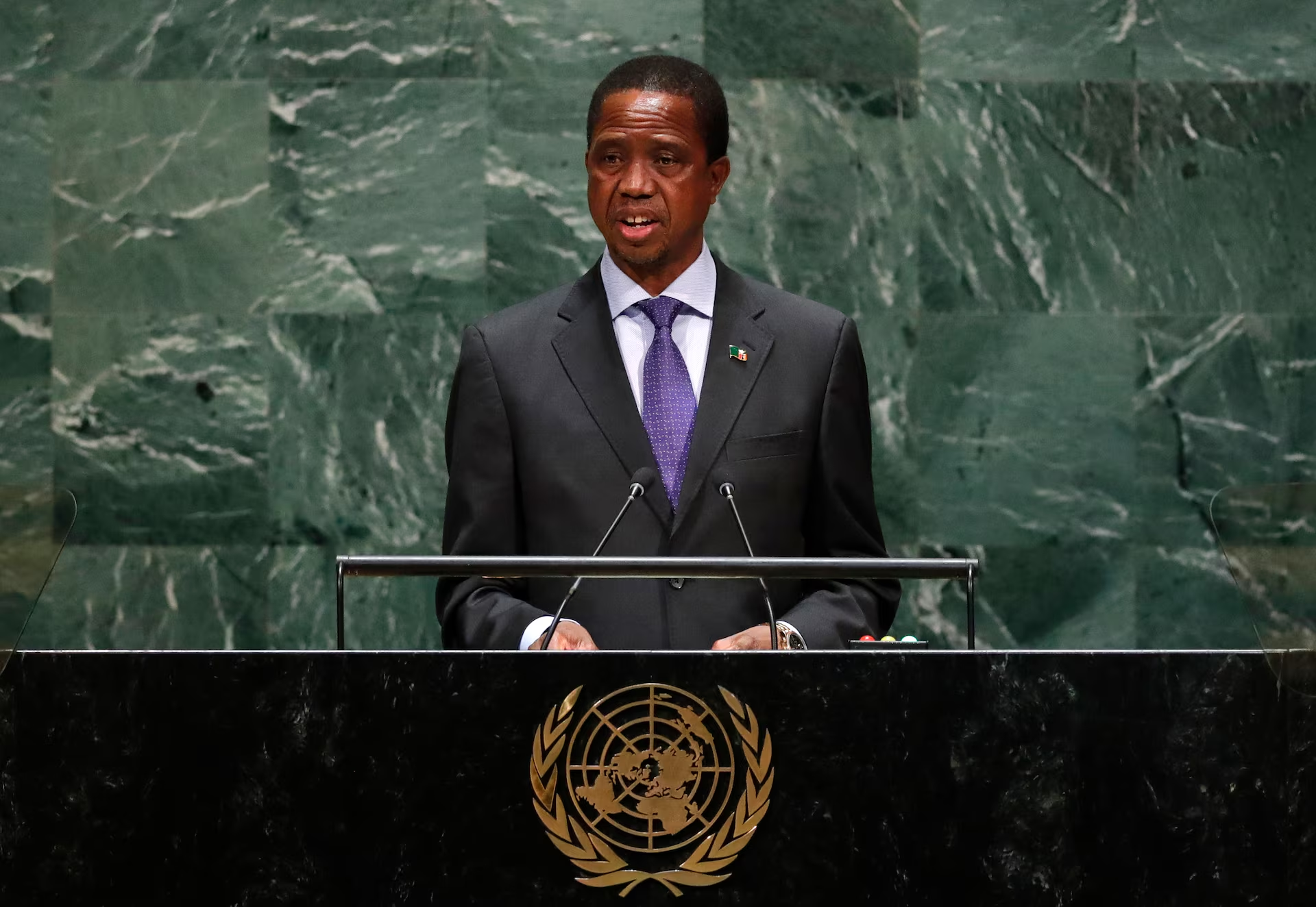
Edgar Lungu, who served as the sixth president of Zambia from 2015 to 2021, passed away on Thursday at the age of 68. Lungu’s death came six months after his endeavours to return to politics were quashed by a court ruling declaring him ineligible to run for office again.
Lungu, who was born on November 11, 1956, in Ndola, Zambia, entered the political scene as a lawyer and served as both justice and defence minister under former president Michael Sata. Upon Sata’s death in 2015, Lungu succeeded him, leading the Southern African nation through a tenure marked by both ambitious infrastructure projects and significant economic challenges.
During his presidency, Lungu was lauded for initiating a massive road-building programme that promised to bolster Zambia’s economy. However, these developments were overshadowed by severe financial mismanagement, culminating in Zambia defaulting on its international debt in 2020. This financial turmoil contributed to Lungu’s electoral defeat to long-time opposition leader Hakainde Hichilema in 2021.
On Thursday morning, Lungu’s political party, the Patriotic Front, confirmed in a statement that he had died following complications related to a rare disorder causing a narrowing of the food pipe. He had been in medical care in Pretoria, South Africa, where he had sought treatment for this ailment previously. Lungu’s daughter, Tasila Lungu, who serves as a member of Zambia’s parliament, shared the news on social media, stating, “My father had been under medical supervision in recent weeks. This condition was managed with dignity and privacy.”
Political analysts have described Lungu’s legacy as “checkered.” Lee Habasonda, a political analyst at the University of Zambia, noted that while Lungu’s constituency had become more accessible to lower-income Zambians, his presidency was marred by increasing lawlessness among his supporters. He reflected, “He will be remembered for tolerating thuggery by his supporters although he also represented a brand of politicians who interacted across class.” This unruliness culminated towards the end of his presidency, with critics arguing that Lungu’s failure to control the violent actions of his affiliates amounted to tacit endorsement.
As his presidency drew to a close, Lungu’s relations with Western donors deteriorated significantly, particularly with the United States and the International Monetary Fund (IMF). In 2020, Lungu expelled the US ambassador, further straining bilateral relations. Zambia became the first African nation to default on its debt in the wake of the COVID-19 pandemic, leading to heightened scrutiny of Lungu’s administration.
After voters rejected him in 2021 and Lungu retreated from the national political landscape, he attempted a comeback in early 2023, ultimately being accepted as the presidential candidate for the Patriotic Front. However, this resurgence was curtailed in December 2022 when Zambia’s constitutional court ruled that he could not stand for election again.


