



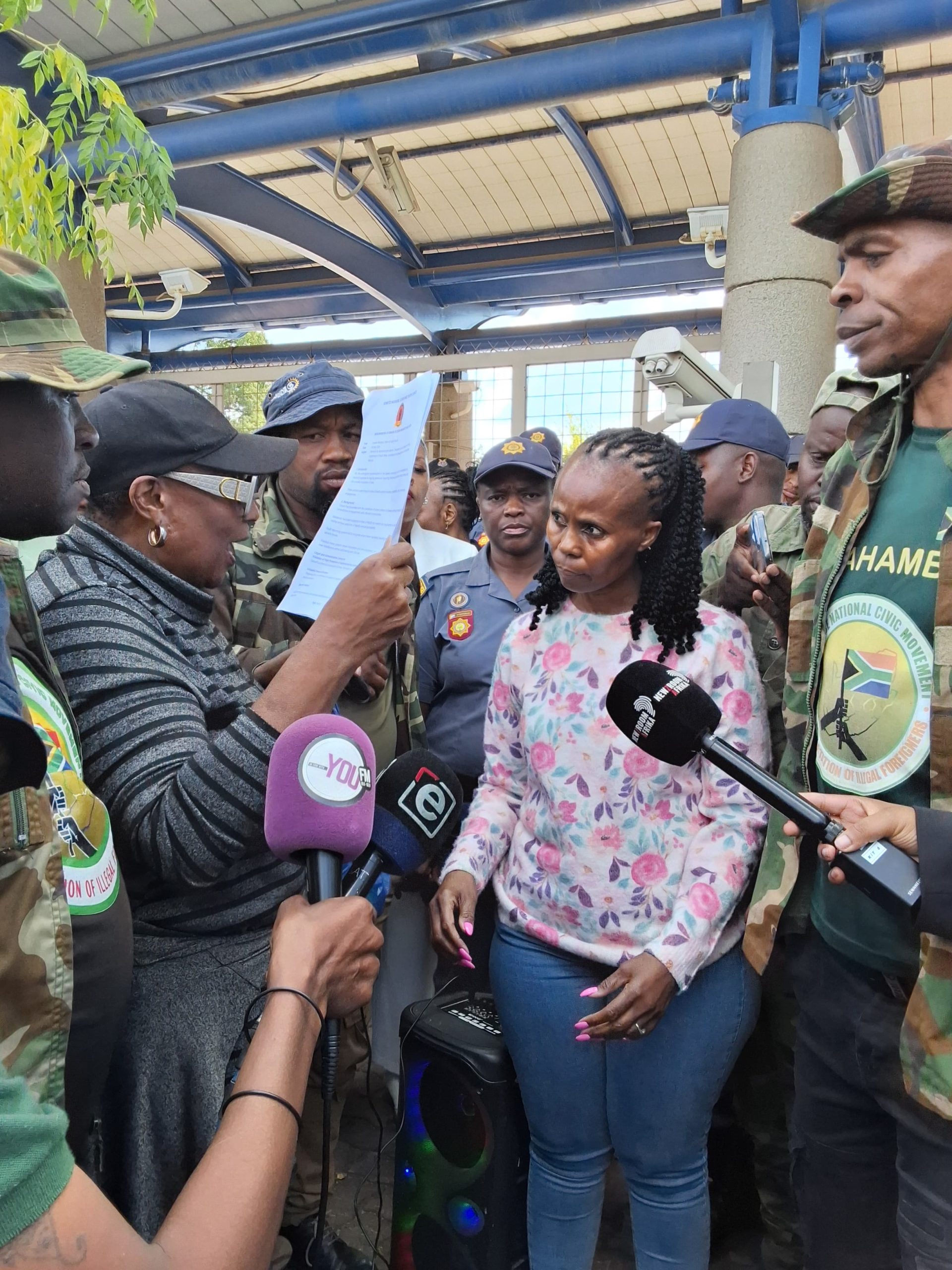
Hundreds of Soweto residents confronted Eskom officials while handing over a memorandum of demands at Megawatt Park in Sunninghill today, venting anger over what they describe as unbearable electricity costs and broken promises.
The residents are demanding a flat electricity rate of R350, an immediate end to load reduction, and the dissolution of Eskom’s leadership in Soweto. The march was led largely by elderly residents, many of whom say they are being pushed to the brink by rising tariffs and unreliable supply.
Community leader Thabo Ngayo said Eskom has been given 14 days to respond, warning that tensions will escalate if there is no meaningful intervention.
“There are grannies sitting in the dark because they cannot afford electricity through these smart meters,” said Ngayo. “People are even turning to loan sharks just to keep the lights on. What Eskom is bringing to our township is pure exploitation.”
Ngayo added that the community plans to meet the National Energy Regulator of South Africa (NERSA) on Tuesday and could escalate their protest to the Public Protector’s office.
Frustration among residents was palpable. Millicent Mkayo from Zola said her appliances were damaged due to ongoing load reduction.
“I’m so angry at Eskom. They gave us these new meter boxes and promised an end to load reduction. Why are we still suffering?” she said.
Another elderly resident said the cost of electricity has driven her to contemplate suicide, as it consumes most of her pension.
A visibly emotional pensioner confronted Eskom’s Gauteng Customer Service Manager, Nokuthula Mntungwa, who received the memorandum.
“I am suicidal because of this oppression of the poorest of the poor,” she said. “If it took Jesus to liberate the world, maybe it will take me to end these smart meters. I have nothing to lose.”
She detailed the cost burden: “Five units is R20, 14 units is R50. In just two weeks I spend R350 and I use gas for heating and cooking. How are we supposed to survive?”
A visually impaired resident also joined the protest, questioning how social grants of R2,400 can sustain both basic living costs and electricity.
“You can come and take your electricity, we don’t care anymore,” the resident said.
Mntungwa acknowledged receipt of the memorandum and committed to responding within 14 days, while also requesting seven days to provide an initial response.
According to Eskom, indigent households qualify for 50 to 60 kWh of free basic electricity per month, though residents argue this allocation is insufficient.
The protest follows the approval of an average electricity tariff increase of 8.76% by NERSA, further intensifying frustrations in already struggling communities.

