


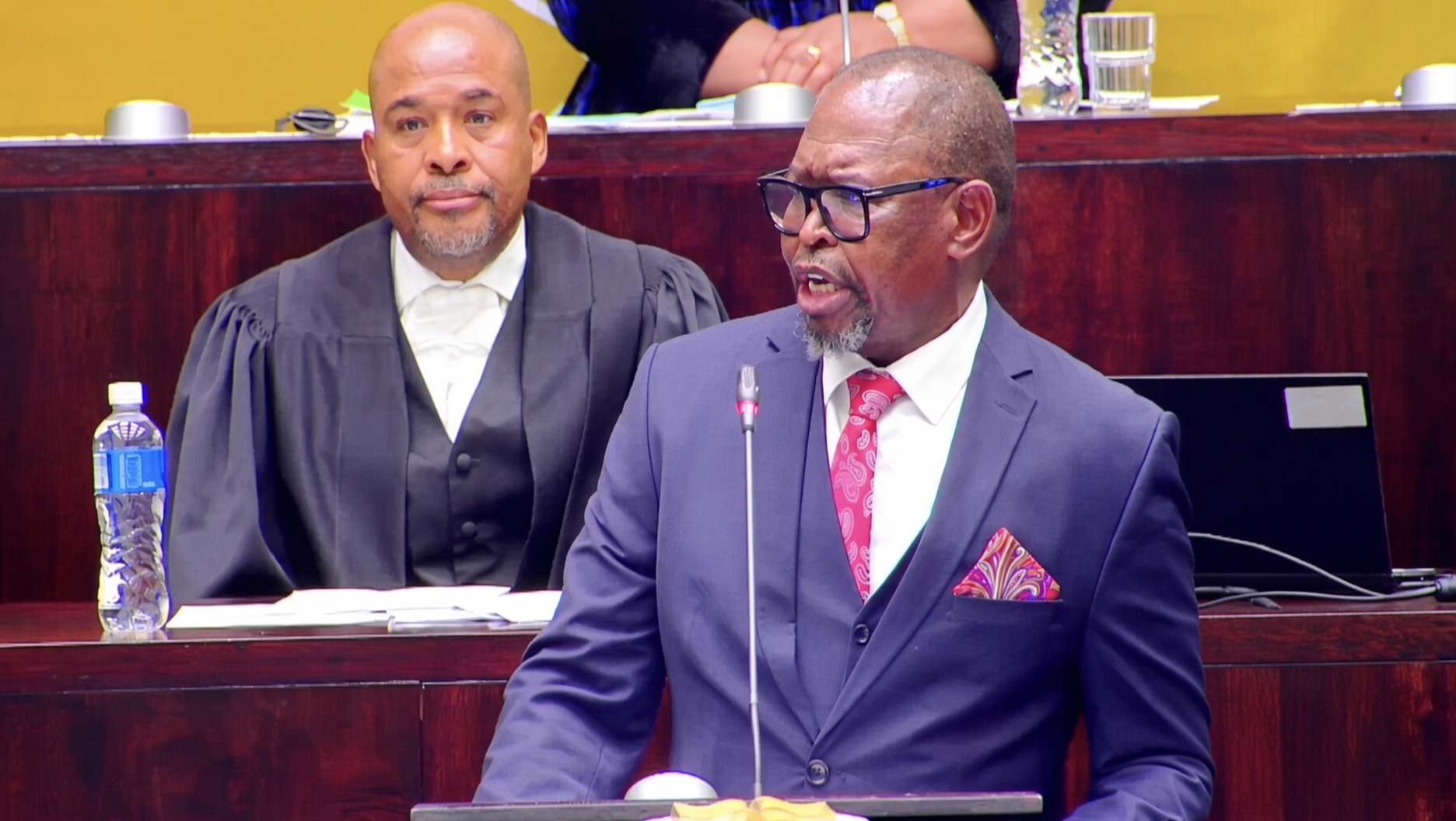
South Africa’s Finance Minister Enoch Godongwana has outlined measures to ease the cost-of-living burden, strengthen public finances and support economic growth in the government’s 2026 Medium-Term Budget Policy Statement (MTBPS), presented in Cape Town on Wednesday.
The budget update comes as South Africa continues to face economic challenges, including sluggish growth, high living costs and uncertainty in global markets.
Government announces R10 billion fuel relief
One of the key announcements is the reintroduction of temporary fuel levy reductions worth R10 billion to provide relief to motorists and businesses affected by rising global oil prices.
From 4 November to 1 December 2026, the general fuel levy will be reduced by R3 per litre for diesel and R1.50 per litre for petrol.
Smaller reductions of R1.50 per litre for diesel and R1 per litre for petrol will remain in place until 5 January 2027.
The government says the intervention is intended to ease pressure on households and businesses without undermining the sustainability of the national budget. The relief follows an earlier temporary fuel levy reduction introduced between April and June.
Improved revenue provides some fiscal breathing room
The National Treasury reported stronger-than-expected revenue collection, giving the government additional room to respond to economic pressures.
According to Reuters, the Treasury recorded a R54.1 billion revenue overrun. The additional funds are expected to support infrastructure investment, ease spending pressures, strengthen reserves and help reduce government debt.
The improved fiscal position comes after years of rising debt, weak economic growth and increasing debt-service costs.
However, the government continues to face uncertainty linked to geopolitical tensions and fluctuations in global energy prices.
Economic growth remains under pressure
Despite improvements in public finances, South Africa’s economic outlook remains challenging.
Economic growth for 2026 is forecast at 1.2%, down from the 1.6% projected in February, according to the budget figures reported by Reuters.
The lower forecast reflects the difficult global environment and ongoing pressures affecting the domestic economy.
South Africa remains vulnerable to international oil price movements because it imports much of its fuel. Higher energy costs can feed into transport, food and other essential expenses, placing additional pressure on households.
Government plans new fiscal rules
Godongwana also outlined plans to strengthen fiscal discipline through a proposed principles-based fiscal anchor.
The framework is intended to improve transparency, accountability and the long-term sustainability of government finances.
Under the proposal, future administrations would be expected to establish fiscal plans setting out their objectives, strategies, assumptions and risks. They would also need to explain how their spending and policy decisions support sustainable public finances.
The proposed legislative changes are expected to be presented to Parliament in 2027.
Infrastructure and state-owned enterprises remain priorities
The Treasury has identified infrastructure investment and improvements to state-owned enterprises as important priorities for supporting economic growth.
Reforms at Eskom and Transnet, alongside improvements in municipal management, remain central to efforts to strengthen electricity supply, improve logistics and reduce obstacles to business activity.
The government also intends to improve public spending efficiency while directing resources towards infrastructure and essential services.
Outlook
The 2026 Medium-Term Budget Policy Statement presents a combination of short-term relief and longer-term fiscal reforms.
While the fuel levy reductions are intended to provide immediate support to motorists and businesses, the government faces the challenge of sustaining improvements in public finances while addressing unemployment, poverty and weak economic growth.
The effectiveness of these measures will depend on how successfully the government balances immediate household pressures with investment, debt management and the need to build a stronger economy.