





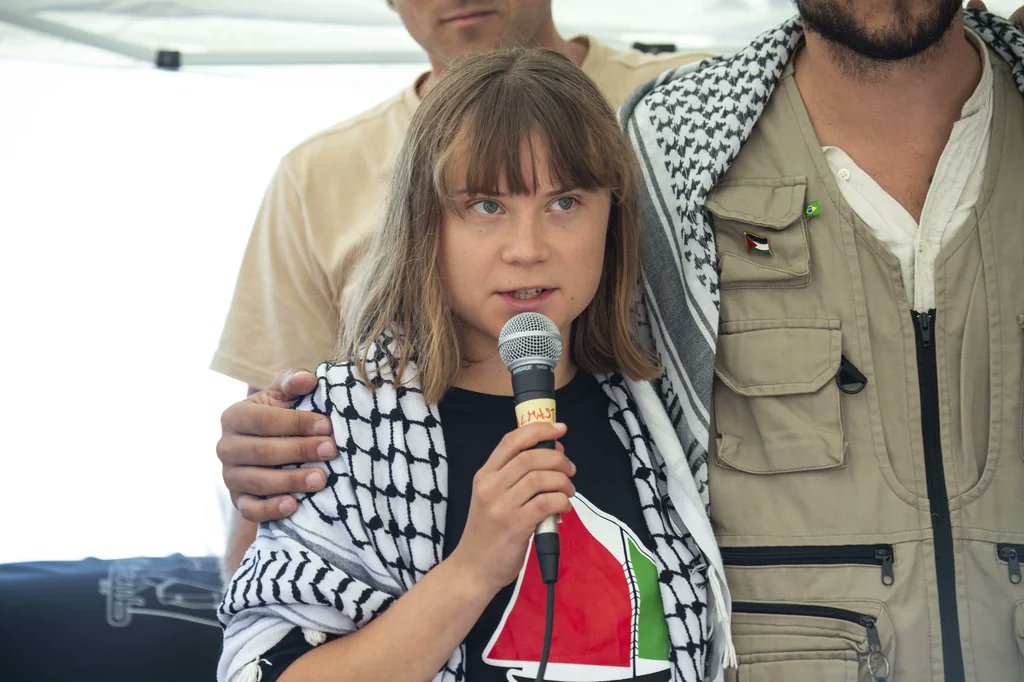
Swedish climate activist Greta Thunberg has returned home this week following her detention by Israeli authorities while attempting to deliver humanitarian aid to Gaza. Thunberg was onboard the Madleen, a boat carrying food and supplies, when Israeli forces intercepted the vessel in international waters. The activists aboard were on a mission to challenge the ongoing blockade of Gaza, which has come under renewed scrutiny as the region faces critical humanitarian crises.
The incident occurred on Monday, with the Israeli military towing the Madleen to the port of Ashdod before transferring the activists to Ben Gurion Airport near Tel Aviv. Out of the twelve activists on board, four, including Thunberg, chose to accept immediate deportation. However, they, along with the others, have been banned from entering Israel for 100 years, as stated by the rights group Adalah, which legally represents some of the activists.
The remaining eight activists were taken into custody after they refused to leave Israel voluntarily, with Adalah indicating that they were brought before a detention review tribunal this week. “The state asked the tribunal to keep the activists in custody until their deportation,” it reported, citing Israeli law which allows for individuals under deportation orders to be held for up to 72 hours before forced removal.
In an emotional statement at Charles de Gaulle Airport in Paris, Thunberg expressed her outrage, accusing Israel of “kidnapping us in international waters and taking us against our will to Israel.” Reflecting on her fears, she stated, “What I’m afraid of is that people are silent during an ongoing genocide,” highlighting the dire situation in Gaza.
The Madleen’s interception has elicited wide condemnation, with countries like Turkiye describing it as a “heinous attack” and Iran labeling it an act of “piracy” in international waters. French Foreign Minister Jean-Noel Barrot announced that four French activists would face an Israeli judge after the incident. Significantly, the activists hailing from various countries including Germany, Brazil, Turkiye, and Spain aimed to deliver essential humanitarian aid amidst an ongoing blockade that has left Gaza in a state of crisis.
The interception comes amidst rising international pressure on Israel to facilitate more humanitarian aid into Gaza, where widespread shortages of food and medical supplies have reached alarming levels. Despite resuming some deliveries after a two-month stoppage, humanitarian agencies have raised concerns over the Israeli-backed Gaza Humanitarian Foundation, asserting that its practices and neutrality are questionable.
According to reports from Gaza’s civil defence agency, there have been numerous fatalities near distribution points, with the UN’s Office for the Coordination of Humanitarian Affairs warning of intensified Israeli military operations in the territory.
An independent UN commission has recently concluded that Israeli attacks on schools and religious sites in Gaza may constitute war crimes, further complicating the already tense situation. As the conflict continues, the UN has reported that over 54,981 individuals have been killed in Gaza since the outbreak of hostilities, with alarming concerns about the humanitarian impact of the ongoing blockade and military actions.


