



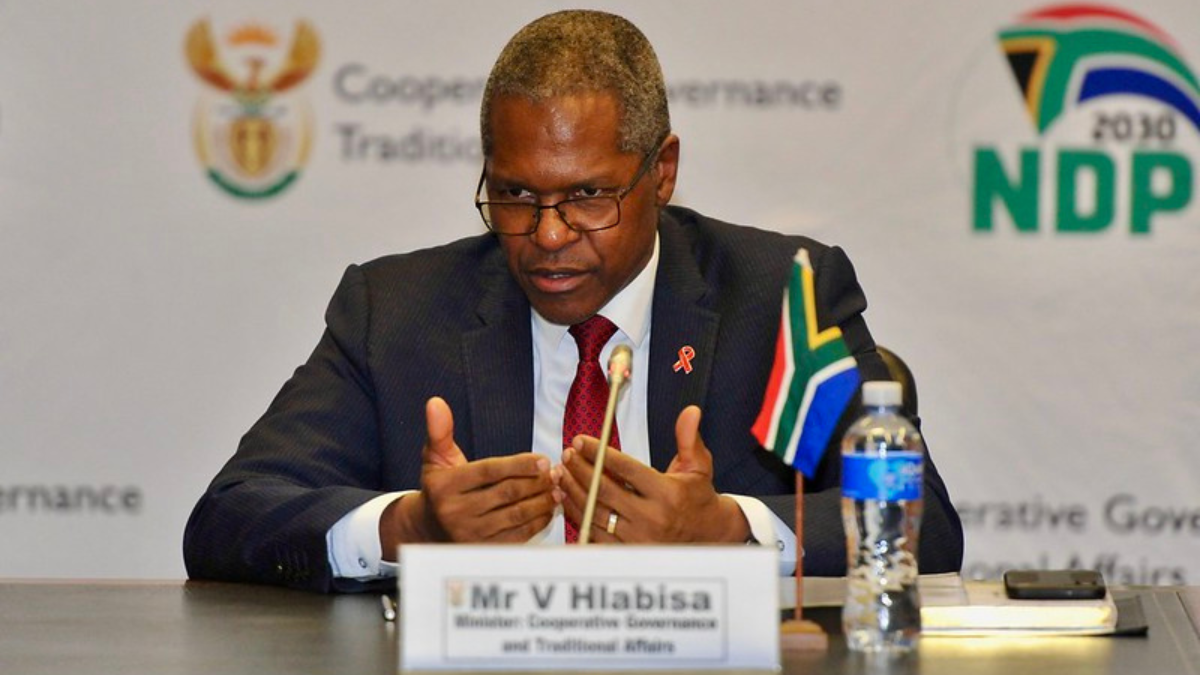
The Minister of Cooperative Governance and Traditional Affairs (COGTA), Velenkosini Hlabisa, has issued the Guidelines for Stable Coalitions in Local Government as political parties and independent candidates begin coalition negotiations following last week’s local government elections.
The guidelines come after 138 metropolitan and local municipalities failed to secure an outright majority for a single political party, creating the need for coalition arrangements across the country.
According to Hlabisa, the guidelines are intended to help municipalities manage coalition governance, strengthen institutional stability and ensure that political transitions do not disrupt service delivery to communities.
The minister said the guidelines would also assist municipalities and political parties in navigating coalition arrangements responsibly, while keeping community interests and the effective functioning of local government at the centre of governance.
Hlabisa appealed to all stakeholders to manage the coalition formation process in a manner that promotes stability, accountability and effective service delivery.
“Coalition governance is a legitimate feature of our democratic system. However, our experience has shown that prolonged political instability, frequent changes in municipal leadership and delays in decision-making can weaken municipal institutions, disrupt administration and compromise service delivery.
“The people who suffer most from such instability are the residents who depend on municipalities for essential services,” Hlabisa said.
The minister expressed confidence that the guidelines would provide valuable assistance as coalition negotiations continue between political parties across the country.
“The guidelines provide practical guidance on coalition governance, including mechanisms for political collaboration, the development of coalition agreements, applicable legislative requirements, dispute resolution and measures to safeguard administrative continuity.
“They also encourage coalition partners to conclude written agreements that clearly outline their shared policy priorities, the allocation of political responsibilities, decision-making processes, standards of conduct and mechanisms for resolving disputes,” Hlabisa explained.
Meanwhile, the guidelines include a template coalition agreement that political parties can adapt to suit their respective municipal circumstances.
They also seek to distinguish between political governance and professional municipal administration, with the aim of protecting the functioning of municipal institutions from political instability.

