




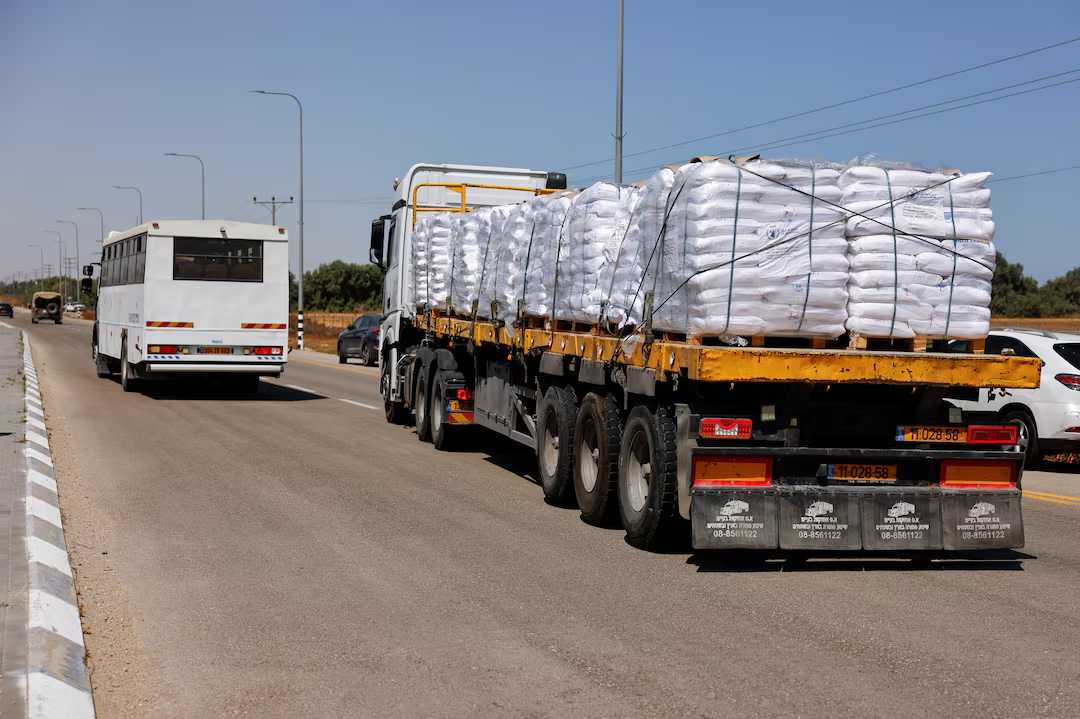
Trucks laden with vital humanitarian aid for Gaza were observed on Sunday at the Kerem Shalom border crossing in Israel, marking a significant moment in the efforts to alleviate the ongoing humanitarian crisis. This aid package included essential items such as wheat flour, cooking oil, and a variety of canned foods, prepared meticulously before being loaded onto trucks designated for delivery into the beleaguered territory.
In a notable development, Israeli Prime Minister Benjamin Netanyahu indicated on Wednesday a willingness to consider a temporary ceasefire, specifically to facilitate the return of hostages. However, he reiterated that Israel would continue its military operations aimed at securing complete control of Gaza—an intention that echoes the ongoing strife in the region.
While the easing of the blockade has allowed aid to flow into Gaza, the distribution of these resources has encountered significant hurdles. Reports have surfaced about armed groups looting aid near Khan Younis, raising concerns among humanitarian organisations. The umbrella network representing Palestinian aid groups stated that these incidents are hampering efforts to deliver aid to those most in need. In turn, Israel has accused Hamas of misappropriating assistance meant for civilians, a claim that Hamas vehemently denies, asserting that its own fighters have suffered casualties while trying to safeguard the aid trucks from looters.
In response to the ongoing situation, Israel has announced the implementation of a new system for aid distribution—backed by the United States and operated by private contractors—set to launch from four distribution centres in southern Gaza. Despite these developments, many aspects of how the new distribution framework will function remain ambiguous. The United Nations has declared it will not collaborate with this system, voicing concerns that operational procedures could be subjected to Israel’s political and military objectives, rather than solely focused on humanitarian needs.
As it stands, Israel has stated that its forces will only ensure security for the centres and will not take on the role of actual aid distribution. The complexities surrounding this situation underline the difficulties of humanitarian efforts amid ongoing conflict, sparking broader discussions on the efficient delivery of aid in crises marked by political and military tension.


