



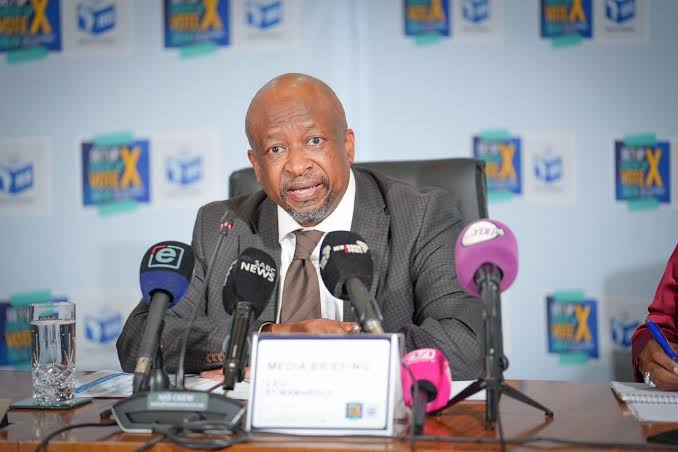
The Electoral Commission of South Africa (IEC) says it is satisfied with the conclusion of the first day of special voting for the 2026 Local Government Elections, with more than 750,000 people turning out to cast their ballots.
During a media briefing on Monday evening, the commission confirmed that voting stations closed at 17h00, with the process proceeding relatively smoothly across the country despite isolated operational challenges.
Earlier in the day, the IEC reported delays at some voting stations in the City of Cape Town following the late distribution of ballot papers. However, the commission’s latest update confirmed that all affected stations subsequently opened and remained operational.
In a statement delivered by Chief Electoral Officer Sy Mamabolo, the IEC said it was satisfied with the day’s proceedings and expected improved performance during the second day of special voting and the main election.
“The first day of Special Voting concluded at 17h00 today, Monday 2 November, and the Commission is satisfied that the day’s proceedings creates a solid basis for improved performance on day two of special votes and on election day,” the statement read.
IEC urges remaining special voters to cast ballots on Tuesday
The commission has called on all approved special voters who did not manage to cast their ballots on Monday to use the remaining opportunity on Tuesday, November 3.
Voting stations will open at 08h00 and close at 17h00.
Mamabolo emphasised that Tuesday would be the final opportunity for approved special voters, after which they would only be able to vote on November 4 at the voting stations where they are registered.
“This is the final opportunity for special voting after which voters may only be able to vote on 4 November 2026 at the same voting stations they are registered,” he said.
IEC home visit teams will also continue their operations on Tuesday to reach eligible voters who could not be attended to on the first day.
The commission has urged affected voters to remain at the addresses reflected in their approved special voting applications to ensure officials can reach them.
IEC warns against voter intimidation and photographing ballots
Meanwhile, the commission has reminded voters that taking photographs of marked ballot papers is strictly prohibited.
Voters are required to mark their ballots privately inside designated voting compartments and follow instructions from electoral officials.
The IEC also warned against campaigning, canvassing, intimidating voters or attempting to influence their choices inside voting stations.
The commission raised particular concern about the safety of officials conducting home visits, warning that confrontations with electoral staff could prevent them from reaching approved voters.
It further cautioned that intimidating electoral officials, taking unauthorised photographs of them and publishing those images on social media constitute criminal offences.
Mamabolo responds to complaints about voting conditions
Mamabolo also addressed concerns raised during the media briefing about alleged irregularities and unpleasant voter experiences during the first day of special voting.
These included complaints about the positioning of voting booths in ways that could potentially allow IEC officials to see how voters marked their ballots.
The Chief Electoral Officer acknowledged that operational shortcomings could occur during an election of such a large scale, involving approximately 127,000 personnel and 23,000 voting stations.
“When you deal with a programme as big as an election involving 127,000 people, as well as 23,000 voting stations, aberrations are going to arise. They’ll arise in South Africa. They’ll arise in any other context because of the sheer size of the operation,” Mamabolo said.
He questioned whether any election could realistically be conducted without isolated operational incidents, noting that such challenges could occur in South Africa and elsewhere in the world.
His remarks came amid scrutiny of the commission’s handling of the special voting process and the need to ensure that voters’ experiences meet the required electoral standards.
Who qualifies for special voting?
Special voting is intended for registered voters who cannot physically travel to voting stations because of physical or health-related challenges.
It also accommodates emergency services personnel and other eligible individuals who are unable to vote on the main election day.
The process allows approved voters to cast their ballots ahead of the general electorate, either at their registered voting stations or through home visits, depending on their approved arrangements.
With the second and final day of special voting scheduled for Tuesday, the IEC says it remains focused on addressing operational challenges and ensuring that the main voting day on Wednesday, November 4, proceeds smoothly.