




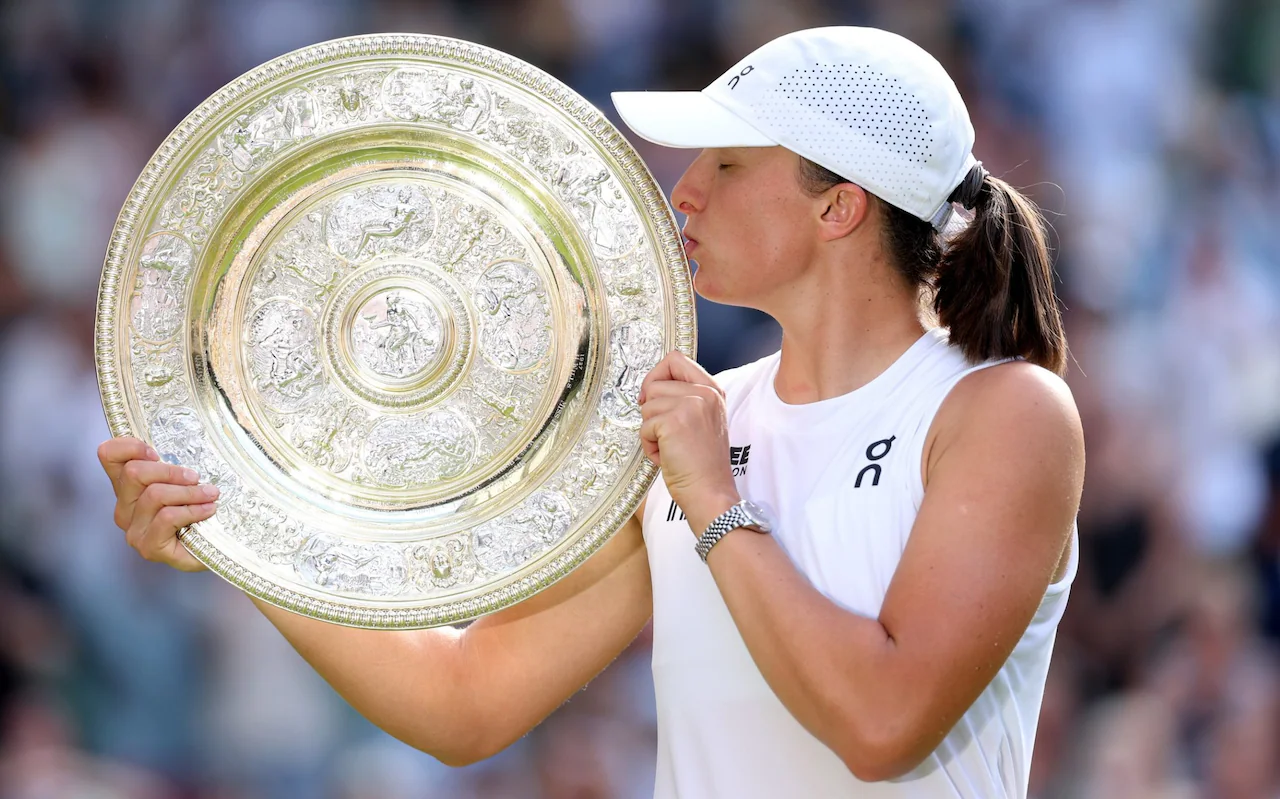
In a stunning display of skill and poise, Iga Swiatek seized her first Wimbledon title with a relentless performance, soundly defeating Amanda Anisimova 6-0, 6-0. This victory on Centre Court marked a historic moment for Swiatek, as she not only claimed her sixth Grand Slam title but also delivered the most lopsided women’s final performance at the All England Club in over a century.
Both competitors were making their debuts in a Wimbledon final, but it was the eighth seed Swiatek who looked composed and confident from the outset. Within just 57 minutes, Swiatek, now 24, showcased her mastery over the grass-court surface, a feat she had previously struggled with despite winning the Wimbledon junior title back in 2018. No woman had achieved such a ‘double bagel’ victory at Wimbledon since Dorothea Lambert Chambers in 1911, underlining the rarity of Swiatek’s accomplishment.
“It seems super surreal,” Swiatek reflected. “Honestly, I didn’t even dream of winning Wimbledon because it was way too far. I feel like I’m an experienced player, having won other Slams, but I didn’t expect this.”
The match was a stark contrast in performance levels. Swiatek’s experience shone through as she dashed through the first set in just 25 minutes, allowing Anisimova to win a mere nine points. The jittery 13th seed appeared overwhelmed and succumbed to 28 unforced errors and five double faults, illustrating her difficulty handling the high-stakes environment of a major final. Despite the sympathetic cheers from the Centre Court crowd, Anisimova’s nerves remained evident throughout the match.
In a poignant moment following the match, Anisimova addressed the crowd, fighting back tears as she acknowledged the intensity of the experience: “It’s been an incredible fortnight for me – even though I ran out of gas. I wish I could have put on a better performance for you today.”
While Swiatek’s performance was nothing short of brilliant, it was clear that Anisimova was struggling with her nerves. Having taken time to recuperate and improve her mental health after dealing with the tragic loss of her father, Anisimova’s journey to the final was inspirational. Yet her struggles in the final brought to light the immense physical and emotional challenges that come with competing at the highest level. She revealed that fatigue had plagued her, limiting her practice before the match, and acknowledged her need to improve her endurance for future Grand Slam events.
Swiatek’s victory cements her status as an ‘all-court great’. At just 24, she has now remarkably won Grand Slam titles on all three major surfaces—clay, hard, and grass—becoming the youngest woman to achieve this feat since Serena Williams in 2002. With six major titles to her name, Swiatek has surpassed legends such as Maria Sharapova and Martina Hingis, joining a select group of 10 women in the Open era with more than six championships. Her dominance on clay, branded ‘Queen of Clay’, and her impressive track record on hard courts, now gains significant credibility with her Wimbledon triumph.
This Grand Slam title not only marks a significant milestone in Swiatek’s career but also raises expectations for her future performances on the grass courts. With her remarkable progression, the world will be watching closely to see how she builds on this historic moment.


