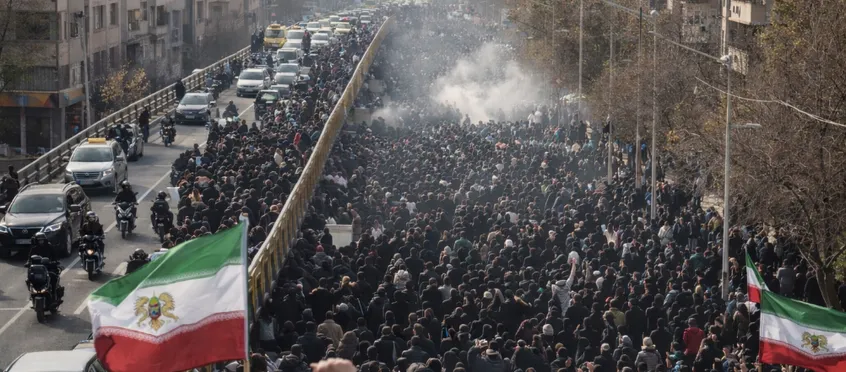
Anti-government protests intensified across Iran on Thursday, entering their 12th day, with large crowds gathering in Tehran and other major cities following calls for demonstrations by exiled Crown Prince Reza Pahlavi. Witnesses reported chants against the regime and clashes with security forces, as a nationwide internet blackout was imposed, according to monitoring group NetBlocks.
The protests, initially sparked by the collapse of the Iranian rial and soaring inflation exacerbated by reimposed UN sanctions, have spread to all 31 provinces. Human rights groups report at least 45 deaths, including minors, and over 2,200 arrests since late December. Security forces have used tear gas, water cannons, and live fire in some areas, while bazaars and shops in multiple cities remained shuttered in strikes.
Iranian authorities disrupted internet access nationwide shortly after evening protests began, in what NetBlocks described as escalating digital censorship. This follows partial restrictions in protest hotspots earlier in the week.
International Reactions
U.S. President Donald Trump has repeatedly warned Iran against violent crackdowns, stating the U.S. is watching closely and could intervene if protesters are targeted. Israeli Prime Minister Benjamin Netanyahu has expressed support for the demonstrators, suggesting the Iranian people may be “taking their fate into their own hands.”
Iranian Foreign Minister Abbas Araghchi, speaking in Beirut, said Iran does not seek war with the U.S. or Israel but is “ready for it” if attacked again. He also indicated openness to nuclear negotiations based on mutual respect.
Nuclear and Regional Tensions
Tensions remain high following the June 2025 12-day war, during which Israel and the U.S. struck Iranian nuclear sites and military targets. Recent satellite imagery shows ongoing construction at a former nuclear-related facility in Parchin, raising concerns about rebuilding efforts, though Iran maintains its program is peaceful.
Iranian officials have accused the U.S. and Israel of exploiting the unrest, with the newly formed Defense Council warning of potential preemptive measures against perceived threats.
The situation continues to evolve rapidly, with protests showing no signs of abating despite government concessions on subsidies and warnings against “rioters.”