


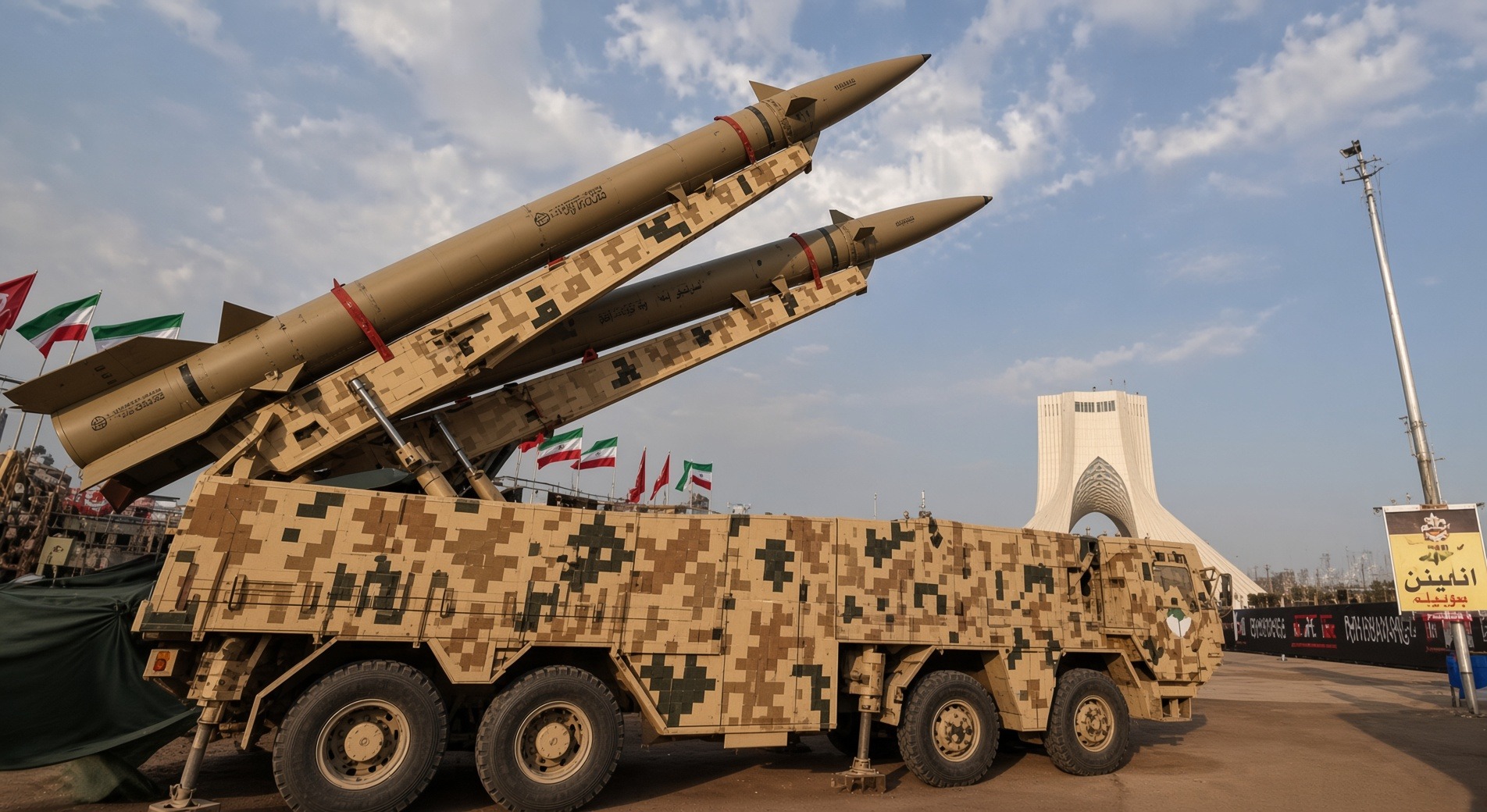
The Iran-US war has entered a potentially dangerous new phase after Tehran launched ballistic missiles at US military targets in Jordan, widening the conflict beyond the immediate battlefield.
Iran’s Islamic Revolutionary Guard Corps (IRGC) said it targeted two US military air bases in Jordan, claiming the attacks caused “heavy damage”. The strikes were described by Tehran as retaliation for US attacks on Iranian military assets in the Strait of Hormuz.
Jordan’s military said it intercepted eight missiles, without identifying their origin.
The escalation highlights the growing risk that the six-month-old conflict could draw more countries and US military installations across the Middle East directly into the fighting.
The latest confrontation began after the United States said it had carried out “limited, precise” strikes against Iranian rocket launchers on a small island in the Strait of Hormuz.
Washington said the targets were Iranian forces preparing to lay additional sea mines in the strategic waterway.
US Central Command said the Iranian activity posed an “imminent threat” to shipping and US forces operating in the region.
Iran, however, accused Washington and Israel of continued aggression and said its strikes against US targets in Jordan were carried out in response.
Jordan becomes a new flashpoint
Jordan is a close US ally and hosts American military personnel and infrastructure, making the country particularly sensitive to any escalation involving Iran and Washington.
Although Jordan’s military said it intercepted the incoming missiles, the attack demonstrates how the conflict could increasingly threaten countries that are not direct participants in the war.
Iran has previously targeted US facilities and allied positions across the Gulf, including in Kuwait, Oman, Saudi Arabia and the United Arab Emirates.
The latest strikes therefore raise concerns that the conflict could develop into a broader regional confrontation involving multiple US allies.
Strait of Hormuz at centre of crisis
The Strait of Hormuz remains one of the most important pressure points in the conflict.
The narrow waterway carries a significant share of global oil supplies and has become a major battleground between Iran and the United States.
Washington said it had completed clearing sea mines from international shipping routes through the strait but warned that US forces remained prepared to protect commercial shipping.
Iran’s effective disruption of traffic through the waterway has already contributed to higher global energy prices and shortages affecting fuel, fertiliser and other commodities.
Following the latest US strikes, Brent crude rose above $90 a barrel, while West Texas Intermediate climbed above $85.
Peace efforts under pressure
The renewed military confrontation comes despite months of diplomatic efforts aimed at ending the war.
Mediators including Pakistan and Qatar have attempted to broker an agreement between the two sides. An April ceasefire ended the most intense phase of the fighting, while a memorandum of understanding toward a final peace deal was signed in June.
However, continued attacks — particularly around the Strait of Hormuz — have undermined hopes for a lasting settlement.
The Trump administration has also shifted greater emphasis towards economic pressure on Tehran, describing its strategy as “economic warfare”.
But the latest exchange of strikes suggests that military confrontation remains a significant risk.
Political pressure grows in Washington
The war is also becoming an increasingly difficult political issue for President Donald Trump as the United States approaches November’s midterm elections.
Democratic Senator Jack Reed, the ranking Democrat on the Senate Armed Services Committee, has sharply criticised the administration’s handling of the conflict.
“Six months later, not a single objective has been achieved,” Reed said.
He argued that the war had weakened the United States’ position in the Middle East and globally.
With US forces and allies increasingly exposed to retaliation, the latest strikes in Jordan could become a major test of Washington’s strategy — and of whether the conflict can be contained before it develops into a much wider regional war.