




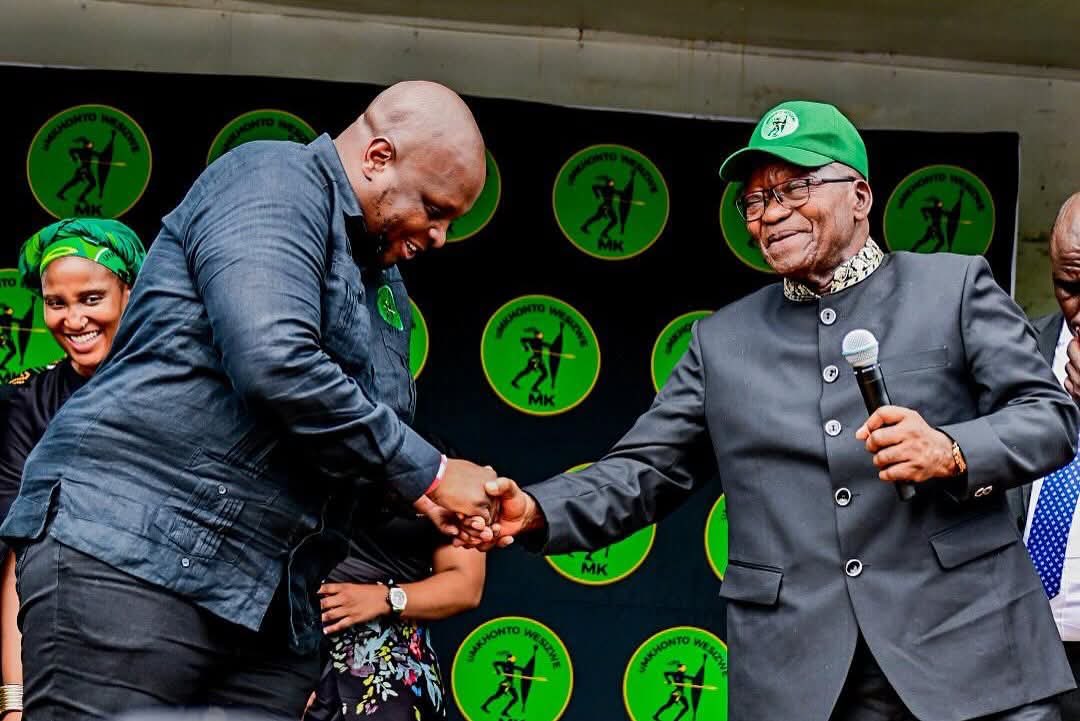
Jacob Zuma, the president of the MK Party, has firmly rejected a proposal from the African National Congress (ANC) to join the Government of National Unity (GNU). This revelation comes from a leaked audio recording which has sparked significant interest and debate within political circles.
The audio reveals that the ANC extended an offer to the MK Party, suggesting positions not only within the GNU but also in the Government of Provincial Unity in KwaZulu-Natal. However, Zuma’s response was unequivocally dismissive. “Even though Thabo Mbeki and I were once friends, we’ve drifted apart. I’m making a point here, speaking about what is real; we no longer see eye to eye on the agreements we made years ago because our objections are not the same,” he stated emphatically.
This rejection highlights the growing rift between Zuma and one of the ANC’s prominent leaders, Thabo Mbeki. Once allies in the struggle against apartheid, the two now appear to have fundamentally differing views on political direction and unity, underscoring the complexities within a party that has historically represented the nation’s transformative agenda.
The ANC’s proposal to involve the MK Party in both the GNU and the KwaZulu-Natal government seems to have been framed as a strategic move to bolster alliances and strengthen governance. Yet, Zuma’s refusal raises questions about the stability of political partnerships and the actualisation of a cohesive approach to governance in a country still grappling with the aftereffects of apartheid.
Political analysts interpret this as a clear indication of Zuma’s intent to maintain autonomy and to assert the MK Party’s distinct identity within South Africa’s political landscape. This development could signal a more fragmented political environment ahead, as alliances that once seemed unshakeable are slowly being re-evaluated.


