


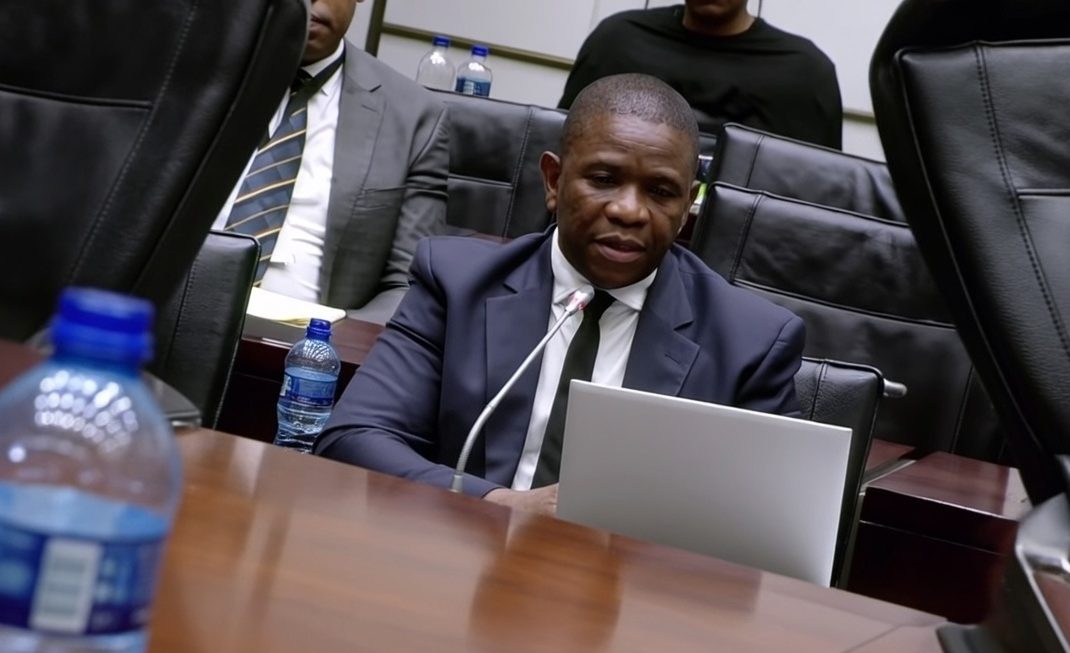
KwaZulu-Natal Provincial Commissioner Nhlanhla Mkhwanazi has confirmed that he currently does not hold top security clearance, citing delays by the State Security Agency (SSA) and the police’s Crime Intelligence Unit, which have stalled the process since 2018, when his previous certificate expired.
Mkhwanazi made the disclosure while responding to testimony by investigator Paul O’Sullivan, who noted that the commissioner’s clearance had not been issued.
The delay stems from Mkhwanazi being incorrectly flagged by Crime Intelligence, based on allegations from the Independent Police Investigative Directorate (IPID). An IPID official in KwaZulu-Natal had claimed Mkhwanazi was implicated in a 2013 hit squad case, even though he was working in Pretoria at the time. “This is why the SSA did not issue a new clearance,” Mkhwanazi told the parliamentary ad hoc committee investigating police corruption.
Mkhwanazi Raises Alarm Over Big Five Cartel Influence in Prison
In a separate revelation, Mkhwanazi told the parliamentary committee investigating corruption that businessperson and alleged leader of the Big Five cartel, Vusimuzi “Cat” Matlala, holds significant influence while incarcerated.
Mkhwanazi explained that he received a tip-off from a fellow prisoner housed with Matlala. “This person alleges that Cat Matlala has freedom inside the C-Max. He is very close to the head of the facility; that’s why he can get around and get things at ease,” he said.
He added that he was not aware of all events mentioned in the letter, particularly allegations that suspended police minister Senzo Mchunu had possession of Matlala’s affidavit presented to the ad hoc committee. The letter, authored by a prisoner within Matlala’s cell block and received through an associate of former uMkhonto weSizwe Party spokesperson Nhlamulo Ndhlela, contained information not previously made public.
The letter suggested that communications between Matlala and Mchunu were more direct than previously revealed. While a middleman, police informant Brown Mogotsi, facilitated contact, there was also direct communication, including a conference call in September 2025 involving Shamila Batohi, Mchunu, Matlala’s advocate Lawrence Hodes, and an unnamed SAPS general.
According to the letter, the call aimed to have Matlala sign an affidavit stating he did not know Mchunu, with bail being a condition for his cooperation. Matlala reportedly refused to sign unless bail was granted first. The correspondence also implicated the Investigative Directorate Against Corruption (IDAC), claiming its officials had visited Matlala in prison multiple times.
Mkhwanazi stated that Matlala approached him as an informer, sharing information under significant personal risk. He emphasized that key witnesses, including KwaZulu-Natal Hawks head Lesetja Senona and Matlala, had been fearful to reveal the names of influential individuals involved in organised crime.
The commissioner further alleged that corrupt politicians had captured officials in the justice system to facilitate criminal activity, referencing Mchunu’s disbandment letter regarding the Political Killings Task Team (PKTT). “I believe that Minister Mchunu was captured to end up writing that letter. But he doesn’t accept that he owns it. He said he wrote the letter on his own iPad,” Mkhwanazi said.