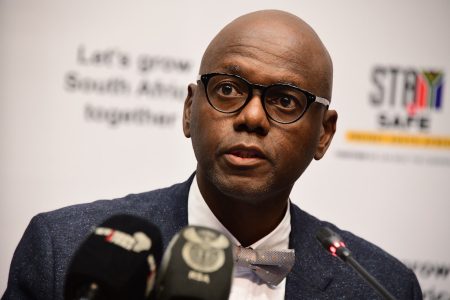



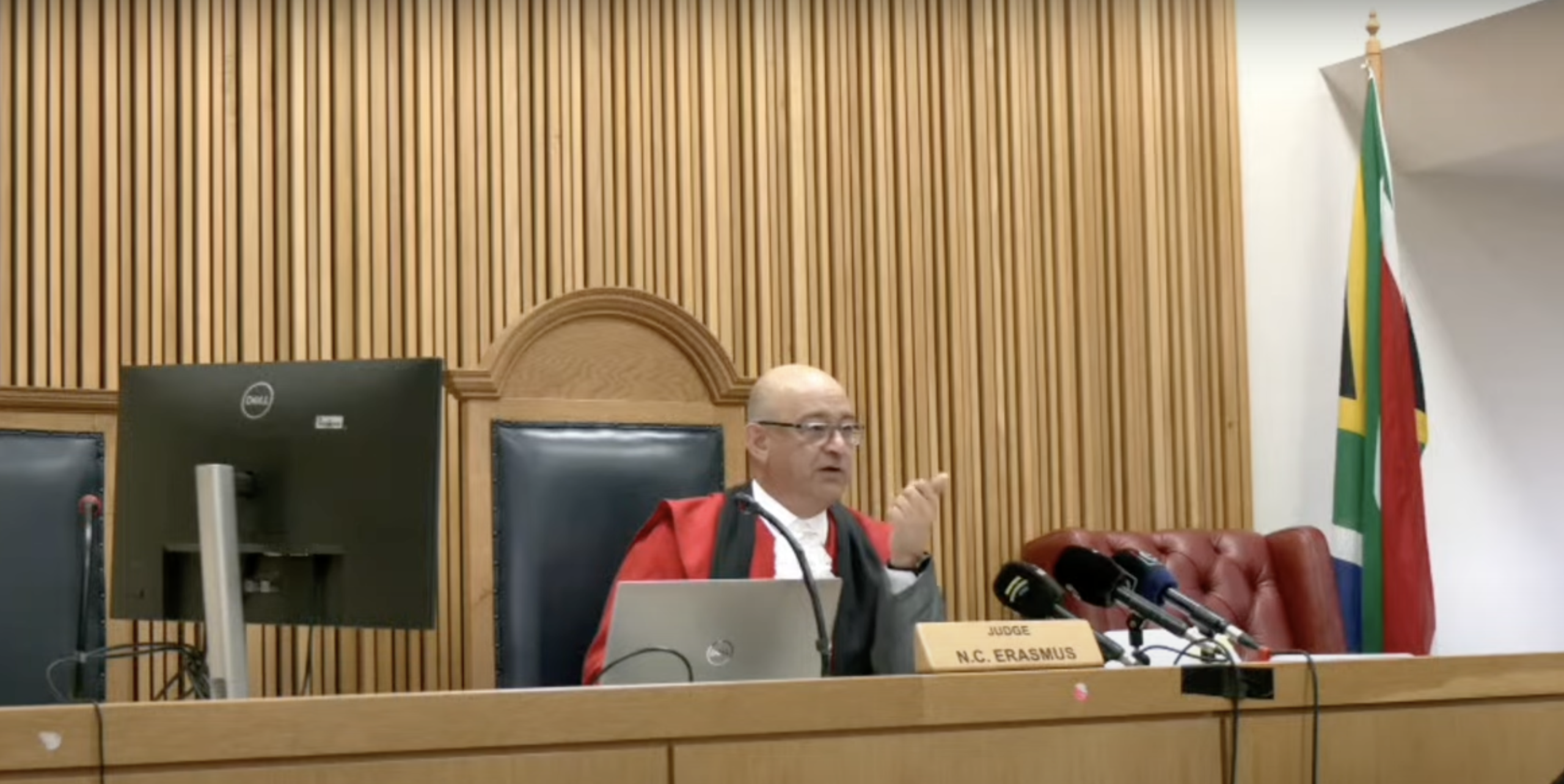
The lawyer representing Steveno “Steffie” van Rhyn, one of three individuals convicted of human trafficking and kidnapping in the high-profile Joshlin Smith case, asserted that the legal proceedings were marred by significant violations of rights and improper conduct from the outset.
Advocate Nobahle Mkabayi argued before the bench that her client had been unlawfully detained for over 48 hours prior to his first court appearance on 7 March 2024, a blatant breach of his constitutional rights.
“We appeared in court on 31 January 2021 bare-handed and clueless, without the contents of the docket. The State knew the attorneys, but details were never furnished before the pre-trial,” Mkabayi recounted. She noted that the defence team only received the docket two weeks before trial—a timeline insufficient for meaningful preparation—and highlighted that significant evidence was missing from the documents provided.
“We had to climb the mountain to fetch the contents ourselves. It is unconstitutional to shift that duty to the defence,” she remarked, emphasising how the limited preparation time hindered their ability to consult witnesses, formulate a strategy, or thoroughly analyse video evidence crucial to the case.
Mkabayi went on to accuse law enforcement of arresting her client without a warrant, subjecting him to torture in custody, and underscored that the first doctor to evaluate him did not dismiss the possibility that his injuries were consistent with abuse. She argued that Captain Philip Seekoei had obtained a confession from Van Rhyn that was inherently flawed, as any statement elicited from a tortured individual is inadmissible in court.
“A bleeding man has no will,” Mkabayi told the court, further alleging that police officers failed to inform Van Rhyn of his rights, including the right to remain silent and to legal representation.
In a pointed critique of the trial court’s proceedings, she lamented the lack of a clear ruling regarding the admissibility of the confession obtained under questionable circumstances. “This confession was not made freely or voluntarily. Suffocation was used,” Mkabayi asserted.
Advocate Fanie Harmse, representing Jacquen “Boeta” Appollis, shifted focus onto the reliability of the State’s pivotal witness, Lourentia “Renz” Lombaard. Harmse highlighted discrepancies, noting that even Lombaard testified that Appollis wanted no part in the alleged scheme to sell Joshlin.
The defence drew attention to another suspect, Phumza “Maka Lima” Sigaqa, who had never been charged despite suggestions that Joshlin could have been taken to her residence. Harmse further claimed that Appollis’s statement to police was coerced, pointing to video evidence that showed Appollis limping, alongside medico-legal notes documenting fresh injuries noted on 6 March 2024. “Those injuries cannot be wished away,” he argued.
Defending Lombaard’s credibility, Advocate Eben van Tonder maintained that she had testified truthfully during the trial. He referenced the Western Cape High Court’s finding of “sufficient corroboration for the reliability” of Lombaard’s testimony, which was bolstered by both direct and circumstantial evidence. According to Van Tonder, despite defence claims casting doubt on Lombaard’s reliability, it was her account that the court chose to rely upon to reach its verdict.
The case started with the alarming disappearance of Joshlin, who vanished from her Middelpos home in Saldanha Bay on 19 February 2024. Subsequently, her mother, Racquel “Kelly” Smith, along with Appollis and Van Rhyn, faced conviction for kidnapping and human trafficking, each receiving life sentences.
The appeal proceedings, which have captivated public attention, are set to continue.