



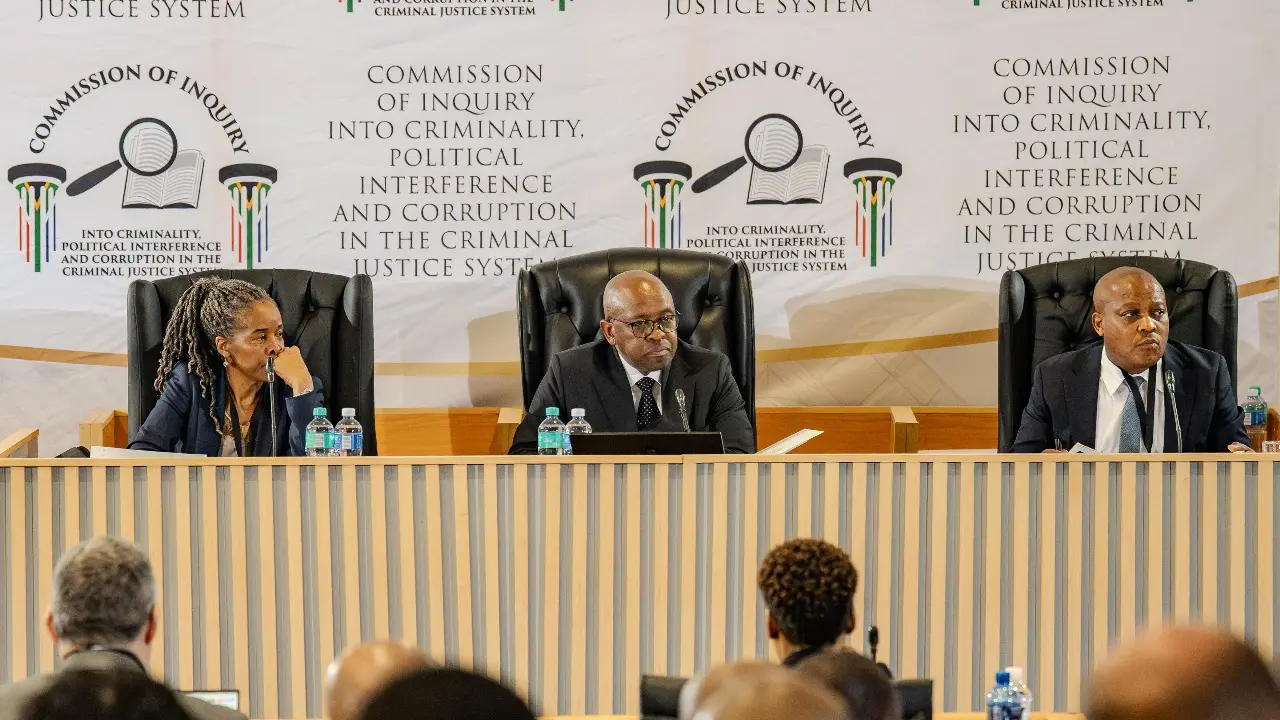
The Madlanga Commission is set to resume public hearings at the Bridget Mabandla Justice College in Pretoria after a break of more than a week.
The inquiry is expected to accelerate proceedings as it faces growing time constraints while investigating allegations of criminal infiltration, corruption and political interference within South Africa’s criminal justice system.
On Tuesday, the commission will turn its attention to the Johannesburg Metropolitan Police Department (JMPD), with a senior official expected to testify about the alleged theft of drugs by law enforcement officers during and after a drug bust in Aeroton, Johannesburg.
Commission spokesperson Jeremy Michaels said the inquiry would examine alleged criminal infiltration of the JMPD and possible collusion between officers and criminal syndicates.
“On Tuesday (Day 173), the Commission will hear testimony regarding infiltration of the JMPD by criminal networks, and collusion between JMPD officers and criminal syndicates,” Michaels said.
The commission is also expected to recall several individuals who previously appeared before the inquiry but were unable to complete their testimony.
Those expected to return to the witness stand include Police Minister Senzo Mchunu, taxi boss Joe Sibanyoni, alleged criminal figure Vusimuzi “Cat” Matlala and his associate Suleiman Carrim.
Carrim is also the subject of a separate Special Investigating Unit (SIU) investigation into multimillion-rand contracts allegedly secured in the North West.
The SIU previously investigated Carrim over allegations of tender irregularities worth about R2 billion at Tembisa Hospital.
Other individuals who have been mentioned during the commission and could potentially be called include businessman Steve Motsomi, accused criminal Katiso Molefe and businessman Hangwani Maumela, who has been linked to both Matlala and Carrim.
The inquiry is expected to continue facing resistance from some implicated individuals, with several witnesses having used legal avenues to delay or avoid appearing before the commission.
Ill health and concerns about self-incrimination have been among the reasons cited by some individuals for their reluctance to testify.
The commission is also considering criminal charges against Carrim and potentially suspended Crime Intelligence deputy head General Feroz Khan, who has previously resisted appearing before the inquiry.
Before the break, commission chairperson Justice Mbuyiseli Madlanga ordered Khan to testify or have his medical condition assessed by an independent medical practitioner.
The order followed claims by Khan’s doctor that he was suffering from extreme anxiety and was medically unfit to appear before the commission.
The resumption of hearings is expected to place renewed focus on whether the commission can overcome witness resistance and complete its work within its remaining timeframe.