



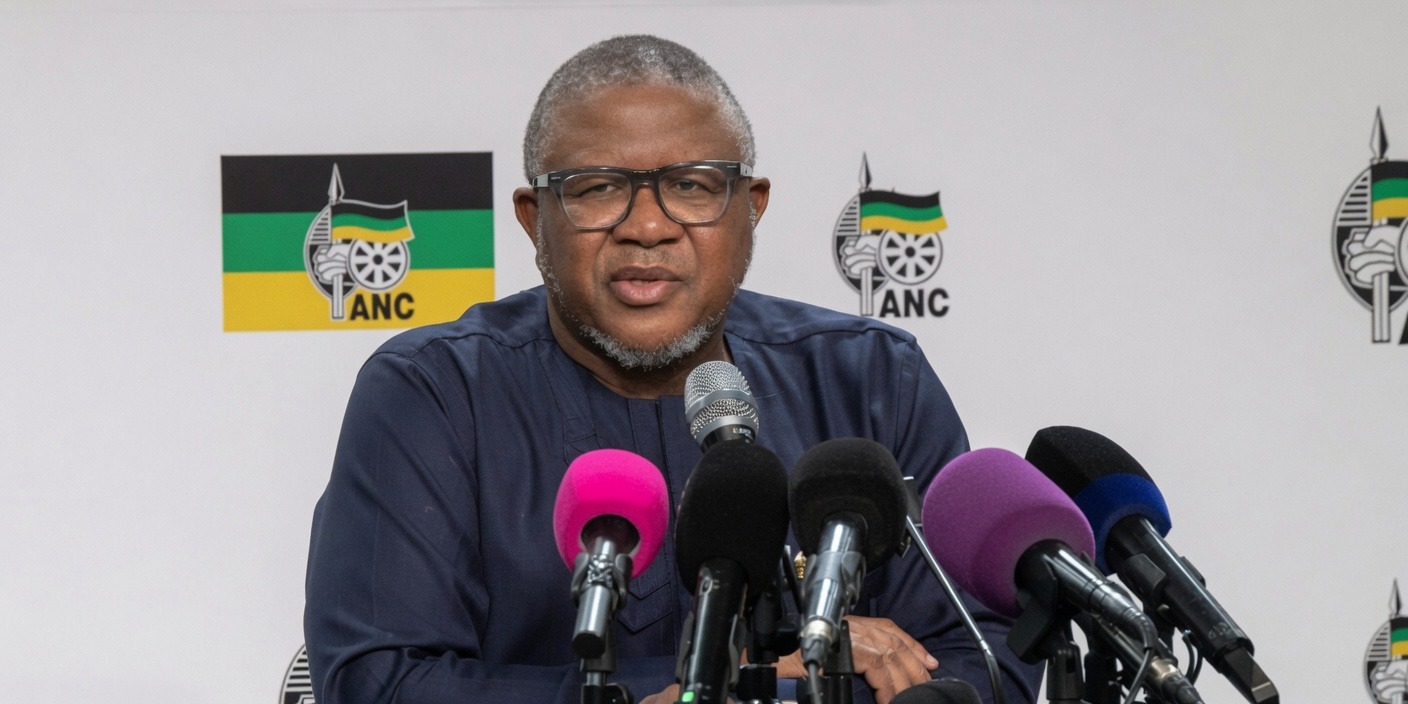
ANC Secretary-General Fikile Mbalula says the public fallout within the leadership of the anti-immigration movement March and March is evidence that the organisation is beginning to fracture.
Addressing the media at Luthuli House in Johannesburg on Tuesday, Mbalula said he had predicted that divisions would emerge within the movement because of what he described as competing political interests among its leaders.
“At the end of June, forces operating under an anti-immigration banner set out to shut down parts of our country,” Mbalula said.
“I was right when I told you they were going to differ because they have political interests while pursuing an immigration agenda. Where are we today? Are they not at each other’s throats?”
Mbalula also dismissed the movement’s nationwide shutdown campaign, saying it failed to achieve its stated objective of bringing the country to a standstill.
“They were contained, and the shutdown they promised did not bring the Republic to its knees,” he said.
Despite this, Mbalula acknowledged that the campaign had caused reputational damage to South Africa.
“There was a cost to the good name South Africa has built since 1912, and we are going to pay heavily for that,” he said.
His comments come a day after March and March announced that it had severed ties with one of its associates, Ngizwe Mchunu.
In a statement issued after its National Executive Committee (NEC) meeting on 25 July, the movement said it had uncovered alleged attempts to interfere with and weaken the organisation, prompting the decision to cut ties with Mchunu.
Mchunu responded in a video, rejecting the movement’s decision and criticising its leadership.
He argued that March and March had already achieved its objective of drawing attention to illegal immigration and said continued street protests would do more harm than good.
“We cannot march forever,” Mchunu said, arguing that further demonstrations would negatively affect the economy while having little impact.
He also criticised March and March leaders Jacinta Ngobese-Zuma and Phakel’umthakathi, describing them as his “juniors” who were “excited by the limelight and relevance”.
The public exchange marks the latest sign of internal tensions within the movement following its high-profile anti-illegal immigration protests held across parts of South Africa at the end of June.

