





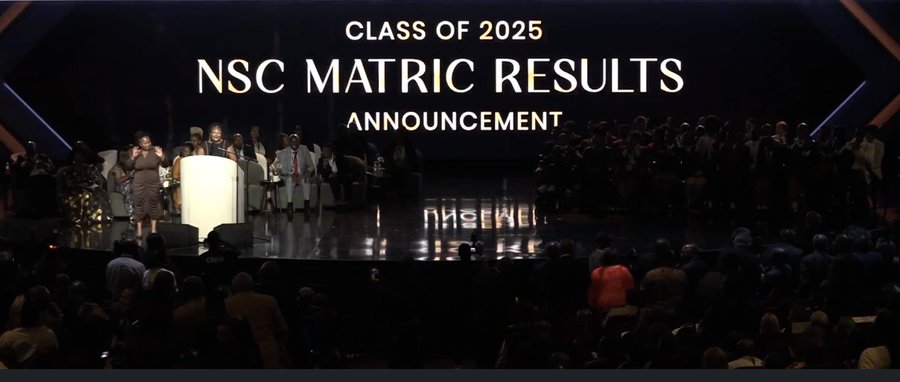
South Africa’s 2025 matric results have sparked mixed reactions following their release by Basic Education Minister Siviwe Gwarube in Fairlands on Monday evening.
According to the minister, the Class of 2025 achieved a historic 88% pass rate, the highest in the country’s history, marking what she described as a major milestone for the basic education sector.
However, the announcement has been met with skepticism from several political parties and civil society groups, who argue that the headline figure masks deeper systemic failures in the education system.
Build One South Africa (BOSA) was the first political party to challenge the results, describing them as “misleading and ineffectual.”
BOSA leader Mmusi Maimane said the true matric pass rate stands at just 54.7% when measured using cohort data.
“Of the 1,250,791 learners who began Grade 1 in 2014, only 684,640 full-time learners passed matric in 2025. This means more than 566,000 young people did not make it through the system,” Maimane said.
While acknowledging that some learners may have pursued alternative pathways such as Technical and Vocational Education and Training (TVET) colleges, Maimane argued that many others had dropped out entirely.
“The sharp drop-off between Grades 10 and 12 shows that hundreds of thousands of learners are being lost before matric, often because poverty forces young people out of classrooms and into work to support their families. This is an indictment of both the education system and its supporting structures,” he added.
ActionSA echoed similar concerns while congratulating the Class of 2025 for their achievement under difficult circumstances.
The party’s Parliamentary Chief Whip, Lerato Ngobeni, said headline pass rates do not accurately reflect the system’s performance.
“Using the accepted cohort methodology—measuring how many learners passed matric relative to the 1.14 million learners who entered Grade 10 in 2023—the effective completion rate drops to 57.7%,” Ngobeni said.
In contrast, Deputy President Paul Mashatile welcomed the results, praising learners for their resilience, discipline, and determination.
Mashatile encouraged matriculants to take advantage of government-supported opportunities aimed at assisting young people as they transition into higher education, skills development, and employment.
The South African Federation of Trade Unions (SAFTU) also welcomed the results, describing them as a testament to the perseverance of learners, educators, and parents amid ongoing economic hardship, resource shortages, and social instability.
“SAFTU pays special tribute to teachers and learners in under-resourced schools who continue to succeed against overwhelming odds. Their dedication represents the best of South Africa’s working class, which has carried the education system despite chronic state neglect,” said federation spokesperson Newtown Masuku.


