



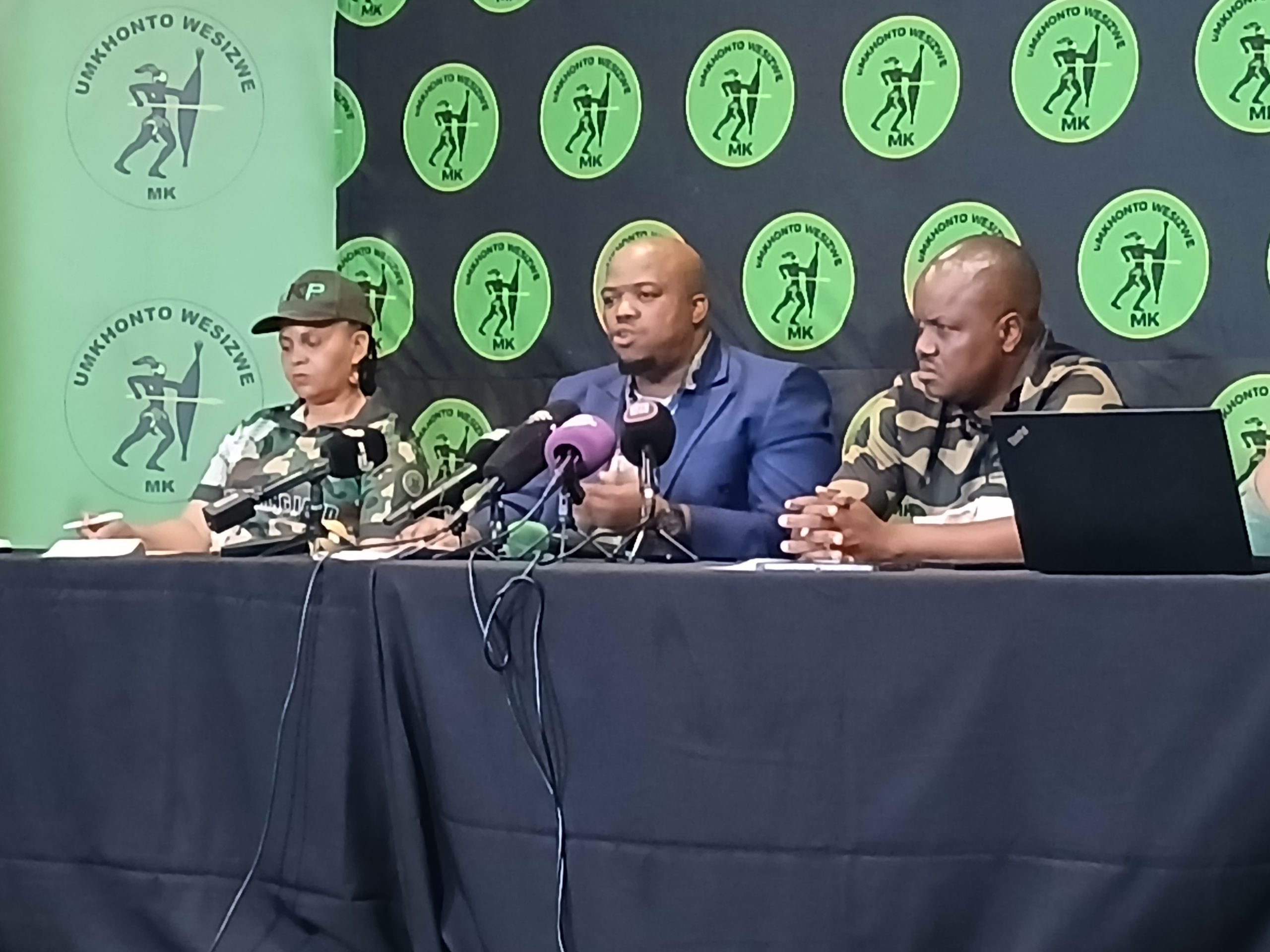
The uMkhonto weSizwe Party Secretary-General Sibonelo Nomvalo has rejected criticism that the party is unstable following several leadership changes in key positions.
Nomvalo was speaking during a media briefing in Sandton after the party held a National Officials Meeting to discuss internal organisational matters and its political strategy ahead of upcoming political activities.
Nomvalo, who recently became the party’s eighth secretary-general in just two years, defended the frequent leadership changes, saying the party is experimenting with different leadership styles as it consolidates its structures.
“We are developing systems from time to time. The party suffers from instability is the party that cannot conduct its core business,” she said.
His appointment follows a series of rapid changes in the secretary-general position since the party’s formation, a development that has drawn criticism from political observers and opponents who argue that it signals instability within the organisation.
However, Nomvalo insists the changes are part of a process of refining the party’s leadership and strengthening its internal systems.
He also dismissed claims that the MK Party’s political support is largely confined to KwaZulu-Natal, saying the party is expanding its footprint across the country.
“Here in Gauteng we are having eight MPL’s this is Gauteng not KZN, we MPL in North West and Mpumalanga.”
Political analysts have often linked the party’s strong support base to the home province of its founder, former president Jacob Zuma, where it performed strongly in the 2024 general elections.
Nomvalo says the party is working to build structures in other provinces as part of its broader national strategy.
The MK Party has also recently reshuffled some of its leadership in Parliament, a move the organisation says is aimed at strengthening its effectiveness in legislative processes and improving coordination between its parliamentary caucus and party leadership.
The party remains one of the newest but fastest-growing political formations in South Africa’s political landscape, although it continues to face scrutiny over its internal leadership changes and organisational stability.


