



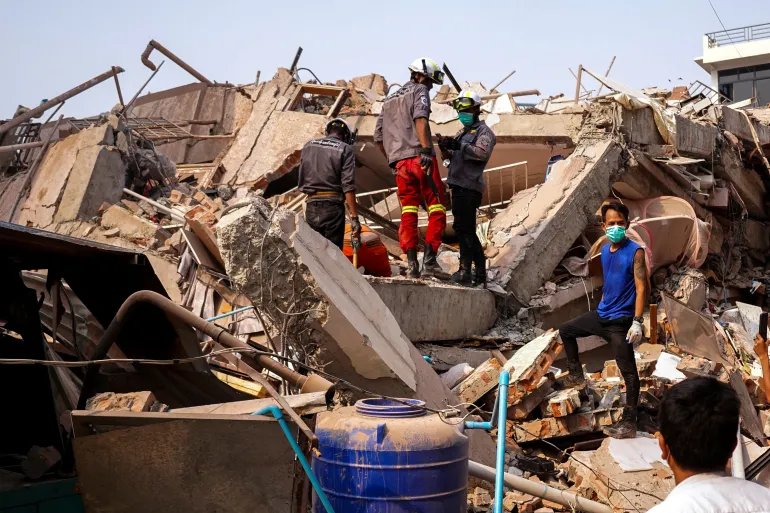
Long-shot efforts to uncover survivors from Myanmar’s devastating earthquake on March 28 have come to a close, paving the way for increasing relief and recovery activities as the death toll exceeds 3,500 and continues to rise. As families navigate the wreckage, the nation faces the grim reality of its latest natural disaster amid ongoing civil unrest.
In the capital, Naypyitaw, residents braved drizzling rain to clear debris from their damaged homes, while military personnel worked tirelessly to remove the remains of collapsed structures, including Buddhist monasteries. Tragedy was compounded on Monday as the Myanmar Fire Services Department reported the recovery of 10 bodies from the ruins of a building in Mandalay, the country’s second-largest city.
The 7.7 magnitude earthquake struck a vast region, inflicting devastating damage across six states and regions. Many communities remain without power, severing telephone and cell connections while roads and bridges lie in ruins, complicating the assessment of the full scale of destruction. Recent heavy rains and winds have further hindered relief operations, exposing the most vulnerable to harsh elements as thousands spend the night in makeshift shelters.
In the aftermath of the quake, international rescue efforts have dwindled, with teams from Singapore, Malaysia, and India returning home after their search for survivors concluded. The number of operational rescue teams in Naypyitaw’s residential zones has been steadily decreasing, raising concerns about the areas’ ability to recover from such significant losses.
As the nation grapples with the disaster, tensions persist between Myanmar’s military government and its opponents. Although both sides had declared unilateral ceasefires aimed at facilitating relief efforts, accusations of ceasefire violations continue to surface. Reports indicate that while battles have lessened, the military has been accused of conducting airstrikes, including the use of toxic gas bombs, on territory held by the opposition.
The Three Brotherhood Alliance, comprising powerful ethnic minority guerrilla armies, declared a temporary ceasefire on April 1, mirroring an earlier announcement by the opposition National Unity Government (NUG). While both sides have signalled intentions to reduce hostilities, incidents of violence have continued, casting doubt on the sincerity of these ceasefire agreements.
As of Saturday, the NUG claimed that the military carried out 63 airstrikes and artillery attacks since the earthquake, resulting in at least 68 civilian deaths. Among the casualties were women and children, underscoring the humanitarian crisis unfolding alongside the natural disaster.
In response to these claims, Maj. Gen. Zaw Min Tun of the military government accused opposition forces of breaching ceasefire terms by launching their own attacks. “We are carrying out relief and assistance efforts for the people affected by the earthquake. I am saying this to make everyone aware of the ceasefire violations at a time like this,” he stated in an audio message to journalists.
Amid the chaos of recovery, independent verification of ongoing conflicts remains elusive due to the remoteness of affected areas and restrictions on journalistic access.