


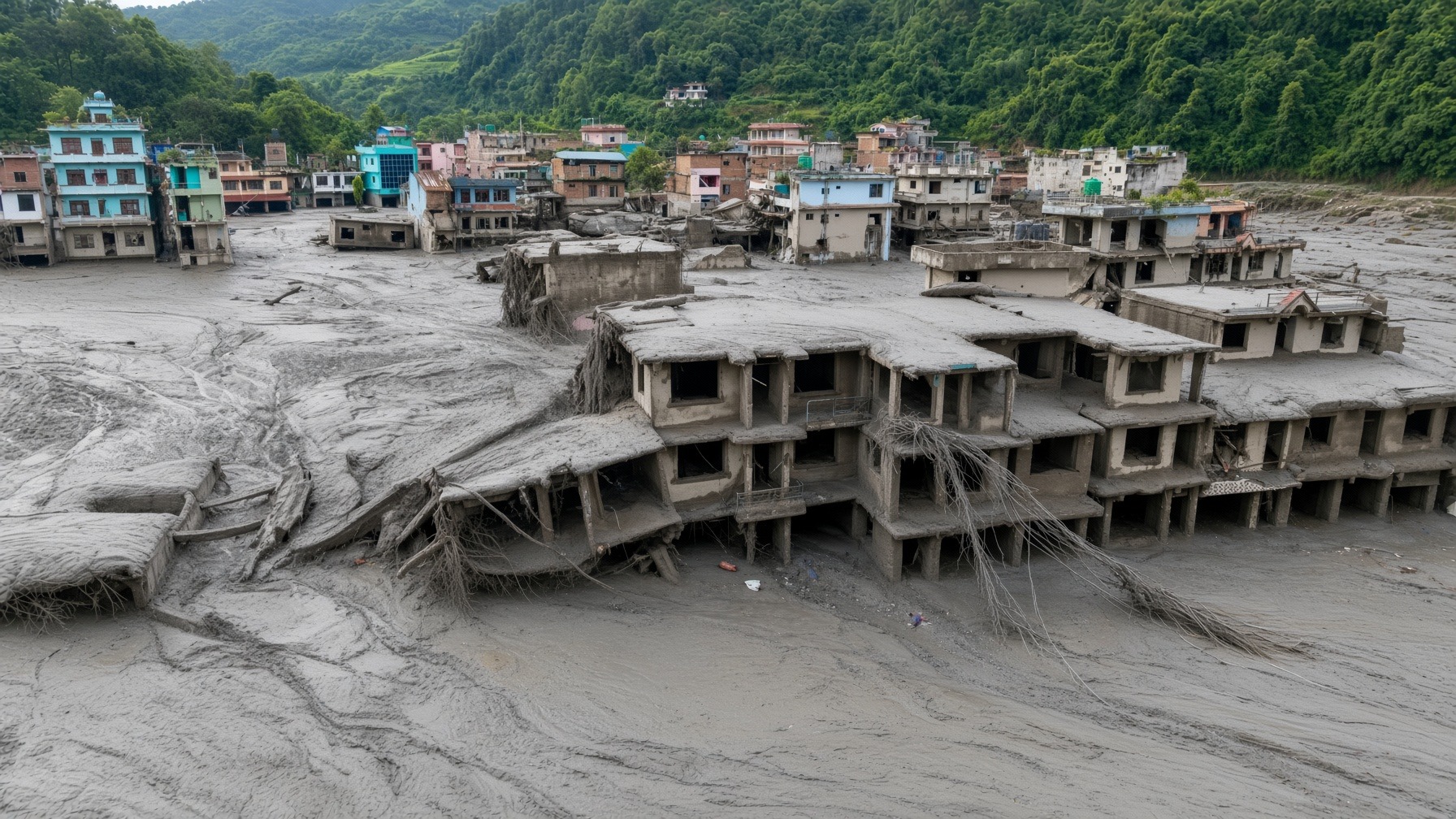
Emergency teams in Nepal are intensifying their search for survivors after devastating floods and landslides left more than 1,300 people dead and thousands missing.
The disaster was triggered on 26 August when a massive glacial and rock collapse near the China-Nepal border unleashed a tsunami-like wall of water, mud and debris.
According to Nepal’s disaster agency, 1,294 bodies have been recovered in the country, while 5,053 people remain missing. In neighbouring China, state media reported 31 deaths and 531 missing people, bringing the combined death toll to 1,325.
The rescue effort gained renewed momentum after two hydropower workers were found alive on Friday, nine days after becoming trapped inside the Trishuli 3A tunnel. Their rescue has been described as a “miracle”.
Nepal Army spokesman Raja Ram Basnet said rescue teams were continuing operations at the tunnel and several other locations on Saturday.
At least 12 hydropower projects have reportedly been destroyed by the floods, with hundreds of workers feared to have been caught in the disaster.
Experts from India, China, Australia and South Korea are assisting Nepali teams as they search blocked tunnels and other areas where survivors could still be trapped.
The scale of the disaster has also created a humanitarian crisis, with morgues overwhelmed and more than 1,000 bodies buried in mass graves after DNA samples were collected for future identification.
Nepal Prime Minister Balendra Shah has pledged safe and comfortable accommodation for thousands of people displaced by the floods and currently living in temporary relief camps.
As rescue operations continue, authorities face the enormous task of recovering the missing, identifying victims and supporting communities devastated by one of the region’s worst recent natural disasters.