





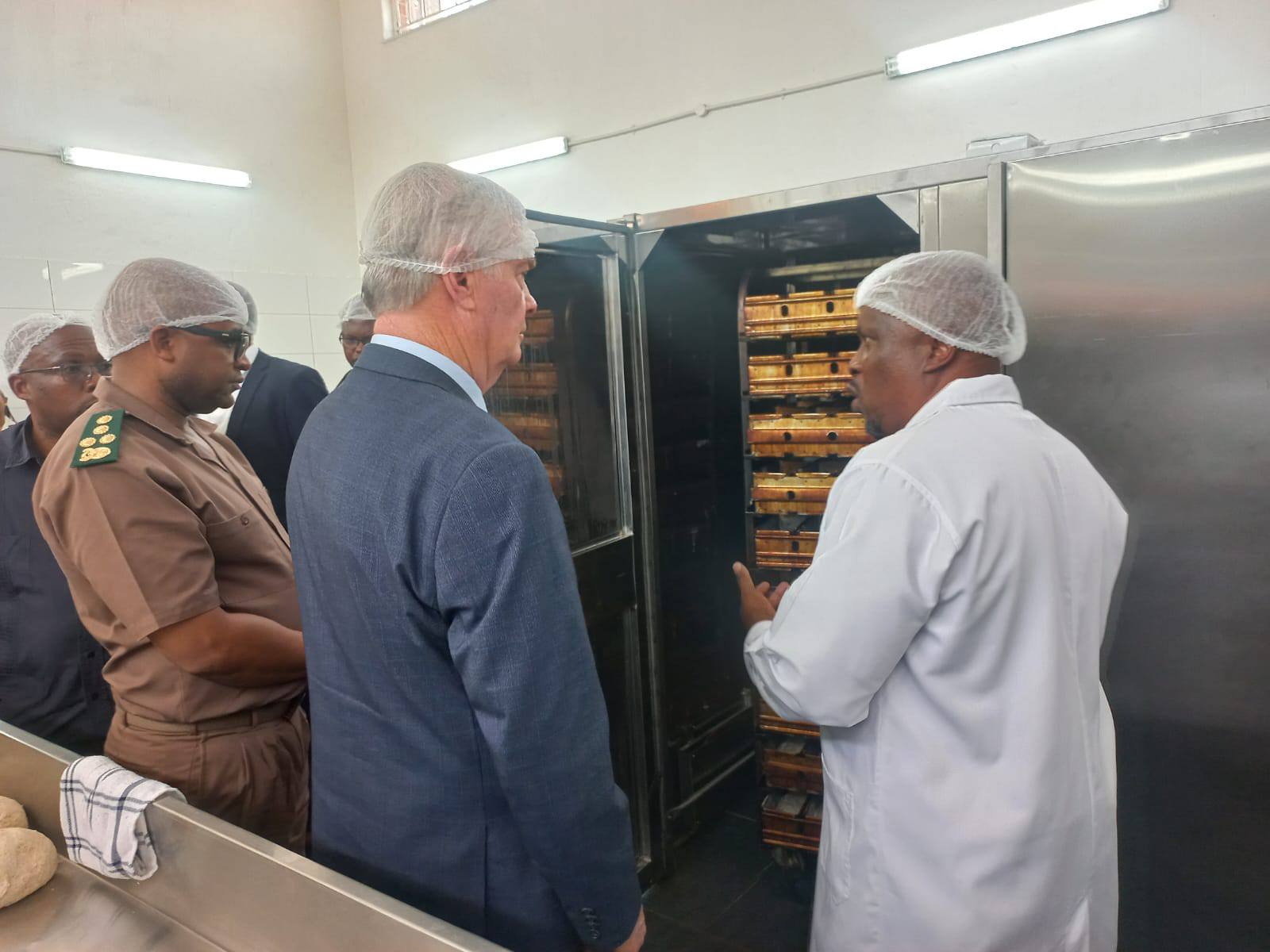
The Police and Prisons Civil Rights Union (POPCRU) has welcomed the Department of Correctional Services’ (DCS) bakery roll-out programme, adding that it’ll address the broader and deep-rooted challenges within the correctional system.The programme, which was launched recently at the Westville Prison in Durban by Minister Dr Pieter Groenewald, is meant to cut outsourcing costs and promote self-sustainability in the country’s correctional facilities.
There are already 13 operational bakeries already producing over 3 800 loaves a day at a third of outsourced costs.POPCRU said the programme is long-over and will be eradicate the costly and corruption-prone tenderisation of services and will help with the rehabilitation of inmates. “For true transformation, our correctional facilities must be self-sufficient beyond just bread production. This includes farming for food production, producing offender uniforms, manufacturing furniture, carrying out maintenance and repairs, and ensuring consistent vocational training. These measures will not only cut costs and reduce corruption but will also provide inmates with skills that will serve them beyond incarceration, thus lowering recidivism rates.We must emphasise that inmates should not be left idle,” said POPCRU spokesperson, Richard Mamabolo.
Furthermore, Mamabolo said constructive, skills-based work must form a central pillar of daily prison life, benefiting rehabilitation, reducing criminal activities within centres, and enhancing cost efficiency.According to the union, this initiative must form part of a clear, comprehensive, and time-bound implementation plan. “Such a plan should ensure all facilities are brought into the self-sustainability programme, with measurable targets and regular progress reporting.Prisons, by their nature, should not be dependent on external suppliers for basic needs such as bread, meat, uniforms, or maintenance. They should have the internal capacity to produce, repair, and sustain themselves. Where Public Works lacks capacity, DCS must step in to maintain its own facilities,” explained Mamabolo.
The union said it’ll continue to engage the department, to ensure that self-sufficiency is expanded, institutionalised, and embedded into a holistic rehabilitation framework, “that transforms correctional centres into spaces of genuine reform and societal reintegration.”The union expressed concern that limited access to technical training and life skills, result in many inmates leaving prison unprepared to survive outside, fuelling the cycle of crime. It also cautioned that overcrowding at correctional services, compound effort to rehabilitate prisoners.“South Africa’s 243 operational correctional centres currently face an overcrowding rate of 48%, housing over 156 000 inmates despite having an approved bed capacity for only 105 474. This dire situation is compounded by a staff complement of approximately 27 000, of which around 11 000 perform administrative duties, leaving an insufficient number of personnel for direct inmate management and rehabilitation,” remarked Mamabolo.


