



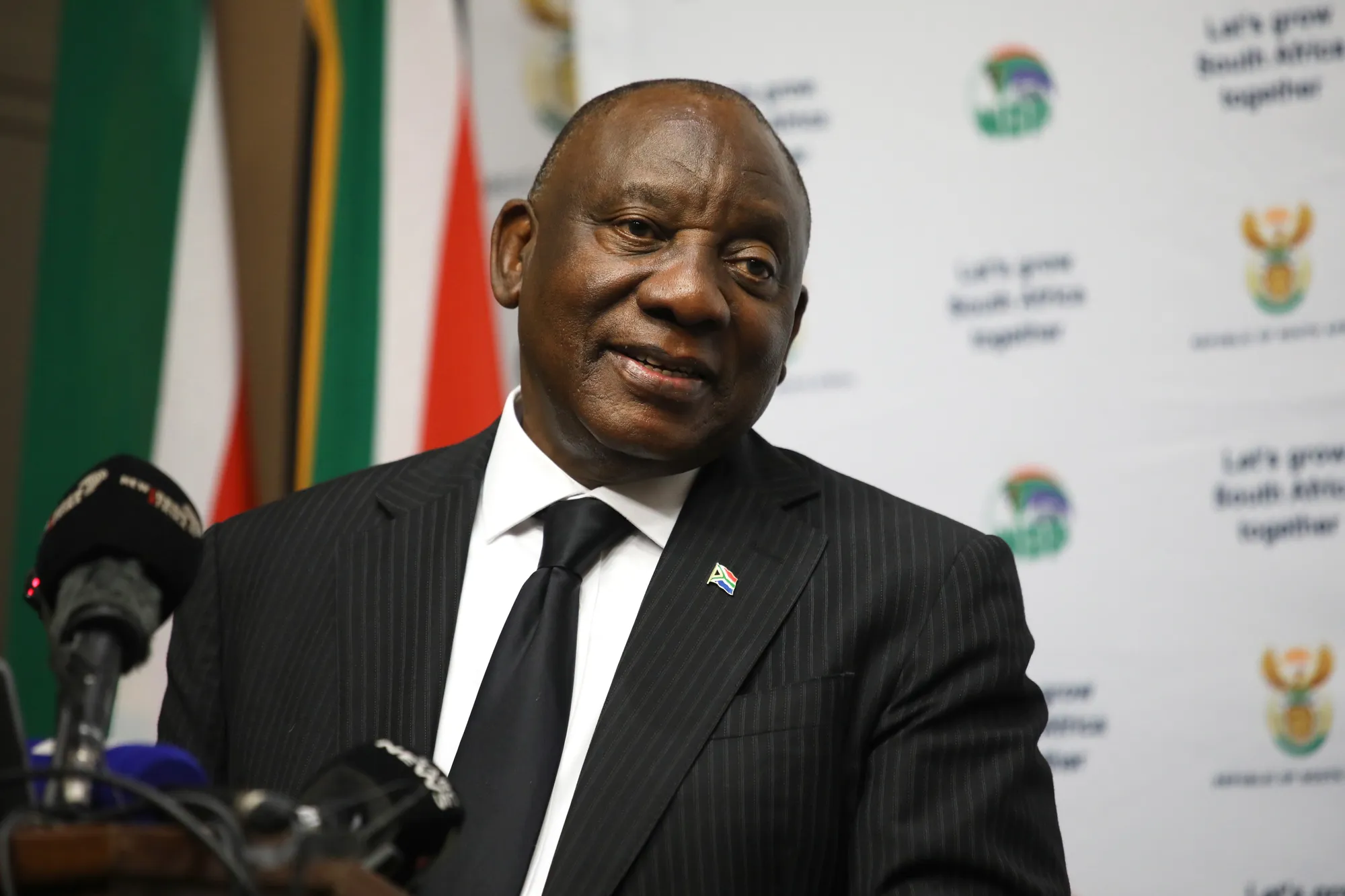
President Cyril Ramaphosa has called for the consistent application of international law, warning that the world cannot build a stable international order on selective justice, unilateralism and the principle that might makes right.
Ramaphosa was speaking on Friday during the presentation of letters of credence by newly accredited Heads of Mission to South Africa at the Sefako Makgatho Presidential Guest House in Pretoria.
He said the international community was facing heightened geopolitical competition, shifting alliances and growing uncertainty about the future of the international order.
The President pointed to ongoing conflicts in the Middle East, Ukraine and Sudan, saying they demonstrated the devastating human cost of war and the failure of diplomacy.
“International law must apply consistently, without exception or favour,” Ramaphosa said.
“The principles of the United Nations Charter must be respected by all nations, whatever their economic or military power.”
He also raised concerns about growing divisions among major powers, which he said were placing the multilateral system, particularly the United Nations, under considerable strain.
Ramaphosa maintained that the response to the crisis facing multilateralism should be stronger international cooperation rather than a retreat from it.
“The answer to the crisis facing multilateralism is not less multilateralism, but better, more representative and more effective multilateralism,” he said.
He reaffirmed South Africa’s commitment to dialogue, the peaceful resolution of disputes, the protection of civilians and respect for human rights.
Turning to the continent, Ramaphosa said Africa remained at the centre of South Africa’s foreign policy, with the country seeking to advance regional industrialisation, infrastructure development, agricultural transformation and food security during its 2026/2027 chairpersonship of the Southern African Development Community (SADC).
He said African countries needed to move beyond being suppliers of raw materials and position themselves as centres of production, innovation and value addition.
“Africa must move beyond being a supplier of raw materials to become a centre of production, innovation and value addition,” he said.
Ramaphosa called on international partners to support the continent through investment, technology transfer, skills development, infrastructure financing and trade.
He also reiterated South Africa’s call for reform of global governance institutions, including the United Nations Security Council and international financial institutions, arguing that Africa deserved a permanent voice in decisions affecting international peace and the global economy.
The President further highlighted South Africa’s priorities during its G20 Presidency, including inclusive growth, debt sustainability, climate justice and food security.
He said international partnerships should translate into tangible benefits for ordinary people, particularly through economic growth, industrial development, job creation and skills development.
“The strength of relations between countries is measured by the tangible benefits they deliver to their people,” Ramaphosa said.
He encouraged the newly accredited diplomats to work closely with the Department of International Relations and Cooperation, as well as provincial and local governments, universities, research institutions and the private sector, to strengthen cooperation between their countries and South Africa.
The President also reaffirmed that South Africa’s foreign policy remained anchored in the values of its Constitution, which marks 30 years this year, including human dignity, equality, non-racialism, non-sexism, freedom and justice.

