



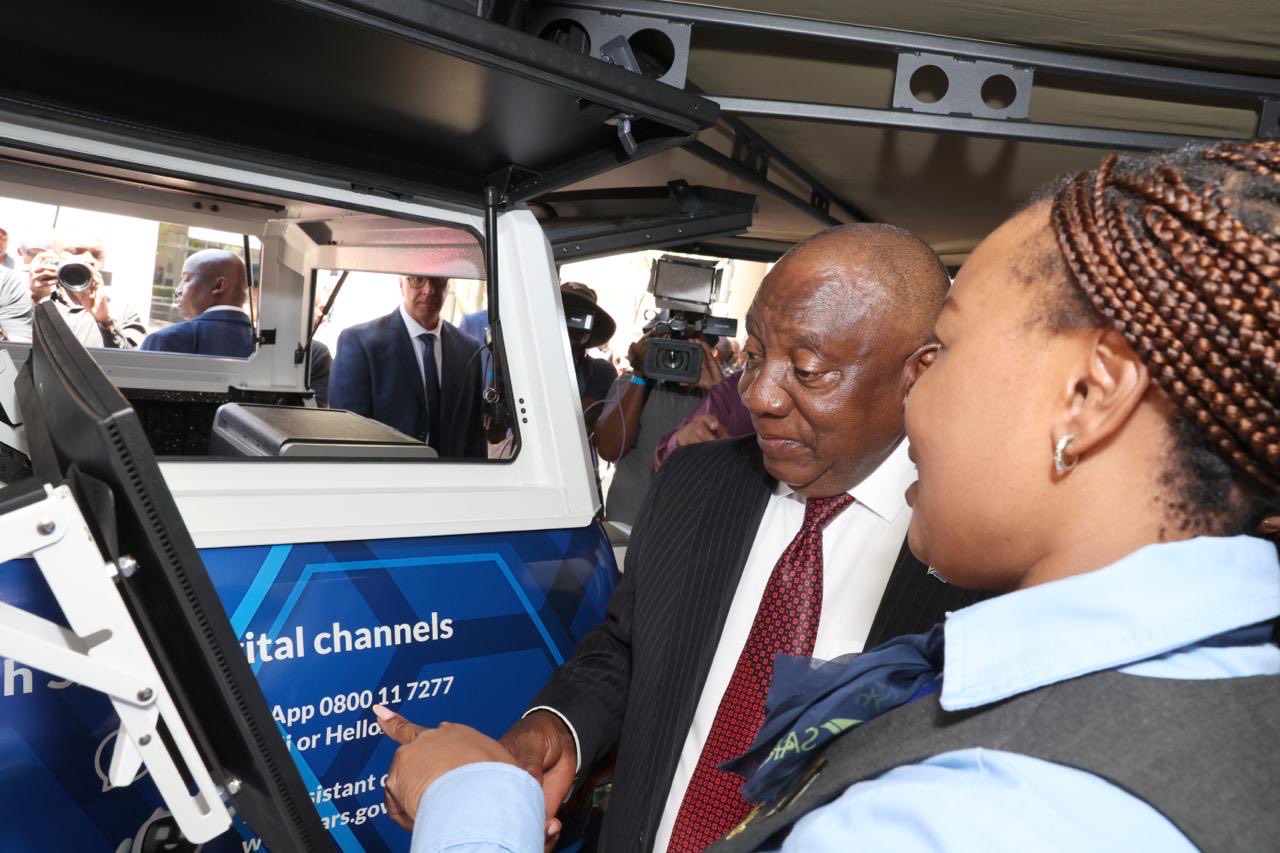
President Cyril Ramaphosa has suggested that the South African Revenue Service (SARS) would have collapsed if not for his interventions. Speaking at the SARS National Command Center in Brooklyn, Pretoria, on Thursday, Ramaphosa said there were concerted efforts to rescue the institution, which he halted through measures including the establishment of a commission of inquiry.
He described these interventions as part of the achievements of his early days in office—efforts he believes are often overlooked by critics.
“People often refer to a period they call ‘Ramaphoria,’ and suggest that nothing significant happened then. But if there was anything we did when we came into office, it was to stop state capture. We did this by setting up the Nugent Commission—a deliberate and direct act to halt state capture. Today, SARS has been revived and is even stronger than it was before. That, in my view, is what Ramaphoria represents,” Ramaphosa said.
The president explained that state capture actors had already taken control of several state institutions when he assumed office and that he successfully prevented them from taking over SARS and the National Treasury.
“They had already captured a number of institutions and departments. At SARS, we intervened at the right moment. The state capture actors were targeting the National Treasury next, thinking they had finished with SARS. But we stopped them in time. They were clever, too clever by half, systematically capturing people, departments, and entities. By intervening at SARS, we prevented them from taking control of the Treasury, which would have been catastrophic,” he said.
Ramaphosa stressed that the country would have been in a much worse state without his actions.
“SARS came dangerously close to collapse. Had that occurred, the democratic gains of South Africa would have been severely compromised. Decisive intervention halted the destruction. Efforts to fully capture SARS were stopped in time, safeguarding the National Treasury and, ultimately, South Africa itself. This intervention marked one of the defining moments of our administration,” he said.
The period he refers to coincides with what is often called the “nine wasted years,” during which Jacob Zuma was president and Ramaphosa served as deputy. Some critics have argued that Ramaphosa was an enabler of state capture during that period.